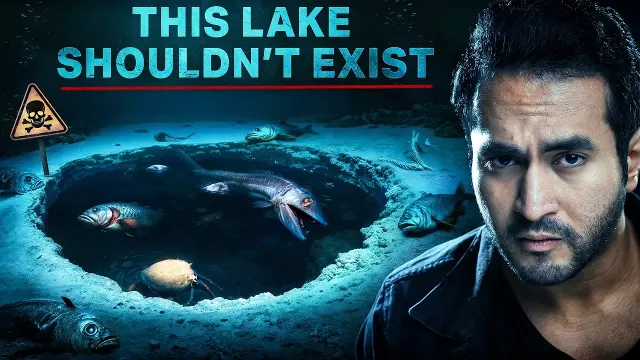
 Deep Sea Underwater Lakes That Shouldn’t Exist
#Underwater Lakes
1 ideas
Deep Sea Underwater Lakes That Shouldn’t Exist
Get new #Underwater Lakes ideas by email
Every Thursday: the week's best ideas, with the newest from #Underwater Lakes.
Related tags
Underwater Lakes Explained
What underwater lakes are
An underwater lake is a dense body of water that sits on the seafloor and stays distinct from the surrounding seawater. It can look strikingly like a lake, with a visible shoreline, surface, and even ripples, even though it is completely submerged. These features are usually found in the deep ocean and are often called brine pools when the water inside is especially salty.
Underwater lakes are unusual because water normally mixes with the sea around it. Here, however, the liquid is heavier than the surrounding water, so it settles in a depression and remains separated. This can create a calm, almost eerie boundary between two different environments.
How they form
Read more
Most underwater lakes form where salt or other minerals dissolve into seawater and make it much denser. The dense liquid sinks and collects in low places on the ocean floor. In some areas, underground salt layers or mineral-rich seepage feed the pool continuously, helping it keep its shape.
A few conditions help these formations exist:
- A basin or hollow on the seafloor
- Water that is denser than normal seawater
- Limited mixing with the surrounding ocean
- A steady source of salty or mineral-rich fluid
Because the deep sea is cold, dark, and under great pressure, these pools can remain surprisingly stable.
What they are like
Underwater lakes are not safe places for most sea life. The water inside may have very different chemistry from the water outside, often with low oxygen and high salinity. For that reason, the edges can act almost like a boundary between two worlds. Some microbes and specially adapted organisms can live nearby, but many animals avoid the interior.
They are often of great interest to scientists because they reveal how life adapts to extreme environments. They can also help researchers understand seafloor geology, chemical cycles, and how fluids move through the ocean crust.
Why they matter
These formations are more than a curiosity. They can:
- Show how salt, gas, and minerals move beneath the seafloor
- Support unusual microbial communities
- Offer clues about deep-sea ecosystems
- Help scientists study the chemistry of extreme environments
Because they are rare and difficult to reach, underwater lakes are still not fully understood. Each discovery adds to what we know about the deep ocean.
What to know if you are curious about them
If you are just beginning to learn about underwater lakes, it helps to think of them as dense pools of water, not literal fresh lakes hidden underwater. Their “shorelines” are created by differences in density and chemistry, not by gravity alone. They are a reminder that the ocean is full of hidden structures and boundaries that can look familiar while behaving in very unfamiliar ways.
If you enjoy natural wonders, underwater lakes are a beautiful example of how the Earth can surprise you. They combine geology, chemistry, and biology in one place, and they show that even in the darkest parts of the sea, there are environments with their own shape and character.
Videos come from YouTube and posts from Instagram; titles and summaries are our own. All rights belong to their creators.