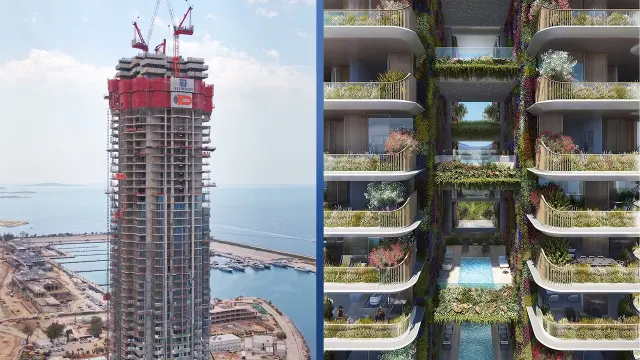
 The Luxury Redevelopment Skyscraper Dividing Europe
#Urban Development
1 ideas
The Luxury Redevelopment Skyscraper Dividing Europe
Get new #Urban Development ideas by email
Every Thursday: the week's best ideas, with the newest from #Urban Development.
Related tags
Urban Development: A Plain Guide to Changing Cities
Urban development is the process by which towns and cities change: new buildings going up, old ones coming down or being put to new use, roads and rail extended, parks and squares created or improved. It covers the physical fabric of a place, but also the services and institutions that make that fabric work — schools, clinics, shops, water, power, waste. Almost every city you find pleasant to walk through is the result of decades of such decisions, made well or badly.
How it comes about
Cities have always been remade. Development responds to where people want to live and work, and to public choices about land: what may be built where, how tall, how dense, and what must be provided alongside. Planners, architects, engineers, developers, landowners, councils and residents all have a hand in it. The pace varies enormously — some places grow in bursts, others change one plot at a time over a generation.
The main approaches
Read more
- Greenfield development: building on land at the edge of a settlement that has not been built on before.
- Infill and brownfield development: reusing vacant, derelict or former industrial sites inside the existing city.
- Adaptive reuse: converting warehouses, factories, offices or civic buildings into housing, studios or cultural space.
- Transit-oriented development: denser, mixed-use building clustered around stations and bus corridors.
- Master-planned districts: large sites designed as a whole, with streets, blocks and public space laid out together.
- Incremental development: single plots, extensions and self-built homes, accumulating gradually.
Recurring ideas
Three themes run through most contemporary practice. Density, because compact settlements use land and infrastructure more efficiently. Mixed use, because homes, workplaces and shops close together make streets livelier and shorten journeys. Walkability and public transport, because places designed around the car tend to spread out and isolate. Green and blue space, shade and drainage are usually part of the same conversation, as are heritage and the character of existing streets.
Tensions worth understanding
Development is rarely uncontested. Growth brings investment but can strain roads, schools and services. New housing may be welcomed in principle and resisted in a particular street. Rising land values can push out the people who lived there first. Old buildings can be an asset or a constraint. Good processes do not remove these conflicts; they make them visible and negotiated rather than hidden.
If you want to get involved
Learn a little vocabulary — zoning or land-use rules, density, floor area, planning permission, public consultation. Read your local plan or development framework; it sets out what is intended for your area and is usually public. Attend consultations, and ask practical questions: what infrastructure comes first, what happens to existing residents, how are public spaces maintained. Neighbourhood and civic groups are often the fastest way to understand a proposal. Whether you are a designer, a resident or simply curious, understanding the process is the first step to having a say in how your city grows.
#Urban Development: frequently asked questions
How do I get started learning about urban development in my own city?
Begin with the vocabulary that comes up again and again — zoning or land-use rules, density, floor area, planning permission and public consultation. Then read your local plan or development framework, which sets out what is intended for your area and is usually a public document. Attending a consultation or joining a neighbourhood group is the quickest way to see how the process actually works in practice.
Which approach to development is best — building at the edge, or reusing land inside the city?
There is no single right answer; it depends on what land is available, what infrastructure exists and what the community needs. Reusing vacant or former industrial sites makes use of services and streets that are already there, while building on the edge is often simpler but can stretch roads, schools and transport. Many cities combine the two, and the better question is which choice fits the particular site.
What does it take to convert an old building into housing or workspace instead of demolishing it?
Adaptive reuse depends on whether the structure, floor heights and access can reasonably accommodate the new use, and on what the local rules allow. It usually involves engineers and architects assessing the building alongside the planning authority, and it can preserve character that a new build would lose. Old buildings can be an asset or a constraint, so an honest early survey matters more than enthusiasm.
What should I ask when a development is proposed for my neighbourhood?
Ask practical questions rather than abstract ones: what infrastructure arrives first, what happens to people already living there, and how public spaces will be maintained afterwards. It also helps to know how tall and how dense the proposal is, and whether the mix of uses includes anything besides housing. These questions make trade-offs visible instead of leaving them buried in documents.
Why do plans that sound good on paper still meet opposition?
Development is rarely uncontested, because growth brings investment while also straining roads, schools and services, and rising land values can push out the people who lived there first. Housing that is welcomed in principle is often resisted on a particular street. A good process does not remove those conflicts — it makes them visible and negotiated rather than hidden.
What mistakes do cities most often make when they grow?
Two recurring ones are designing around the car, which spreads a place out and isolates it, and separating homes from workplaces and shops, which makes streets quieter and journeys longer. Ignoring green space, shade, drainage and the character of existing streets tends to be regretted later. Compact, mixed and walkable development is the usual correction, though it has to be handled with care for the people already there.
Videos come from YouTube and posts from Instagram; titles and summaries are our own. All rights belong to their creators.