 High-Yield USMLE Review for Biostatistics Concepts
#USMLE
3 ideas
High-Yield USMLE Review for Biostatistics Concepts
 Ultimate High-Yield Biostatistics Review for Medical Exams
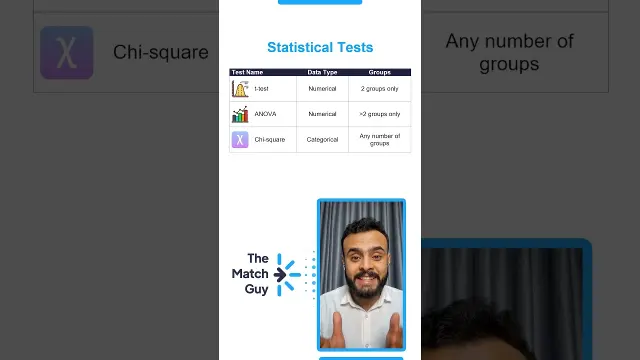 High-Yield Statistical Tests for Medical Board Exams
Get new #USMLE ideas by email
Every Thursday: the week's best ideas, with the newest from #USMLE.
Related tags
USMLE: A Beginner's Guide to the Medical Licensing Exams
If you are training to become a physician in the United States, or hoping to join that path from another country, you will meet the USMLE sooner or later. The United States Medical Licensing Examination is the multi-part exam that anyone seeking a licence to practise medicine in the US must pass. It is sponsored by two bodies: the National Board of Medical Examiners and the Federation of State Medical Boards. The exam is not run by a single medical school, and it is not a university test — it is a licensing requirement, which is why its results matter to state medical boards and to residency programmes alike.
The exam comes in three steps, and each one asks something different of you.
Step 1 is the foundation. It tests the basic sciences that underlie clinical practice — anatomy, physiology, biochemistry, pharmacology, microbiology, pathology, behavioural science and biostatistics among them — usually through multiple-choice questions written as clinical vignettes. You are expected to recognise mechanisms, not merely recall isolated facts. Step 1 is currently reported as pass or fail, so it works as a gate you must clear rather than a score to chase.
Step 2 has two parts. Clinical Knowledge (CK) moves from mechanisms to the practice of medicine: diagnosis, management, prevention and the everyday judgement a doctor needs at the bedside. Clinical Skills (CS) was a hands-on assessment of communication and examination skills; it has been discontinued, so check the current requirements with the sponsoring organisations before you plan. Step 3 comes later, usually during or after the first year of residency, and combines multiple-choice questions with computer-based case simulations that ask you to manage a patient over time.
Read more
For international medical graduates, the steps sit alongside a separate certification process, and eligibility rules differ by pathway, so it is worth reading the official requirements early rather than assuming.
What helps most, whatever step you are on?
- Build understanding before memorisation. Vignette-style questions reward reasoning, and reasoning is easier to carry into unfamiliar scenarios.
- Study by system and by topic rather than by accumulating resources. A small set of trusted materials, worked through thoroughly, usually beats a large collection skimmed once.
- Practise questions under timed conditions, then review every answer — including the ones you got right by luck.
- Space your revision across weeks. Sleep, meals and movement are part of preparation, not luxuries taken from it.
- Treat the exam as a marathon with checkpoints. Plan backwards from your intended test date, and leave room for a second attempt in your timeline without panic.
Above all, remember that the USMLE measures readiness to practise, not your worth as a clinician. Steady, honest preparation over months is what carries people through — and almost everyone who passes will tell you the same thing: consistency mattered more than intensity.
#USMLE: frequently asked questions
How should I start preparing for the USMLE?
Start by understanding the structure of the exam and choosing a small, reliable set of study resources. Build your plan around active question practice, then review explanations carefully so you learn how to think through clinical scenarios instead of memorizing facts in isolation.
What topics should I focus on first for Step 1?
Begin with the basic sciences that support clinical reasoning, especially subjects like anatomy, physiology, biochemistry, pharmacology, microbiology, pathology, behavioural science, and biostatistics. The goal is to connect concepts to patient-style questions, so focus on why things happen, not just what they are called.
Which USMLE step should I take, and when?
The steps are meant to be taken in sequence, with each one assessing a different stage of medical readiness. Step 1 builds the foundation, Step 2 focuses on clinical judgment, and Step 3 comes later when you are managing patients more independently, so the right timing depends on where you are in training and what your eligibility path allows.
Do I need to prepare differently for biostatistics and clinical questions?
Yes, but they should still be studied together because both appear in the same style of reasoning-based questions. For biostatistics, make sure you understand common test interpretations and how to read data in context, then practice applying that knowledge to clinical vignettes.
What are the most common mistakes people make when studying for the USMLE?
A common mistake is collecting too many resources and not going deep enough with any of them. Another is skipping timed practice or not reviewing missed questions carefully, which makes it harder to improve decision-making under exam conditions.
How can I stay organized while preparing for all the steps?
Plan backwards from your target test window and break the work into smaller, manageable study blocks. Keep a steady routine, include rest and revision space, and treat your preparation like a long project rather than a last-minute sprint.
Videos come from YouTube and posts from Instagram; titles and summaries are our own. All rights belong to their creators.