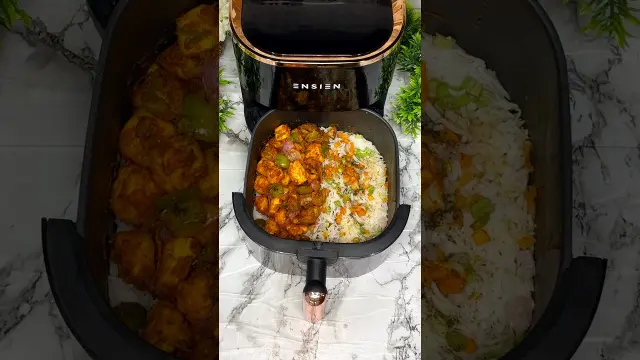
 Quick Air Fryer Paneer Fried Rice Recipe
#Vegetarian Cooking
1 ideas
Quick Air Fryer Paneer Fried Rice Recipe
Get new #Vegetarian Cooking ideas by email
Every Thursday: the week's best ideas, with the newest from #Vegetarian Cooking.
Related tags
Vegetarian Cooking: A Beginner's Guide
Vegetarian cooking simply means preparing food without meat, poultry or fish. Within that broad definition lives a whole world of traditions, and it is worth saying at the start that "vegetarian" is not one single thing: some people avoid all animal flesh but still eat eggs and dairy, others include dairy but not eggs, and others again avoid both. If you cook for others, it is always worth asking what they actually eat rather than assuming.
Where it comes from
Cooking without meat is not a modern invention or a niche habit. It has deep roots in many parts of the world: in the vegetarian traditions of India, in Buddhist temple cooking across East Asia, in the vegetable-focused kitchens of the Mediterranean, and in the meatless fasting days kept by various religious communities. Many of the dishes people consider classic vegetarian food were never designed as substitutes for anything — they are simply good cooking built around plants, grains, pulses and dairy.
The main kinds of dishes you will meet
Read more
- Vegetable-led dishes, where the produce is the point: roasted, braised, grilled or raw.
- Pulse and bean cooking, from lentils and chickpeas to beans, which give substance and protein.
- Grain-based plates: rice, wheat, corn, barley and others, often paired with something saucy.
- Egg and dairy dishes, for those who include them.
- Meat-free versions of familiar dishes, made with tofu, paneer, seitan, tempeh or mushrooms.
What beginners should know
The biggest mistake in vegetarian cooking is treating meat as the only thing worth building a meal around and then looking for something to put in its place. A better approach is to think in terms of what makes food satisfying: something hearty, something savoury, something with texture, something fresh.
Umami — the savoury depth you taste in mushrooms, tomatoes, soy sauce, aged cheese, miso and fermented bean pastes — does most of the work in making a meatless dish feel complete. Learn a few ways to build it and you will stop missing anything.
Texture matters just as much. A soft stew benefits from something crisp on top; a plain grain bowl comes alive with toasted seeds, fried shallots or raw crunch.
Practical tips
Cook legumes from scratch when you can and keep tins in the cupboard for the days you cannot. Salt them properly and season in layers as you go, not only at the end.
Keep a well-stocked pantry: good oil, onions, garlic, ginger, tinned tomatoes, a few dried spices, stock, and a grain or two. Most weeknight meals come out of that list.
Roast vegetables in a hot oven with enough oil and space between them, and they will taste far better than the same vegetables steamed and crowded.
Learn one or two dependable protein sources — beans, tofu, eggs, paneer — and practise them until they are second nature. Confidence comes from repetition, not from collecting recipes.
Finally, taste as you cook and adjust. Vegetarian food is forgiving: if something tastes flat, it usually needs salt, acid, fat or a little heat, and it can be fixed in a minute.
#Vegetarian Cooking: frequently asked questions
Do I need to be vegetarian myself to cook vegetarian food well?
Not at all — plenty of people cook meatless meals simply because they taste good. What matters most is understanding that vegetarian food is its own way of cooking rather than a substitute for something else, so you build dishes around vegetables, pulses and grains instead of looking for a stand-in for meat. If you are cooking for guests, ask what they actually eat, since people mean different things by the word.
What does "umami" mean and why does it matter in meatless cooking?
Umami is the savoury depth you taste in mushrooms, tomatoes, soy sauce, aged cheese, miso and fermented bean pastes. It does much of the work in making a dish without meat feel complete and satisfying rather than thin. Once you know a few ways to add it, meatless meals stop feeling like something is missing.
How do I keep meatless meals from tasting flat?
Season in layers as you go rather than only at the end, and salt legumes properly. If a finished dish still tastes dull, it is usually short on salt, acid, fat or heat, and a squeeze of lemon, a little more oil or a pinch of something spicy will often fix it in a minute. Tasting while you cook is the simplest habit to build.
What should I keep in my cupboard for easy vegetarian meals?
Good oil, onions, garlic, ginger, tinned tomatoes, a few dried spices, stock and a grain or two will cover most weeknight cooking. Keep tinned legumes on hand for the days you have no time to cook dried ones from scratch. Roasting vegetables in a hot oven with enough oil and space between them also makes a big difference compared with steaming them crowded together.
Why does texture matter so much when there is no meat on the plate?
Texture carries a lot of the interest in a meatless meal and can make the difference between a dish that feels finished and one that feels like a side. A soft stew perks up with something crisp scattered on top, and a plain grain bowl comes alive with toasted seeds, fried shallots or raw crunch. Think about contrast, not just flavour.
What is the biggest mistake beginners make?
Treating meat as the only thing worth building a meal around and hunting for something to put in its place. A better habit is to think about what makes any food satisfying — something hearty, something savoury, something with texture, something fresh — and build the plate from there. Pick one dependable protein such as beans, tofu, eggs or paneer and practise it until it is second nature, because confidence comes from repetition rather than from collecting recipes.
Videos come from YouTube and posts from Instagram; titles and summaries are our own. All rights belong to their creators.