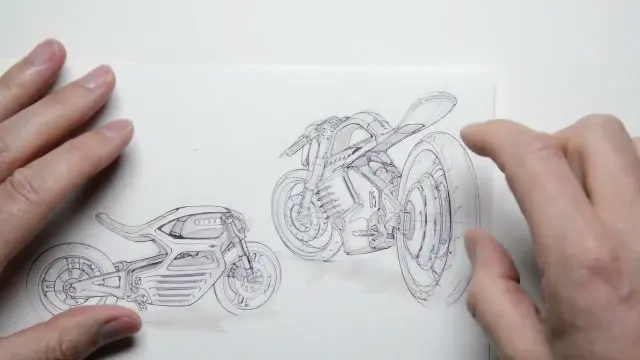
 Motorcycle Design Fundamentals Part Two Workshop
#Vehicle Design
1 ideas
Motorcycle Design Fundamentals Part Two Workshop
Get new #Vehicle Design ideas by email
Every Thursday: the week's best ideas, with the newest from #Vehicle Design.
Related tags
Vehicle Design: An Introduction
Vehicle design is the process of shaping how a vehicle looks, feels, and works. It brings together art, engineering, ergonomics, safety, and usability. Whether the vehicle is a car, motorcycle, bicycle, bus, or utility machine, design helps determine how it moves through the world and how people experience it.
At its core, vehicle design balances appearance with purpose. A vehicle must fit its intended use, whether that means carrying people, transporting goods, travelling long distances, or navigating tight urban spaces. Designers think about proportions, seating position, visibility, access, storage, comfort, and how the vehicle will be understood at a glance. A graceful shape can still be practical, and a practical vehicle can still have a strong visual identity.
Main areas of vehicle design
Vehicle design usually includes several connected parts:
Read more
- Exterior design: the body shape, surfaces, lights, windows, wheels, and overall profile
- Interior design: layout, seating, controls, materials, and comfort
- Ergonomics: how naturally a person can sit, reach, see, and operate the vehicle
- Technical packaging: how components such as the engine, battery, cargo area, or frame are arranged
- User experience: how the vehicle feels to enter, drive, ride, load, and maintain
Each part influences the others. For example, a low roof may look streamlined but reduce headroom, while a larger cabin may improve comfort but affect proportions. Good design finds a sensible balance.
Common styles and approaches
Vehicle design can be highly expressive or deliberately restrained. Some designs emphasize speed and movement with low, flowing lines. Others focus on strength, utility, or robustness, using upright forms and clear, simple surfaces. In some cases, the design language is elegant and minimal; in others, it is bold and mechanical.
Different vehicle types also call for different priorities. Passenger vehicles often focus on comfort, visibility, and safety. Sports vehicles may emphasize responsiveness and a close connection between driver and machine. Commercial and industrial vehicles usually prioritize durability, access, and efficient use of space. Two-wheel designs place special importance on balance, rider posture, and aerodynamics.
What beginners should know
If you are learning vehicle design, start by observing real vehicles closely. Look at the silhouette first, then the proportions, then the details. Notice where the eyes are drawn, how the surfaces change, and how the design communicates movement or stability.
It also helps to understand the relationship between sketching and function. A strong concept drawing is useful, but it must eventually work as a real object. Think about doors, seating, wheels, loading points, cooling, storage, and maintenance access. A design that looks good but is awkward to use will not succeed for long.
Practical tips
- Begin with a clear purpose: who will use the vehicle, and for what?
- Keep proportions consistent and believable
- Use simple forms before adding details
- Pay attention to human scale
- Consider how people enter, exit, and interact with the vehicle
- Study both classic and practical designs to understand why they work
Vehicle design is ultimately about shaping motion into something useful and meaningful. The best designs feel coherent: every line, surface, and feature supports the same idea.
#Vehicle Design: frequently asked questions
How do I start learning vehicle design if I have no background?
Start by observing real vehicles rather than drawing them: trace the silhouette first, then the proportions, then the smaller details, and ask yourself where your eye goes and why. Pair that habit with steady sketching so you can get whole shapes down quickly instead of polishing one idea. Reading about how a vehicle is actually built, even casually, will keep your drawings grounded in things that can exist.
What skills or knowledge do I actually need for vehicle design?
You need drawing and form-making ability, but also an understanding of ergonomics, packaging, and safety, because a design has to accommodate real people and real components. Curiosity about how things are manufactured and maintained matters as much as style, since access, cooling, storage, and service points shape the final look. Working on both visual sensibility and practical reasoning is what separates a good concept from a workable one.
Which style or approach should I choose for a vehicle design?
Let the vehicle's purpose decide before your taste does: passenger vehicles lean toward comfort, visibility, and safety, sport-oriented ones toward responsiveness and a close driver-to-machine feel, and commercial or utility vehicles toward durability and efficient space use. Two-wheelers add balance, rider posture, and aerodynamics into the mix. Once the priorities are clear, an expressive or restrained language both work, as long as every line supports the same idea.
What are the most common mistakes beginners make?
The usual trap is starting with detail—badges, lights, vents—before the overall proportion and silhouette hold up, which leaves the design looking interesting but unbelievable. Another is treating the sketch as the finished job and ignoring doors, seating, wheels, loading points, and maintenance access, which makes the vehicle awkward in real use. Adding complexity to hide a weak form is the third, and the simplest fix is always to go back to simple masses and check the human scale.
How do I keep a vehicle design practical without making it boring?
Recognize that practicality and character aren't opposites: a graceful shape can still be usable, and a plain utility vehicle can still have a strong identity through consistent proportions and clean surface changes. Constraints like a low roof or a large cabin are trade-offs you design around rather than obstacles to fight. Coherence is what reads as designed—when the appearance, the layout, and the way people use it all point the same direction, the result feels confident rather than dull.
How do I evaluate whether a design idea is actually good?
Test it against the people and the job: who uses it, how they get in and out, what they carry, and what they need to see and reach while operating it. Then check whether the design communicates its purpose at a glance—whether it reads as fast, sturdy, spacious, or agile without explanation. If a detail only works in your drawing and not in the physical object, it isn't finished yet.
Videos come from YouTube and posts from Instagram; titles and summaries are our own. All rights belong to their creators.