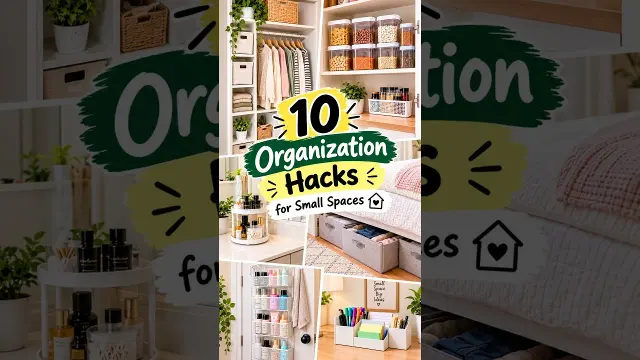
 Ten smart storage hacks and organisation ideas for small spaces
#Vertical Storage
1 ideas
Ten smart storage hacks and organisation ideas for small spaces
Get new #Vertical Storage ideas by email
Every Thursday: the week's best ideas, with the newest from #Vertical Storage.
Related tags
Vertical Storage: A Guide to Making the Most of Your Walls
Vertical storage means using the height of a room rather than only its floor area. Instead of spreading belongings outward across shelves, cupboards and tabletops, you build upward: along walls, above doorways, inside tall cabinets, beneath the ceiling. It is less a single product than a way of thinking about space, and it is one of the oldest ideas in domestic design — pantry walls lined with jars, kitchen rails hung with pans, workshops with pegboard and hooks.
Why it works
Floor space is limited and expensive; wall space usually is not. Most rooms have a band of unused height between eye level and the ceiling that nothing occupies. Drawing storage into that band frees the surfaces below for living — a clear desk, a usable worktop, a floor you can walk across. It also tends to make a room feel larger, because clutter is concentrated into vertical lines rather than scattered at ground level, and because the eye reads an unbroken floor as depth.
The main kinds of system
Read more
Storage that reaches upward generally falls into a few families:
- Wall-mounted shelves and floating planks, fixed to studs or proper anchors, for books, boxes and display.
- Rails, hooks and pegboard, which suit kitchens, hallways, sheds and craft rooms where objects hang more efficiently than they stack.
- Tall, narrow cabinets and ladders of shelving, which pack a great deal into a small footprint.
- Over-door and above-door storage, using the dead space at the top of a frame.
- Suspended solutions — hanging baskets, ceiling racks, pot racks — where the air itself becomes a surface.
- Under-stair and alcove joinery, which turns awkward architecture into floor-to-ceiling capacity.
What beginners should know
Start by measuring, not shopping. Note the height of the room, the reach of each person who will use the storage, and where doors, sockets, radiators and switches interrupt the wall. Decide early what goes where by weight and by frequency: heavy and often-used items belong between hip and shoulder height, light and occasional items can go high.
Fixings matter more than furniture. Plasterboard alone holds very little; find the studs or use appropriate anchors for the load you intend. Never hang a heavy shelf over a bed or a seat unless you are confident in the mounting.
Practical tips
Keep the topmost shelf for things you need a few times a year — seasonal bedding, suitcases, archive boxes — and label them so you do not have to climb to check. Use containers that are uniform in shape; matching boxes make a tall shelf read as calm rather than chaotic. Leave a little breathing room between clusters so the wall does not become one dense mass, and keep the lower half of the room visually quiet.
If you rent, or prefer not to drill, tension poles, freestanding ladder shelves and over-door hooks give much of the same effect without permanent changes. Whatever route you choose, the principle holds: look up, and you will usually find the space you were missing.
#Vertical Storage: frequently asked questions
What exactly is vertical storage, and why does it make a room feel bigger?
Vertical storage means building upward along walls, above doorways and into the band of unused height near the ceiling, rather than spreading belongings outward across floors and tabletops. Because clutter is gathered into tall, narrow lines instead of scattered at ground level, the floor stays visibly open and the eye reads more depth. It is a way of thinking about a room rather than a single product you buy.
What should I do before buying shelves or racks?
Measure first and shop afterwards: note the full height of the wall, how far each person using the space can comfortably reach, and where doors, sockets, radiators and switches break up the surface. Then sort what you own by weight and by how often you use it, so you know what belongs at hand and what can live high up. A quick plan drawn from those two steps saves most of the mistakes people make later.
Which kind of vertical storage system is right for my space?
Match the system to what you are storing: wall shelves and floating planks suit books, boxes and display, while rails, hooks and pegboard work better wherever things hang more naturally than they stack. Tall narrow cabinets and ladder shelving pack a lot into a small footprint, and over-door or ceiling-suspended options turn dead space into usable capacity. Alcoves and the area under a staircase are worth considering too, since they can be fitted from floor to ceiling.
How do I hang shelves safely, especially above a bed or a chair?
The fixing matters far more than the furniture — plasterboard on its own supports very little, so locate the studs or use anchors rated for the load you plan to put up. Avoid hanging anything heavy over a bed or a seat unless you are genuinely confident in the mounting, and when in doubt choose a lighter option or call in someone experienced. It is also worth checking that what you place up high is light and rarely needed.
How do I keep tall shelving from looking chaotic?
Use containers of a uniform shape and colour, because matching boxes make a tall run of shelves read as calm rather than busy. Group things in small clusters and leave a little empty space between them, and keep the lower half of the wall visually quiet so the room does not feel crowded from eye level down. Labelling the topmost boxes saves you from climbing up just to check what is inside.
What if I rent and cannot drill into the walls?
Tension poles, freestanding ladder shelves and over-door hooks deliver much of the same upward capacity without permanent changes to the property. They are also a sensible way to test whether a layout works for you before committing to fixed joinery. The underlying principle holds either way: look up, and the space you were missing is usually already there.
Videos come from YouTube and posts from Instagram; titles and summaries are our own. All rights belong to their creators.