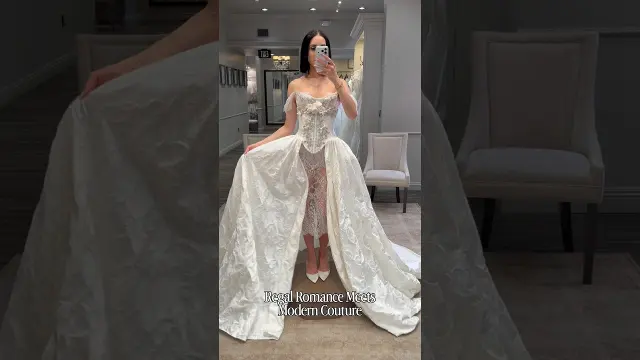
 Victorian Inspired Wedding Dress with a Modern Couture Touch
#Victorian Style
1 ideas
Victorian Inspired Wedding Dress with a Modern Couture Touch
Get new #Victorian Style ideas by email
Every Thursday: the week's best ideas, with the newest from #Victorian Style.
Related tags
Victorian Style: A Guide to Its Charm and Character
Victorian style takes its name from the reign of Queen Victoria in Britain, an era of rapid industrial growth, expanding cities and a strong sense of propriety. The look that grew out of it is decorative, layered and deeply sentimental: more is more, and every surface is an invitation to add a flourish. It reaches us today through fashion, interiors, jewellery, stationery and crafts, and it remains one of the most recognisable and most imitated styles in the decorative arts.
Where it comes from
The period drew on several currents at once. Gothic Revival architecture revived medieval arches and tracery; the Arts and Crafts movement pushed back against factory production in favour of handwork; and a growing middle class wanted homes and clothing that signalled respectability and taste. Industrial printing and manufacturing made ornament affordable for many households rather than only the wealthy, which is why the Victorian look spread so widely and survives in so many everyday objects.
What defines the look
Read more
The palette is rich and warm: deep greens, burgundy, plum, navy, sepia and cream, often set against dark wood. Materials matter — velvet, lace, silk, heavy cotton, brass, copper, carved oak, marble, porcelain. Pattern is dense and all-over: florals, damask, paisley, trellis and small repeating prints, frequently layered pattern on pattern. Detail carries the meaning: scalloped edges, tassels, fringing, ruffles, beading, embossing and hand-painted touches.
In fashion
Victorian dress is associated with defined waists, high necklines, long sleeves, layered skirts and elaborate trim such as lace collars, ribbons and covered buttons. Tailoring was intricate and clothing was often built to be altered. A modern interpretation borrows the silhouette and the trims while keeping the construction simple and comfortable — a lace collar on a plain blouse, a cameo brooch, a velvet ribbon at the throat, a long skirt with a modest train.
In interiors
Victorian rooms layer textiles, framed pictures, patterned wallpaper, shelves of objects and warm lamplight. Practical pieces were decorated as carefully as display pieces: a clock, a mirror or a chest of drawers earned carved brackets, inlay or painted panels. The effect depends on depth rather than clutter, so a good modern approach is to choose a few strong elements — one patterned wall, one dark wooden piece, one velvet chair — and let them carry the mood.
Getting started
Begin with one authentic detail rather than a whole room or outfit: a length of lace, a brass picture frame, a floral print, a piece of pressed glass. Study original objects where you can, in museums, antique shops or family collections, and notice how ornament is repeated and balanced. Mix old pieces with plain modern ones so the richness reads as intentional. Learn a hand skill — embroidery, crochet, decoupage, calligraphy — because Victorian style is at heart a celebration of made things, and making something yourself is the surest way into it.
Warm, layered and slightly theatrical, Victorian style rewards attention to detail. Used with restraint, it lends everyday life a sense of occasion.
#Victorian Style: frequently asked questions
How do I start with Victorian style without redecorating a whole room or buying a whole outfit?
Pick one genuine detail and build around it — a piece of lace, a brass frame, a floral print or a pressed-glass dish — and let it sit next to plain modern things so the richness looks deliberate rather than staged. Handle original pieces in museums, antique shops or family collections when you can, and watch how the ornament repeats and balances. From there you can add a second and third element as you find them.
What defines Victorian style, and what materials and colours should I look for?
The look is layered, decorative and sentimental, built on warm deep tones such as forest green, burgundy, plum, navy, sepia and cream, usually set against dark wood. Materials like velvet, lace, silk, heavy cotton, brass, copper, carved oak, marble and porcelain carry the mood, along with dense all-over pattern — florals, damask, paisley, trellis and small repeating prints. Trims are what give it character: scalloped edges, tassels, fringe, ruffles, beading and hand-painted touches.
What is the best way to wear Victorian style today?
Borrow the shape and trims rather than the full historical construction: a lace collar over a plain blouse, a cameo brooch, a velvet ribbon at the throat, or a long skirt with a modest train. Keep the cut simple and comfortable so the detailing reads as a choice instead of a costume. One or two period touches against modern clothing usually look far more convincing than a complete outfit.
How do I keep a Victorian-inspired interior from feeling cluttered?
Work with depth instead of accumulation — choose a few strong elements, such as one patterned wall, one dark wooden piece and one velvet chair, and let them set the tone for the rest of the room. Layer textiles, framed pictures and warm lamplight around them, and keep the surrounding surfaces quiet so the ornament has somewhere to breathe. Decorating practical pieces as carefully as display pieces is very much in the spirit of the style.
Which craft skills fit Victorian style best if I want to make something myself?
Embroidery, crochet, decoupage and calligraphy all belong naturally to this look, since it celebrates made things and handwork over mass production. Start with a small project — a trimmed handkerchief, a decorated box, a handwritten card — so you can practise the repeating ornament the style depends on. Learning one skill properly will carry you further than dabbling in several.
What mistakes do people usually make with Victorian style?
The most common one is piling on ornament everywhere at once, which reads as clutter rather than richness, and the second is mixing in pieces that are roughly period-flavoured rather than genuinely detailed. Copying a full historical silhouette head to toe can also tip into costume. Stop at one or two strong elements, favour real materials and handwork, and let plainness elsewhere do the balancing.
Videos come from YouTube and posts from Instagram; titles and summaries are our own. All rights belong to their creators.