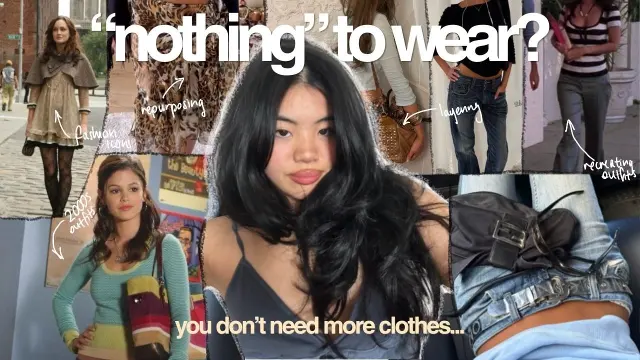
 Four Ways to Romanticise Your Wardrobe for Everyday Outfits
#Wardrobe Styling
1 ideas
Four Ways to Romanticise Your Wardrobe for Everyday Outfits
Get new #Wardrobe Styling ideas by email
Every Thursday: the week's best ideas, with the newest from #Wardrobe Styling.
Related tags
Wardrobe Styling: How to Build Outfits That Work
Wardrobe styling is the practice of putting clothes together deliberately: choosing what to keep, how to combine it, and how to make the pieces you already own work harder for you. It sits somewhere between personal styling, which often involves a stylist choosing for you, and shopping, which adds new things. Wardrobe styling starts with what is already hanging in your closet and asks a simple question: what can this become?
The idea grew out of a practical need. For most of the twentieth century, wardrobes were smaller and more uniform, often made to measure or repaired rather than replaced. As ready-to-wear clothing became cheaper and more plentiful, closets filled up while the feeling of having nothing to wear somehow got worse. Styling as a discipline emerged to close that gap, borrowing from costume design, fashion editing and the way dressers work backstage in theatre, where garments are chosen, altered and combined to tell a story quickly.
The main approaches
Capsule styling builds a small, coordinated set of pieces that all work with each other, usually in a limited palette. It suits people who dislike deciding in the morning.
Read more
Colour-led styling starts from a palette rather than garments. Once you know which tones flatter you and which you enjoy wearing, shopping and combining both get faster.
Proportion and silhouette styling focuses on shape: where a hem falls, where a waist sits, how volume is balanced. It is less about the item than about how it relates to the body and to the other pieces around it.
Occasion-based styling works backwards from real life: work, weekends, travel, celebrations. It is useful for spotting the gaps between what you own and what you actually do.
What beginners should know
Start with an honest clear-out. Pull out everything, try it on, and separate what fits and feels good from what does not. A garment that pinches or needs constant adjusting will never be styled into something comfortable.
Then photograph your outfits. Seeing them in a picture rather than a mirror shows proportion and colour more clearly, and a folder of combinations you liked becomes a reference you can return to.
Learn a few combinations that work and repeat them. Most people with a settled sense of style are not endlessly inventive; they have a handful of reliable formulas — a shape they like, a colour pairing, a layering order — and they vary the details.
Practical tips
Edit by fit before anything else; good tailoring and small alterations make ordinary clothes look considered. Keep a note of gaps as you notice them, so you buy with purpose rather than on impulse. Store things where you can see them, because clothes that are out of sight rarely get worn. And give yourself permission to wear the good things on ordinary days: a wardrobe earns its value through use, not through preservation.
#Wardrobe Styling: frequently asked questions
How do I start wardrobe styling if my closet already feels full?
Begin by emptying the closet and trying each piece on, then sorting what genuinely fits and feels good from what does not. A garment that pinches or needs constant readjusting will never turn into an outfit you enjoy wearing, so let it go first. From what remains, build a few outfits you like and photograph them so you have a reference to return to.
What do I actually need to style a wardrobe?
You need your own clothes, a mirror and a way to record outfits, such as your phone camera, plus a little patience for trying things on. Seeing combinations in a photo rather than only in the mirror makes proportion and colour much easier to judge. Small alterations and good fit matter more than adding new pieces.
Which wardrobe styling approach should I choose?
Pick the approach that matches the problem you actually have. Capsule styling suits people who dislike deciding each morning, colour-led styling helps when your clothes never seem to go together, and proportion-led styling is best when pieces fit but look off once worn. Occasion-based styling is the most practical starting point if your daily life and your closet simply do not match.
How do I keep a styled wardrobe from falling apart over time?
Store things where you can see them, because clothes that stay out of sight rarely get worn. Note gaps as you notice them so you add pieces with purpose rather than on impulse, and keep up with small repairs and alterations. Repeat the combinations that already work for you and vary the details instead of reinventing everything.
How can I make everyday outfits feel more romantic?
Treat romance as a matter of detail rather than occasion: a softer fabric, a gentler colour pairing, a considered layer or a small finishing touch can shift a plain outfit. Work with the pieces you already own and try one change at a time, photographing the result so you remember what worked. Nothing needs to be reserved for special days — ordinary wear is what gives a wardrobe its value.
What are the most common mistakes people make when styling their wardrobe?
The most common ones are shopping before editing, holding on to clothes that do not fit, and buying pieces that suit an imagined life rather than the one you actually live. Another is keeping favourite things boxed away for a better occasion, which means they never get worn. Fixing fit first and building on a few reliable combinations avoids most of these traps.
Videos come from YouTube and posts from Instagram; titles and summaries are our own. All rights belong to their creators.