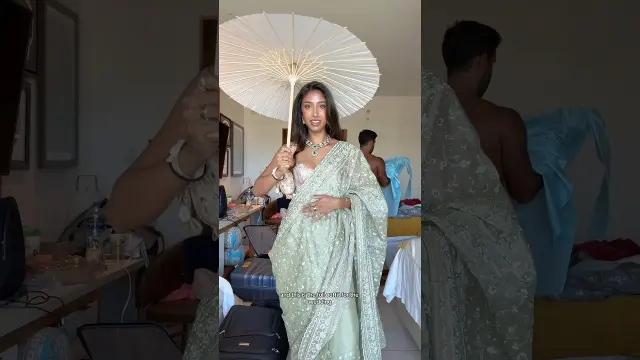
 Timing and Guest Arrival Culture at Indian Weddings
#Wedding Culture
1 ideas
Timing and Guest Arrival Culture at Indian Weddings
Get new #Wedding Culture ideas by email
Every Thursday: the week's best ideas, with the newest from #Wedding Culture.
Related tags
Wedding Culture: Traditions, Rituals and Meaning
A wedding is more than a single day. It is a point where two families, two sets of habits and often two sets of beliefs meet, and every culture has found its own way of marking that meeting. Wedding culture covers everything around the ceremony itself: the rituals, the clothing, the food, the music, the gifts, the etiquette and the expectations that surround a couple as they marry. It is one of the oldest and most persistent forms of shared human ritual, and it changes slowly enough that grandparents and grandchildren often recognise the same gestures.
What wedding culture includes
The phrase reaches further than the ceremony. It takes in engagement customs, the roles of parents and witnesses, the order of the day, the meanings attached to colours and flowers, the way guests are welcomed and fed, and the small superstitions families keep alive without quite knowing why. It also covers the practical etiquette that surrounds a wedding: who is invited, who speaks, what is worn, and how a couple thanks the people who helped them.
Common threads across traditions
Read more
Ceremonies differ enormously, yet certain purposes recur. Most weddings do three things: they make a commitment public, they join two families as well as two people, and they mark a change of status that the wider community recognises. Many traditions include a moment of separation, a moment of transition and a moment of return, whether that means leaving one home, being received into another, or being presented to guests in new clothes. Rings, shared meals, processions, blessings and the exchange of promises appear in many forms, though their meanings and details are never interchangeable.
Styles and approaches
Couples today often choose between several broad approaches. There is the traditional wedding, closely following the customs of a faith or region. There is the civil ceremony, valued for its simplicity and legal clarity. There is the fusion wedding, where two cultural backgrounds are given equal room, sometimes in separate ceremonies, sometimes woven into one. There is also the intimate wedding, small and informal, where the emphasis falls on the people present rather than the programme. None of these is more authentic than the others; each answers a different question about what the day is for.
What to know if you are new to it
If you are attending or planning a wedding in an unfamiliar tradition, ask rather than assume. Rituals often have specific expectations about dress, seating, timing or participation, and hosts generally welcome genuine questions far more than a well-meant guess. Arrive when invited, follow the cues of the people around you, and accept that parts of the ceremony may be in a language you do not speak; being present attentively is enough.
For couples blending traditions, the most useful advice is to talk early about which customs matter and why. Choosing both is possible, but it takes patience, flexible timing and a willingness to explain. Keep what carries meaning for you, set aside what feels like performance, and remember that guests rarely notice the details you worry about most.
#Wedding Culture: frequently asked questions
How do we start planning a wedding when our families come from different traditions?
Begin by talking with each other, before any decisions reach relatives, about which customs genuinely matter to you and why. Being able to explain the meaning behind a ritual is what makes it easier for the other side to accept it, and it keeps the conversation about purpose rather than preference. Once the essentials are named, the rest of the planning has something to organise itself around.
What should I know before attending a wedding in a tradition I have never seen?
Ask your hosts rather than guessing, because dress, seating, timing and whether guests take part often follow specific expectations. People are usually happy to explain and far prefer a sincere question to a well-meant mistake. On the day, follow the cues of those around you, arrive when invited, and accept that some parts may be in a language you do not speak; attentive presence is enough.
Which kind of wedding should we choose: traditional, civil, fusion or intimate?
There is no more authentic option among them; each answers a different question about what the day is for. A traditional ceremony follows the customs of a faith or region, a civil one is valued for simplicity and clarity, a fusion wedding gives both backgrounds real room, and an intimate one puts the people present ahead of the programme. Decide first what you want the day to accomplish, and the form tends to follow.
What are the common mistakes couples make when combining two cultural backgrounds?
The most frequent one is leaving the conversation too late, so that relatives have already formed expectations before the couple has agreed on anything. Trying to stage every custom at full scale is another, which leaves everyone tired and the meaning thin. Keep what carries real significance for you, set aside what feels like performance, and remember that guests rarely notice the details you worry about most.
How should we handle a long ceremony where guests arrive over a stretch of time?
In many traditions the arrival itself is part of the occasion, with hosts welcoming people gradually rather than at one moment. Plan for that reception to be comfortable, and let the ceremony begin on its own cues instead of treating latecomers as a disruption. Telling guests clearly what to expect helps them settle in and follow along.
How do we thank the people who helped us, without turning it into a burden?
Etiquette around a wedding includes acknowledging parents, witnesses and friends who gave time or effort, and a personal word usually means more than anything formal. Say it plainly and specifically, naming what the person actually did. Doing this soon after the day, while the details are still fresh for everyone, keeps it sincere.
Videos come from YouTube and posts from Instagram; titles and summaries are our own. All rights belong to their creators.