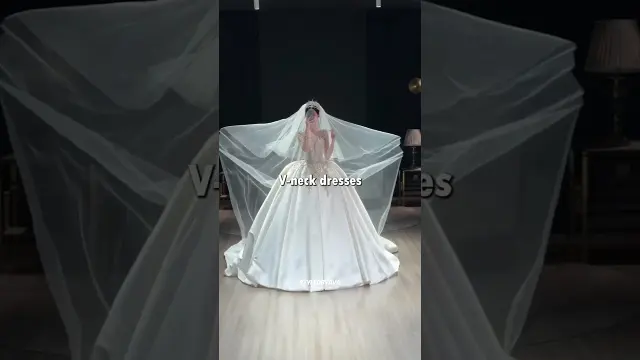
 Three Wedding Dress Mistakes to Avoid and Flattering Styles to Try
#Wedding Dress Styles
1 ideas
Three Wedding Dress Mistakes to Avoid and Flattering Styles to Try
Get new #Wedding Dress Styles ideas by email
Every Thursday: the week's best ideas, with the newest from #Wedding Dress Styles.
Related tags
Wedding Dress Styles: A Guide to Finding Yours
A wedding dress is more than a garment. It is the piece of clothing a person is photographed in more than any other, worn once, kept for decades, and remembered by everyone in the room. Its shape carries a whole vocabulary — silhouette, neckline, waistline, sleeve, fabric, train — and learning that vocabulary is the quickest way to move from vague longing to a clear idea of what you actually want to wear.
The main silhouettes
Silhouette describes the overall outline of the dress from shoulder to hem, and it is the first decision most brides face.
- **Ball gown.** A fitted bodice with a full, voluminous skirt. Traditionally the most formal option and the most dramatic in a large space.
- **A-line.** Fitted through the bodice and gently flared from the waist, skimming the body rather than hugging it. The most universally flattering shape and the easiest to move in.
- **Mermaid and trumpet.** Close through the torso and hips, flaring out below the knee or mid-thigh. Striking, but less forgiving of stride and sitting.
- **Sheath and column.** Follow the body's line closely from shoulder to hem with little flare. Simple, modern, often favoured for civil ceremonies and elopements.
- **Empire.** The waist sits high, just under the bust, with the skirt falling straight down. Light and airy, and comfortable in heat.
Read more
Necklines, sleeves and backs
The neckline frames the face and shoulders: sweetheart, V-neck, illusion, square, halter, off-the-shoulder, high neck. Straps and sleeves change the mood as much as the coverage — cap sleeves, long lace sleeves, spaghetti straps, or none at all. Backs matter more than brides expect, since guests watch them for the whole ceremony.
Fabric and detail
Fabric decides how a dress moves and photographs. Tulle and organza are light and airy; satin is structured and reflective; chiffon drapes softly; lace adds texture and pattern; crepe hangs clean and quiet. Beading, embroidery and appliqué add weight and sparkle but also cost and care. A gown with strong structure in the fabric rarely needs much decoration.
What to know before you shop
Start with your venue and the season, then your budget, then your comfort. A heavy ball gown on a beach or a silk sheath in a cold church will fight the day. Try on shapes you did not expect to like — dresses behave very differently on the body than on a hanger — and wear the underwear and shoes you plan to use. Move, sit, climb a step, raise your arms. Remember that almost every gown needs alterations, so leave time and budget for them. Choose a dress you can breathe in, eat in and forget about once it is on: the best wedding dress is the one that lets you be present.
#Wedding Dress Styles: frequently asked questions
How do I start choosing a wedding dress style?
Begin with the practical picture before the aesthetic one: the venue, the season and your budget narrow the field faster than any mood board. Once those are set, think about comfort and how you want to move on the day. From there, the silhouette vocabulary is simply a way of describing what you already lean toward.
Which wedding dress silhouette should I choose?
There is no single right silhouette, only the one that suits your body, your venue and the day you have planned. A-line and empire styles flatter most people and are easy to walk and sit in, while ball gowns and mermaid cuts are more dramatic and more demanding. Try several on, including shapes you assume you will dislike, because fabric and construction change everything on the body.
What should I know before going to a fitting?
Wear the underwear and shoes you intend to wear with the dress, and bring anyone whose opinion you genuinely trust. Walk, sit, climb a step and raise your arms in each gown rather than judging it in front of the mirror only. Allow time and money for alterations, since nearly every dress needs some.
How do I choose a fabric and level of detail?
Think about how the dress should move and photograph: tulle and organza feel light and airy, satin is structured and reflective, chiffon drapes softly, and crepe hangs clean and quiet. Beading, embroidery and appliqué add sparkle but also weight, cost and upkeep. A gown with strong structure often needs little decoration.
What are common wedding dress mistakes to avoid?
A frequent one is choosing a dress that fights the setting, such as a heavy ball gown on a beach or a delicate sheath in a cold church. Another is buying for the photograph rather than for the hours of standing, sitting and eating ahead. The safest rule is to pick something you can breathe in and forget about once it is on.
How should I care for a wedding dress after the wedding?
Have the gown cleaned promptly rather than storing it with stains, since spills and marks that seem invisible can set over time. Store it flat or lightly hung in a breathable cover, away from direct sunlight and damp, and avoid sealing it in plastic. If you plan to keep it as an heirloom, ask a specialist cleaner about the right method for its fabric and embellishments.
Videos come from YouTube and posts from Instagram; titles and summaries are our own. All rights belong to their creators.