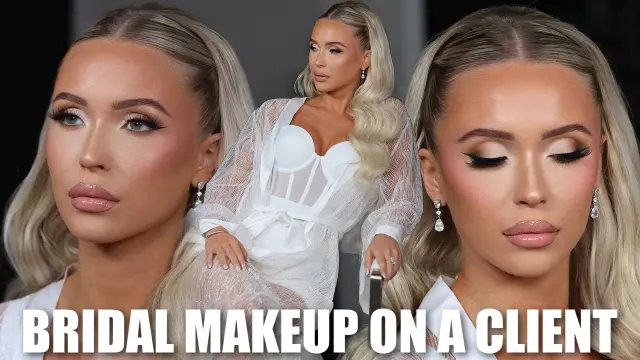
 Timeless Full Glam Bridal Makeup on a Client
#Wedding Glam
1 ideas
Timeless Full Glam Bridal Makeup on a Client
Get new #Wedding Glam ideas by email
Every Thursday: the week's best ideas, with the newest from #Wedding Glam.
Related tags
Wedding Glam: A Complete Guide to Bridal Makeup
Wedding glam describes a style of bridal makeup built around definition and polish: sculpted features, a strong eye, a well-shaped brow and a complexion that photographs cleanly. The name borrows from "glamour," and the look is less a single recipe than a family of approaches that share an intention — to make the face read clearly from a distance, under strong light, and in photographs that will be looked at for decades.
Where it comes from
Bridal makeup as a distinct craft is old, but the "glam" version belongs to the era of photography and film. As wedding pictures moved from stiff studio portraits to candid coverage across a long day, makeup had to work from many angles and in changing light. Theatrical and editorial techniques — contouring, strategic highlight, false lashes — travelled into wedding work and were softened for daylight and close conversation. Traditional bridal customs around the world, from heavy kohl and henna to pale porcelain finishes, each shaped local ideas of what a bridal face should be.
The main styles
Read more
Classic glam keeps the emphasis on balance: even skin, defined eyes, a lip that echoes the natural colour but goes a shade further. Soft glam uses the same structure with gentler contrast — browns instead of blacks, a diffused lash line, a satin rather than matte finish. Full glam pushes further, with a cut crease, dramatic lashes and a stronger contour, and suits evening ceremonies and abundant photography. Editorial or modern glam strips things back to luminous skin with one bold feature, often the lip. Cultural and regional traditions form a style of their own and are usually best handled by an artist familiar with them.
What beginners should know
Start with skin. Bridal makeup lasts or fails on preparation: cleansing, gentle exfoliation in the weeks beforehand, and hydration rather than heavy cream on the day itself. Longevity comes from layering thin coats and setting each one, not from one thick application.
Choose the look for the setting, not only the dress. A ceremony in bright daylight and a reception under warm artificial light ask different things of a foundation. Ask for a trial, and photograph it in daylight, with flash, and indoors. Wear it for several hours; how a base behaves after six hours of talking, eating and hugging matters more than how it looks at the mirror.
Keep a small kit for touch-ups: blotting papers, the lip colour, a little powder. Make sure the makeup suits your skin rather than fighting it — patch-test anything new well in advance, and be honest with your artist about sensitivities.
Finally, remember the face has to look like you. The most lasting bridal glam is the version of your features at their clearest, not a different face wearing your dress.
#Wedding Glam: frequently asked questions
How do I choose between classic, soft, and full wedding glam?
Start from the setting rather than the dress: soft glam, which swaps harsh blacks for browns and diffused lash lines, reads well in bright daylight, while full glam with a cut crease and dramatic lashes suits evening ceremonies and heavy photography. Classic glam sits between the two, keeping skin even and the eye defined without pushing contrast too far. Editorial glam is the outlier, built on luminous skin with a single bold feature such as the lip, so pick it only if you want one element to carry the whole face.
What skin preparation actually matters before the wedding day?
Bridal makeup succeeds or fails on the weeks beforehand: regular cleansing, gentle exfoliation and steady hydration rather than a heavy cream applied at the last minute. Give your skin time to settle into the routine and patch-test anything new well in advance so a reaction never lands on the day itself. On the day, a calm, well-hydrated base holds makeup far more reliably than a rich product layered on top.
Is a makeup trial really necessary, and how should I test the look?
Treat the trial as a rehearsal for the parts you cannot predict: photograph the finished face in daylight, with flash, and under indoor lighting, since each reveals different things about a base. Then wear it for a long stretch of talking and eating, because how a foundation behaves hours in matters more than how it looks at the mirror. Tell your artist honestly about sensitivities and anything that felt uncomfortable.
How do I make wedding glam last through a long day?
Longevity comes from layering thin coats and setting each one as you go, not from one thick application that creases and slides. Keep a small touch-up kit with blotting papers, a little powder and the lip colour you wore, so you can refresh without rebuilding the face. Blotting before powdering keeps the base from turning heavy over the course of the day.
What are the most common mistakes with bridal glam?
The biggest one is choosing a look for the dress rather than for the venue and light, which is why a face that looked perfect indoors can flatten in daylight. Another is chasing a trend that changes the shape of your features instead of clarifying them, or testing a new product too close to the date. The most lasting bridal glam still looks like you, just at your clearest.
Can I do wedding glam on myself, or should I book an artist?
Doing it yourself is realistic if you practise the full look repeatedly before the day and photograph each attempt under the lighting you expect. An artist is worth considering when your plans involve cultural or regional bridal traditions, or a full glam finish with cut creases and lashes that is hard to build on your own face. Either way, the same rules apply: prepare the skin, choose for the setting, and keep the result recognisably yours.
Videos come from YouTube and posts from Instagram; titles and summaries are our own. All rights belong to their creators.