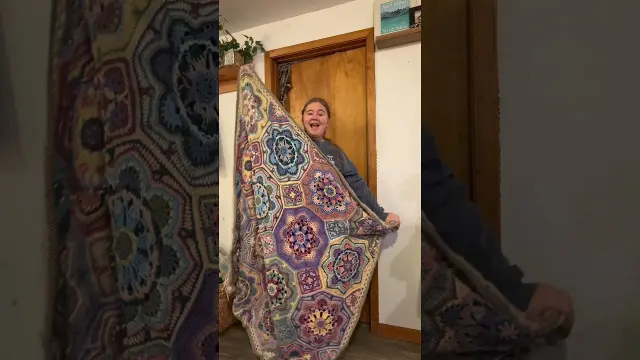
 Everything I Crocheted in a Week: A Weekly Project Round-Up
#Weekly Crochet
1 ideas
Everything I Crocheted in a Week: A Weekly Project Round-Up
Get new #Weekly Crochet ideas by email
Every Thursday: the week's best ideas, with the newest from #Weekly Crochet.
Related tags
Weekly Crochet: A Gentle Rhythm for Steady Making
Weekly crochet is less a technique than a way of organising the craft: setting aside regular time to work with hook and yarn, and often gathering a week's progress into a single project, a small finish, or a round-up of what was made. It sits somewhere between a personal routine and a shared ritual — many makers photograph their week's work, note what changed, and start again on Monday. The appeal is simple. Crochet grows slowly, one stitch at a time, and a weekly rhythm makes that slowness visible and satisfying rather than frustrating.
Why a weekly rhythm helps
Crochet is easy to abandon in the gap between projects. A weekly anchor — an evening, a commute, a quiet hour on a fixed day — keeps the hands familiar with the hook and the tension steady. It also breaks large pieces into humane portions: a blanket that looks impossible as a whole becomes eleven or twelve weekly sittings, each with its own small ending. Makers who work this way often find they finish more, because the decision to start has already been made.
Kinds of weekly crochet
Read more
There is no single format, and the shape you choose can change with the season of your life.
- The weekly finish: one small, completable object per week — a coaster, a washcloth, a granny square, a pair of booties.
- The weekly segment: a fixed amount of a long project, such as a set number of rows on a blanket or a section of a garment.
- The weekly sampler: a different stitch or motif each week, later joined into a throw or a scarf.
- The weekly round-up: no fixed output, simply documenting whatever was worked on, including the rows undone.
- Themed weeks: colour weeks, yarn-from-the-stash weeks, or weeks devoted to learning one new technique.
Getting started
Beginners do best with a small, honest goal. Choose a project you can plausibly finish in a week, or a segment small enough that missing one evening does not derail you. Keep a basket or bag packed with the current project, its hook, a yarn needle and a spare ball, so no time is lost hunting for supplies. Note your hook size and yarn on a slip of paper — when you return after a few days, memory will not supply it.
Practically, protect your hands and eyes: work in good light, loosen your grip on the hook, and take breaks to stretch fingers and wrists. If anything aches persistently, stop and rest rather than working through it.
Keeping it going
Forgive the missed weeks. A rhythm is not a rule, and a week without crochet is simply a week without crochet. Ravelry-style notes, a simple notebook or a photo at the end of each session all help you pick up where you left off. Above all, let the weekly habit serve the pleasure of making, not replace it.
#Weekly Crochet: frequently asked questions
How do I start a weekly crochet habit?
Pick a fixed slot in your week — an evening, a commute, a quiet hour on a set day — and treat it as the time you always pick up the hook. Choose something small enough to finish or make real progress on within that slot, so a missed week doesn't feel like failure. Keeping the current project, its hook and a spare ball packed in one bag removes the friction that usually stops a session before it begins.
What do I actually need to begin?
A hook, a yarn you enjoy working with, a yarn needle for finishing ends, and something to carry it all in are enough for most small weekly projects. It also helps to write down the hook size and yarn you're using, since after a few days away you may not remember which combination gave you that tension. Add good lighting and a comfortable place to sit, and you're set.
Which kind of weekly crochet should I choose?
It depends on how much time and patience you have right now. If you like visible progress, go for a weekly finish such as a washcloth or a granny square; if you're working on something large, a fixed number of rows per week keeps it manageable. A weekly sampler or a simple round-up of whatever you touched that week suits people who want variety rather than a deadline.
How do I keep the habit going when I miss a week?
Treat a missed week as an ordinary week without crochet rather than a broken streak, and simply return to the rhythm when you can. Notes or a photo at the end of each session make it much easier to pick up the stitches and the thread of your thinking later. Let the schedule serve the pleasure of making — if it starts to feel like an obligation, change the format.
What are common mistakes people make with weekly crochet?
The usual one is setting a goal too big for the time available, so the project stalls and the habit collapses with it. Another is skipping the note about hook size and yarn, which leaves you guessing when you return. Working in poor light or gripping the hook too tightly also makes sessions uncomfortable, so loosen your hold and pause to stretch your hands.
Can I document my weekly crochet instead of finishing something?
Yes — a weekly round-up is a valid format in its own right, covering whatever you worked on, including rows you ended up undoing. Many makers photograph the week's progress and jot down what changed, then begin again the following week. It keeps the hands familiar with the hook without turning the craft into a production target.
Videos come from YouTube and posts from Instagram; titles and summaries are our own. All rights belong to their creators.