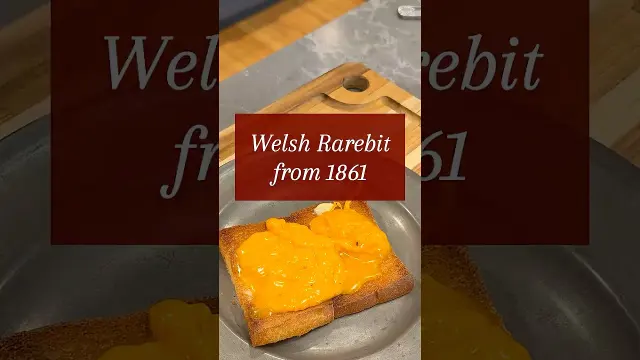
 Tasting History Recreates a 160 Year Old Welsh Rarebit Recipe
#Welsh Rarebit
1 ideas
Tasting History Recreates a 160 Year Old Welsh Rarebit Recipe
Get new #Welsh Rarebit ideas by email
Every Thursday: the week's best ideas, with the newest from #Welsh Rarebit.
Related tags
Welsh Rarebit: The Classic Cheese on Toast, Done Properly
Welsh rarebit is one of the oldest and simplest dishes in the British kitchen: a savoury melted cheese sauce, sharpened with mustard and often loosened with ale, poured over thick slices of toast and browned until it bubbles. It is comfort food with no ceremony attached, made from things most kitchens already have.
A dish with a puzzling name
The dish appears in English cookery writing as far back as the eighteenth century, and it has been called Welsh rabbit for just as long. The name has nothing to do with game. It seems to have started as a gentle joke: cheese sauce on toast was nicknamed "rabbit" in the way that a poor substitute is given a grander name, and the Welsh part was attached because Wales was long associated, fairly or not, with a love of toasted cheese. Over time "rarebit" appeared as a more genteel spelling, and today both versions are understood, with rarebit the usual form on menus.
What it is, and what it is not
Read more
Rarebit is not simply cheese on toast. The cheese is melted into a sauce first, so that it coats the bread evenly instead of congealing in a stringy layer. Nor is it the same as fondue, though the principle of melting cheese with an acidic, flavoured liquid is similar. Recipes vary enormously: some are as plain as cheese, butter and mustard; others include ale, stout, milk, cream, Worcestershire sauce, cayenne, or a beaten egg yolk. A version topped with a poached egg is traditionally called a buck rarebit.
Choosing and handling the cheese
A firm, well-flavoured cheese works best. Cheddar is the common choice, and Lancashire, Cheshire or a similar traditional British cheese will also do well. Very soft or very young cheeses turn gluey, and heavily processed cheeses behave unpredictably when heated.
The essential skill is gentle heat. Cheese turned too hot separates into grease and rubbery strands, and there is no rescuing it. Melt it slowly, in a bowl set over barely simmering water or in a heavy pan over low heat, stirring constantly. A little mustard helps the sauce hold together, and so does an egg yolk stirred in off the heat. A splash of ale, milk or cream keeps the mixture loose enough to pour. If it does begin to split, take it off the heat at once and beat in a small amount of cold liquid a spoonful at a time.
Assembling and serving
Toast the bread until it is properly dry and crisp; a soft slice will go soggy under the sauce. Pile the rarebit on generously, right to the edges, and finish it under a hot grill until the surface is mottled brown and blistered. Watch it closely, as the distance between golden and burnt is short.
Eat it straight away, with something sharp alongside: pickled onions, chutney, a few cornichons, or a salad of watercress dressed with vinegar. It suits a cold evening, a late supper, or a plain lunch when there is little in the house but bread and cheese.
#Welsh Rarebit: frequently asked questions
What is Welsh rarebit, and how is it different from cheese on toast?
It is a savoury melted cheese sauce, sharpened with mustard and usually loosened with ale or milk, poured over thick slices of toast and browned until it bubbles. The difference is that the cheese is melted into a sauce first, so it coats the bread evenly rather than congealing into a stringy layer. It is also distinct from fondue, even though the idea of melting cheese with a flavoured liquid is similar.
What do I need on hand to make it?
A firm, well-flavoured cheese, butter, mustard and something to loosen the sauce — ale, milk or cream — plus bread sturdy enough to toast dry. A heavy pan or a bowl set over barely simmering water is the only equipment required. It is deliberately plain cooking, built from things most kitchens already have.
Which cheese should I choose?
Pick a firm, well-flavoured traditional British cheese that melts smoothly and carries a bit of sharpness. Very soft or very young cheeses turn gluey, and heavily processed ones behave unpredictably under heat, so they are best avoided. Whatever you choose, the way it is melted matters more than the variety itself.
How do I keep the sauce from turning greasy or stringy?
Keep the heat gentle — melt slowly over barely simmering water or in a heavy pan on low, stirring constantly, since cheese that gets too hot separates into grease and rubbery strands with no way back. A little mustard, and an egg yolk stirred in off the heat, help the sauce hold together. If it does begin to split, take it off the heat at once and beat in a small amount of cold liquid a spoonful at a time.
How should I serve it, and what goes alongside?
Spread the rarebit generously right to the edges of properly dry, crisp toast, then finish it under a hot grill until the surface is mottled brown and blistered — watching closely, because golden turns to burnt quickly. Eat it straight away with something sharp: pickled onions, chutney, cornichons or a vinegar-dressed watercress salad. It suits a cold evening, a late supper, or a plain lunch when there is little in the house.
What mistakes do people most often make?
The usual culprits are soft, under-toasted bread that goes soggy, cheese pushed too hard over high heat, and a thin scraping that leaves the edges of the toast bare. Drying the toast thoroughly, melting gently and covering the slice edge to edge fixes most of it. The last one is simply walking away from the grill, which is where good rarebit is most often lost.
Videos come from YouTube and posts from Instagram; titles and summaries are our own. All rights belong to their creators.