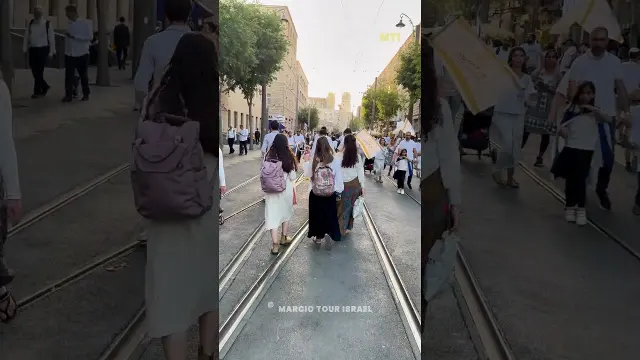
 Old City of Jerusalem: The Western Wall and Its Pilgrims
#Western Wall
1 ideas
Old City of Jerusalem: The Western Wall and Its Pilgrims
Get new #Western Wall ideas by email
Every Thursday: the week's best ideas, with the newest from #Western Wall.
Related tags
Western Wall: A Visitor's Guide to Jerusalem's Ancient Shrine
The Western Wall stands in the Old City of Jerusalem, at the foot of the Temple Mount. It is the surviving western section of the vast retaining wall that once supported the raised platform of the Second Temple, and it is not a building in itself but an engineered support: enormous limestone blocks, some of them weighing many tonnes, laid without mortar and finished with the characteristic chiselled border that runs around the edge of each stone. When the temple was destroyed, this wall remained. For Jews it became the closest point of access to the site of the ancient sanctuary, and over the centuries it has grown into one of the most visited places of Jewish prayer in the world.
What you are looking at
The visible courses are only the upper part of a far deeper structure. Below the level of the plaza the wall continues downward, and much of that lower mass can be seen in the tunnel that follows the wall's full length underground. The stonework records different periods of building: the great dressed blocks of the earlier construction sit beside smaller stones added in later centuries, and the joins are worth looking for.
Prayer and custom
Read more
The plaza in front of the wall is divided into separate sections for men and women. You will see people praying from prayer books, swaying gently, resting a hand or forehead against the stones, and reciting Psalms at any hour. Bar Mitzvah celebrations are frequent on weekday mornings, often with drums and singing. Many visitors write a prayer or a wish on a slip of paper and press it between the stones; the notes are gathered from time to time and buried.
Modest dress is expected from everyone: shoulders and knees covered. Men wear a head covering, and paper ones are usually available at the entrances. Photography is permitted but should never intrude on someone praying, and on Shabbat and festivals it is best to put phones away altogether.
Practical tips
- Approach through the Jewish Quarter of the Old City or by the Dung Gate; there are security checks at every entrance.
- Come early in the morning or in the evening for a calmer atmosphere.
- Stones worn smooth by generations of feet can be slippery, so wear comfortable shoes.
- Keep your voice low near the wall. It is a place of worship before it is a monument.
- Visitors of any faith or none are welcome; simply follow the cues of the people around you.
A layered place
The site also matters to Muslims, who know the plateau above as the Haram al-Sharif and associate the western wall with the Prophet's night journey, and the arrangements for the area reflect that long and sensitive history. The surrounding streets hold the Via Dolorosa and the markets of the Muslim Quarter, so a visit easily becomes a walk through several traditions in an afternoon.
Whatever your own background, the wall rewards patience. Stand back for a while, watch the rhythm of the place, and let it be what it is to the people praying there.
#Western Wall: frequently asked questions
What exactly is the Western Wall — a building or something else?
It is not a building but an engineered support: the surviving western stretch of the massive retaining wall that once held up the raised platform of the Second Temple. Its huge limestone blocks were laid without mortar, and each one is finished with a chiselled border around the edge. What you see at plaza level is only the upper part — the wall continues far deeper, and the underground tunnel reveals much more of it.
Can people of other faiths, or no faith, visit the Western Wall?
Yes. Visitors of any background are welcome, as the wall is both a working place of worship and a site of wide historical interest. The main thing is to read the room: keep your voice down, avoid stepping into anyone's prayer, and follow the cues of the people around you.
What should I wear and how should I behave there?
Modest dress is expected from everyone, with shoulders and knees covered; men also wear a head covering, and paper ones are usually available at the entrances. Photography is allowed but should never intrude on someone praying, and on Shabbat and festivals it is better to leave your phone alone entirely. The plaza is divided into separate sections for men and women, so look before you walk.
When is the best time to come, and what should I expect on the way in?
Early morning or evening tends to be calmer and lets you stand back and watch the rhythm of the place before it fills up. Access is through the Jewish Quarter of the Old City or via the Dung Gate, and there are security checks at every entrance. Weekday mornings often bring Bar Mitzvah celebrations with drums and singing.
What is the custom with the slips of paper pressed between the stones?
Writing a prayer or a wish on a small note and tucking it into a crack between the stones is a long-standing practice open to anyone, whatever their background. The notes are collected from time to time and buried rather than thrown away. It is a personal gesture, not a performance, so do it quietly and step aside afterwards.
What are the common mistakes first-time visitors make?
The usual ones are treating it as a photo opportunity, arriving in sleeveless or shorts-and-shorts weather, and rushing the upper plaza without realising how much of the wall lies below. Wearing comfortable shoes matters more than you would think, since stones worn smooth by generations of feet can be slippery. Give it time instead of ticking it off — the site rewards patience far more than a quick stop.
Videos come from YouTube and posts from Instagram; titles and summaries are our own. All rights belong to their creators.