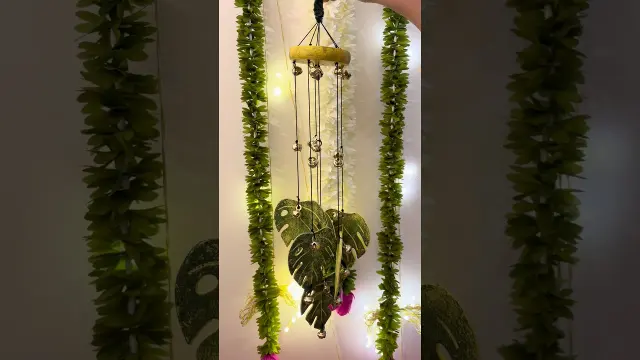
 DIY clay leaf wind chime for handmade home decor
#Wind Chime
1 ideas
DIY clay leaf wind chime for handmade home decor
Get new #Wind Chime ideas by email
Every Thursday: the week's best ideas, with the newest from #Wind Chime.
Related tags
Wind Chimes: A Beginner's Guide to Sound and Making
A wind chime is a simple thing: a set of suspended objects that strike one another when the air moves. Yet that simplicity is why chimes have stayed in gardens, doorways and windows for centuries. They turn a passing breeze into sound, and the sound is never quite the same twice.
What a wind chime is made of
Most chimes have four parts. There is a top piece at the centre, often called the crown, from which everything hangs. The chimes themselves are the tubes, bars or bells that produce the note. A clapper in the middle swings to strike them. And a windcatcher or sail hangs below, catching the air so the whole assembly moves. Some chimes omit the clapper and let the chimes hit a central disc instead; others are strung so the pieces touch each other directly.
A long history
Read more
Suspended bells and tubes have long been used to mark wind and to carry sound across open ground. In East Asia, tubular chimes of glass or bamboo hung from temple eaves and shrines, where the tinkling was understood as a kind of music offered to the air. In Southeast Asia, bamboo and metal chimes were part of agricultural life, hung to keep birds from crops. Simple shell and bone rattles hung outside dwellings in many coastal cultures. The modern garden chime of metal tubes tuned to musical notes is a later arrangement of these older ideas rather than an invention from nothing.
Materials and their sound
The material decides the character of the sound as much as the length does.
- Metal, usually aluminium or steel, gives a clear, ringing tone that carries a long way. Aluminium is light and rust-resistant; steel is heavier and more resonant.
- Bamboo and wood produce a soft, hollow knock. They suit sheltered spots, since they weather more quickly.
- Glass and ceramic make bright, high sounds. Glass needs care in frost and wind.
- Shell, stone and recycled metal bring a textural, less musical voice, which many people prefer for the garden.
Length matters too: longer tubes sound lower, shorter ones higher. Chimes tuned to a scale will sound harmonious together even when struck at random, which is why makers arrange them in pentatonic patterns.
Choosing one
Think about where it will hang before you pick. A small chime near a window needs to be quiet enough to live with; a large one in a windy garden needs sturdy cord and a secure hook. Sheltered porches suit bamboo and wood, while exposed walls want metal. Listen if you can, and be honest about how much sound you want, since a chime in constant wind can be a constant companion.
Making your own
Homemade chimes need only a hanger, a cord and something that rings. Metal spoons, old keys, shells, driftwood and lengths of copper pipe all work. Drill or thread your pieces at one end, hang them at slightly different lengths so the sounds vary, and use a strong, weather-resistant cord. Knot firmly and check the assembly after the first windy day. A handmade chime will not be perfectly tuned, and it does not need to be: the pleasure is in the accidental pattern of the strikes.
Videos come from YouTube and posts from Instagram; titles and summaries are our own. All rights belong to their creators.