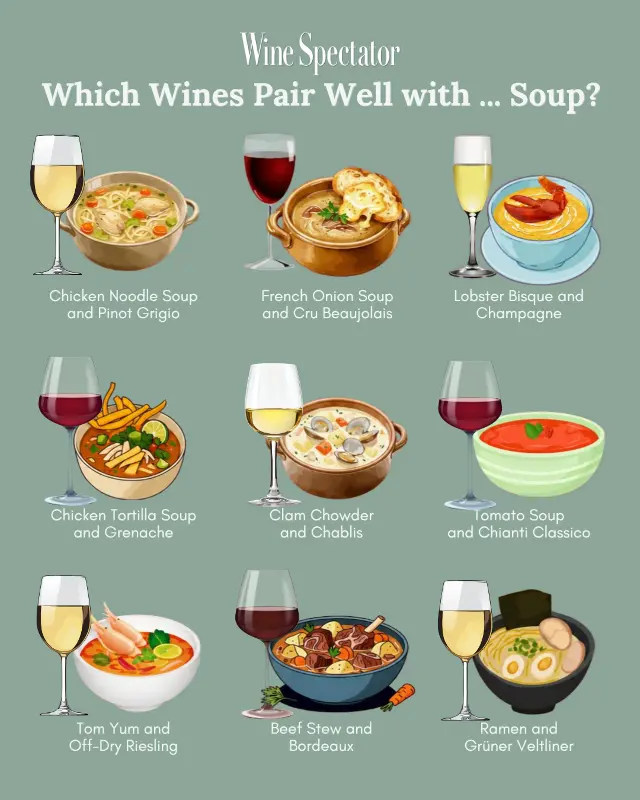
 Cozy Up With Soup And Wine Pairings For Fall
#Wine Pairing
1 ideas
Cozy Up With Soup And Wine Pairings For Fall
Get new #Wine Pairing ideas by email
Every Thursday: the week's best ideas, with the newest from #Wine Pairing.
Related tags
The Art and Guide of Wine Pairing
Wine pairing is the practice of combining food and wine in a way that enhances the flavors of both. Rather than following rigid rules, successful pairing is about creating a pleasant balance where neither the food nor the drink overpowers the other. Understanding how different elements interact helps you create harmonious dining experiences every time you gather around the table.
The foundation of pairing relies on the interplay of basic taste components: acidity, sweetness, salt, bitterness, and fat. Acidic wines cut through rich, fatty dishes, refreshing the palate between bites. Tannins, which come from grape skins and seeds, provide structure and bitterness that bind wonderfully with proteins in hearty meat dishes. Sweetness in wine can tame spicy heat, while salty foods make wines taste fruitier and less acidic.
Main Styles of Pairing
Complementary pairing involves matching similar characteristics in both the food and the wine. For example, pairing a delicate, citrus-forward white wine with a light fish dish highlights shared fresh, bright notes.
Read more
Contrasting pairing creates balance through opposition. A classic example is pairing a salty, pungent blue cheese with a sweet dessert wine. The saltiness tames the sweetness, while the sugar softens the sharp intensity of the cheese.
Regional pairing is a time-tested approach rooted in culinary history. Foods and wines that grow in the same region naturally evolve to complement one another. Think of Italian tomato-based pasta dishes served with local red wines that boast high acidity, which mirrors the acidity of the tomatoes.
Practical Tips for Beginners
Start simple by focusing on the weight and intensity of both the food and the wine. A light-bodied wine pairs best with lighter dishes like salads or white fish, whereas full-bodied wines stand up well to heavy, robust stews and roasted meats.
Do not fear experimentation, as personal taste ultimately dictates what works best. Pay attention to sauces and seasonings rather than just the main protein, because herbs, spices, and cooking methods often have a bigger impact on flavor than the base ingredient itself. Keep a few versatile bottles on hand, such as dry sparkling wines or moderate-reds with balanced acidity, which naturally adapt to a wide variety of everyday meals.
#Wine Pairing: frequently asked questions
How do I start with wine pairing if I know nothing about wine?
Begin with weight rather than labels: match a light dish with a light wine and a hearty dish with a fuller one, and you are already most of the way there. From that starting point, try one bottle across a couple of meals and notice where it sang and where it clashed. Personal preference matters more than any rulebook, so treat each meal as a small experiment.
What do I actually need to have on hand for everyday pairing?
You do not need a large collection, just a couple of flexible bottles that adapt to many dishes. A dry sparkling wine and a moderate red with balanced acidity will carry you through most casual meals. Keeping options rather than specialties means you can open something suitable without planning far ahead.
How do I choose a wine for a specific dish?
Look past the main ingredient and think about how it is cooked and seasoned, since sauces, herbs, and spices often shape the flavour more than the protein itself. Then decide whether you want the wine to echo those flavours or balance them, as with a sweet wine softening a sharp salty cheese. Acidity cuts through richness, while structure from grape skins holds up well to hearty meat dishes.
How should I care for and serve the wine so it tastes its best?
Store bottles away from heat and bright light and keep them lying down if they are closed with natural cork, so the seal stays sound. Serve whites and sparkling wines well chilled and fuller reds a touch cooler than room temperature, and open a bottle a little ahead of the meal to let it breathe. Once opened, reseal tightly and drink within a few days rather than letting it fade.
Any pairing ideas for a cosy autumn evening with soup?
Soup is a good excuse to match texture and warmth rather than rules, so a creamy bowl sits comfortably beside a crisp, refreshing white, while a hearty broth leans naturally toward a fuller red. Seasonal produce in the soup and a wine from the same growing region is an easy, reliable direction. It also gives you a reason to pour something a little more generous than a weekday glass.
What mistakes should I avoid when pairing food and wine?
The most common slip is letting one side dominate, which happens when a very bold wine meets a very delicate dish or the reverse. Another is judging the pairing by the protein alone and ignoring a punchy sauce or heavy seasoning that changes the whole picture. Finally, don't treat the pairing as fixed in advance, since how the dish actually turns out on the day should guide what you pour.
Videos come from YouTube and posts from Instagram; titles and summaries are our own. All rights belong to their creators.