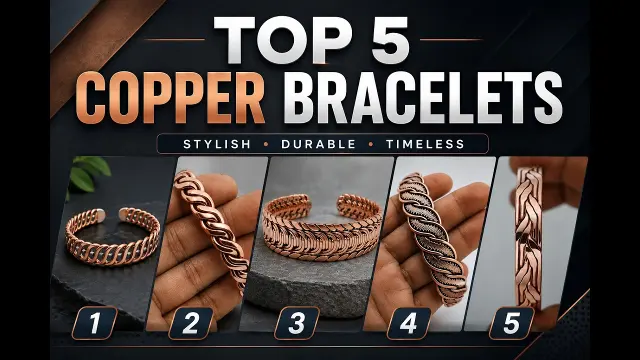
 Five Copper Wire Bracelets Step by Step Tutorial
#Wire Jewelry
1 ideas
Five Copper Wire Bracelets Step by Step Tutorial
Get new #Wire Jewelry ideas by email
Every Thursday: the week's best ideas, with the newest from #Wire Jewelry.
Related tags
Wire Jewelry Guide
Wire jewelry is jewelry made by shaping, twisting, wrapping, and linking metal wire into decorative forms. It can be simple and delicate or bold and sculptural, and it has been used for centuries in many cultures for both adornment and practical fastening. Because wire is versatile, it appears in rings, earrings, bracelets, necklaces, pendants, clasps, and hair ornaments.
What wire jewelry is
At its heart, wire jewelry is made from a flexible metal wire that is formed into structure and decoration. The wire may be left plain for a clean, modern look, or combined with beads, stones, shells, pearls, or charms. Some pieces rely on a single continuous line of wire, while others use several lengths woven together.
Wire jewelry is valued because it can be detailed without needing heavy tools or large amounts of material. It also allows for a wide range of styles, from rustic and handcrafted to fine and elegant.
Read more
Common styles and kinds
You’ll find wire jewelry in many forms:
- Simple wire bands and minimalist earrings
- Wrapped pendants and stone settings
- Braided or woven bracelets
- Wirework with beads for added color and texture
- Filigree-inspired designs with fine, airy lines
- Sculptural statement pieces with curves, loops, and coils
The look often depends on the thickness and finish of the wire. Thicker wire tends to feel sturdy and graphic, while thinner wire creates delicate detail.
Basic techniques
If you’re new to wire jewelry, a few core techniques are useful to learn first:
- Cutting wire cleanly
- Making loops and wrapped loops
- Twisting and coiling
- Simple wrapping around stones or beads
- Forming consistent shapes with pliers or a mandrel
- Smoothing sharp ends so the finished piece is comfortable to wear
Practice matters, because wire remembers bends. Small adjustments can change the whole shape, so it helps to work slowly and check your symmetry often.
What beginners should know
Start with wire that is easy to shape and forgiving of mistakes. Very soft wire is simpler to bend, but it may not hold its form as well as firmer wire. The right balance depends on the project. For practice, begin with small designs like rings, simple earrings, or wrapped pendants.
A few helpful tips:
- Make small test bends before committing to the final shape
- Use the right pliers for clean curves and neat loops
- Keep your wire ends tucked in so they do not scratch skin or snag clothing
- Plan the design before you cut, especially for symmetrical pieces
- Finish the piece carefully so it feels smooth and secure
Materials and care
Wire jewelry can be made from many metals, each with its own look and feel. Some wires shine brightly, while others have a warmer or darker tone. Whatever the material, storing pieces separately helps reduce tangling and scratches. Avoid bending finished jewelry repeatedly, since that can weaken the wire over time.
Wire jewelry is both craft and adornment: simple enough to learn as a beginner, yet open-ended enough to keep evolving as your skills grow.
Videos come from YouTube and posts from Instagram; titles and summaries are our own. All rights belong to their creators.