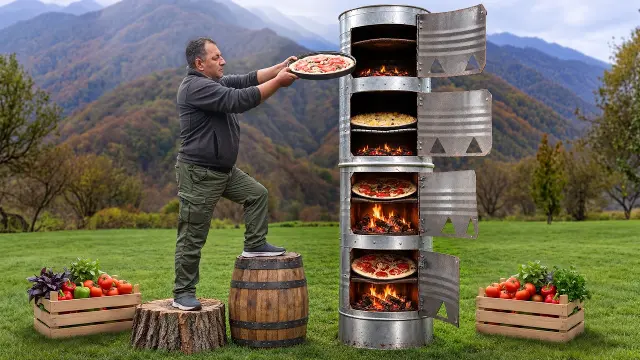
 Baking Rustic Pizzas in a Mountain Vertical Tower Oven
#Wood Fire
1 ideas
Baking Rustic Pizzas in a Mountain Vertical Tower Oven
Get new #Wood Fire ideas by email
Every Thursday: the week's best ideas, with the newest from #Wood Fire.
Related tags
Wood Fire Cooking and Baking
Wood fire cooking is one of the oldest ways to prepare food. It uses heat from burning wood, together with the coals and radiant warmth around it, to bake, roast, grill, and smoke food. Long before modern ovens and stovetops, people cooked this way in hearths, clay ovens, and open fires. Today, wood fire is still valued for its distinctive flavour, its strong heat, and the satisfying, hands-on rhythm it brings to cooking.
What wood fire is used for
A wood fire can be used in several ways. In an open fire, food may be cooked over flames or embers on skewers, grates, or in pans. In a wood-fired oven, heat is stored in the walls and floor, creating an even environment for bread, pizza, pastries, vegetables, and roasting. Some cooking relies on direct flame, while other foods do better beside the fire or in the retained heat after the flames have died down.
The result depends on the balance of flame, coal, and oven heat. Strong live fire gives high heat and quick cooking. Glowing embers create a steadier, gentler heat. A seasoned cook learns to use both.
Read more
Common styles and foods
Wood fire cooking appears in many traditions around the world. Some ovens are domed and enclosed, designed to hold heat for long periods. Others are more open and rustic, made for grilling and direct cooking.
Typical foods include:
- Pizza and flatbreads
- Rustic loaves and other breads
- Roasted vegetables
- Fish, meat, and poultry
- Skewers and grilled foods
- Fruit desserts and baked dishes
Each food needs a different approach. Pizza likes very high heat and a quick bake. Bread usually needs a more even, stable temperature. Roasting works best when the fire has settled and the heat is no longer too fierce.
Techniques to know
If you are new to wood fire cooking, start with control rather than speed. The main skill is understanding the fire itself. Let the wood burn down into clean, bright coals when you want a more even heat. Use dry wood, because damp wood smokes heavily and burns less efficiently. Build the fire gradually so the oven or hearth warms through properly.
A few practical habits help a lot:
- Preheat thoroughly before baking
- Move food closer to or farther from the heat as needed
- Rotate items so they cook evenly
- Keep a close eye on fast-cooking foods
- Use tools such as long-handled peels, tongs, and heatproof gloves
What beginners should keep in mind
Wood fire cooking rewards patience. Heat changes quickly, so it helps to watch the fire as carefully as the food. Different woods can behave differently, but what matters most is that the wood is suitable for cooking, dry, and free from treated materials. Food safety matters too, so cook meats and other perishables fully and keep raw ingredients handled separately.
It also helps to begin with forgiving recipes: vegetables, flatbreads, simple pizzas, or roasted potatoes. These teach you how the heat behaves without demanding perfect timing.
With practice, wood fire cooking becomes intuitive. You begin to read the fire, the oven, and the food together, and that is part of its enduring appeal.
Videos come from YouTube and posts from Instagram; titles and summaries are our own. All rights belong to their creators.