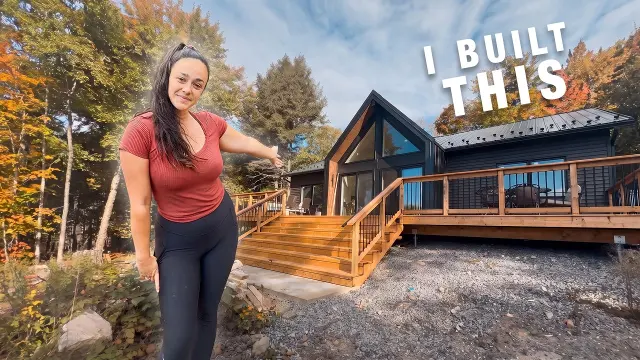
 Complete Off-Grid Home Build from Raw Forest Land
#Woodland Cabin
1 ideas
Complete Off-Grid Home Build from Raw Forest Land
Get new #Woodland Cabin ideas by email
Every Thursday: the week's best ideas, with the newest from #Woodland Cabin.
Related tags
Woodland Cabin: A Guide to Building and Living in the Woods
A woodland cabin is a small dwelling built in or beside a forest, usually from timber and usually with a simple, practical purpose: shelter, retreat, a place to work with your hands, or a base for time outdoors. The idea is old and widespread, but it carries a particular romance in northern Europe and North America, where cabins grew out of genuine necessity — a settler's first shelter, a farmer's summer dwelling, a hunter's camp — and only later became something people chose for pleasure.
Where the idea comes from
Log construction travelled with European settlers into forested regions where timber was plentiful and sawmills were far away. The technique is forgiving: logs are stacked horizontally, notched at the corners so they interlock, and the gaps filled with moss, clay, or a modern sealant. Elsewhere the same need produced different answers — timber frames clad in boards, turf-roofed cabins in treeless landscapes, and stilted huts in wet ground. What they share is a small footprint, local materials, and a shape that sheds weather.
Main approaches today
Read more
You will see three broad categories. The traditional hand-built cabin uses round or squared logs and is the slowest but most self-sufficient route. The kit or prefabricated cabin arrives in numbered panels and goes up quickly, which suits anyone without carpentry experience. Between them sit stick-built cabins on a conventional frame, which allow ordinary building methods with insulation to modern standards. Each can be off-grid or connected to services; the choice depends far more on the site than on the style.
What beginners should know
Start with the land, not the drawings. Check access — how materials and equipment will reach the plot in wet weather — and where water drains. A cabin on a slope needs proper footings, and a cabin in a hollow needs drainage it may never forgive you for skipping. Study local rules about what may be built where, and talk to neighbours who have already done it.
Build small. A modest cabin that is finished and warm beats an ambitious one that stalls. Design in storage from the start, because small spaces fail through clutter rather than lack of floor. Insulate the roof and floor as carefully as the walls, and think about how the building will breathe: timber construction depends on moisture moving through it rather than being trapped.
Living with the woods
A cabin asks something of its owner. Wood must be cut and seasoned well ahead of the fire season, water may need carrying or catching, and power is finite and worth understanding. Learn what grows around you, keep a clearing for light, and clear defensible space around the building where wildfire is a risk. Leave the trees that shade it and the trees that shelter it from wind.
Above all, let the place set the pace. The point of a woodland cabin is not to recreate a house among trees, but to accept a simpler arrangement — fewer things, more weather, and the quiet that comes with it.
#Woodland Cabin: frequently asked questions
How do I get started with a woodland cabin?
Begin with the plot rather than the plans: work out how materials and equipment can reach the site in bad weather, where water drains, and what the local rules allow you to build. Talking to people nearby who have already built in similar conditions saves a great deal of guesswork. Only then start sketching, and sketch something small enough to finish.
Which kind of woodland cabin should I choose?
The choice usually comes down to how much work you want to take on yourself: a hand-built log cabin is the slowest but most self-reliant route, a prefabricated kit goes up quickly with little carpentry experience, and a stick-built frame lets you use ordinary construction methods with modern insulation. Whether it is off-grid or connected to services matters far more than the style, and that decision belongs to the site, not the drawings.
What does a woodland cabin site need to have?
Good access and good drainage are the two things that decide whether a build goes smoothly, since a slope needs proper footings and a hollow needs drainage you will regret skipping. Look at how much light the clearing gets and which trees shelter the building from wind. It also helps to understand what grows around you before you start clearing anything.
How do you look after a woodland cabin once it is built?
Upkeep is mostly about wood, water and weather: firewood has to be cut and seasoned well ahead of the cold season, and water may mean carrying or catching your own. Timber buildings stay sound when moisture can move through them rather than being trapped, so keep an eye on seals, gaps and ventilation. Where wildfire is a concern, maintaining clear space around the structure is part of routine care.
What mistakes do first-time cabin builders make?
The most common one is designing too large, which leaves an unfinished shell instead of a warm, usable room. Another is treating storage as an afterthought, when in practice small cabins fail through clutter rather than lack of floor space. Skipping insulation in the roof and floor, or trapping damp inside the walls, causes problems that are expensive to undo later.
Can a woodland cabin be lived in through the year?
It can, but it asks something of the owner: a finite power supply has to be understood, water often has to be carried or collected, and heating depends on wood that was prepared long in advance. Insulation and ventilation need to be taken seriously if the cabin is to stay comfortable in cold weather. Many people find the simpler arrangement is the point rather than a compromise.
Videos come from YouTube and posts from Instagram; titles and summaries are our own. All rights belong to their creators.