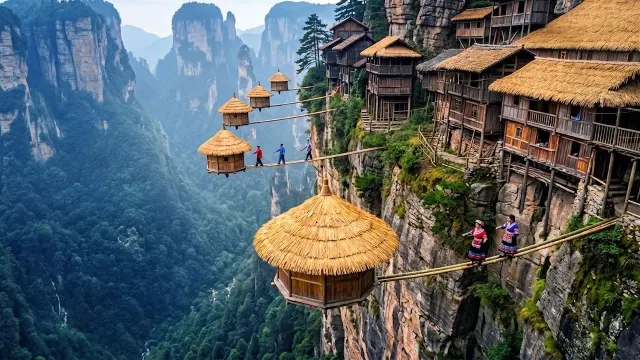
 Thirty Most Dangerous Hanging Structures Around the World
#World Wonders
1 ideas
Thirty Most Dangerous Hanging Structures Around the World
Get new #World Wonders ideas by email
Every Thursday: the week's best ideas, with the newest from #World Wonders.
Related tags
World Wonders: Iconic Places Worth Knowing
What world wonders are
World wonders are places, structures, or natural landmarks that stand out for their beauty, scale, history, or human achievement. Some are built by people, like temples, statues, and ancient cities. Others are shaped by nature, such as mountains, reefs, waterfalls, and caves. What they share is a lasting ability to inspire awe.
The idea of “wonders of the world” goes back to ancient writers who listed remarkable monuments worth seeing. Over time, the phrase has expanded to include not only famous historic sites, but also natural landscapes and cultural treasures from many parts of the globe. Today, the term is often used more broadly, but it still carries the same meaning: something extraordinary enough to be remembered.
Different kinds of wonders
Read more
World wonders can be grouped in a few broad ways:
- Ancient wonders, such as temples, tombs, and ruins from early civilizations
- Architectural wonders, including bridges, cathedrals, palaces, and monuments
- Natural wonders, such as canyons, islands, waterfalls, glaciers, and reefs
- Cultural wonders, like historic towns, sacred places, and landscapes shaped by long traditions
Some wonders are admired for engineering skill. Others are valued for spiritual meaning, artistic detail, or the way they seem to rise naturally out of their surroundings.
What makes a place a wonder
A wonder is not only about size or fame. Many places become wonders because they combine several qualities at once: striking design, deep history, rare natural features, or a powerful sense of place. A site may be simple in appearance yet unforgettable because of how it was made or what it represents.
When people talk about world wonders, they often mean places that reward slow looking. Details matter: stone carving, light on water, the shape of a horizon, or the way an old structure has endured through time.
How to appreciate them
If you are visiting a wonder, the best approach is often to slow down and observe. Learn a little about its background, but leave space for first impressions too. Notice the materials, the setting, and the scale. A place that looks beautiful in a photograph may feel completely different in person because of sound, weather, crowd levels, or distance.
A few practical habits help you enjoy these places more fully:
- Arrive with enough time to look around without rushing
- Wear comfortable shoes, especially at large sites or uneven ground
- Respect local rules, sacred spaces, and protected environments
- Stay on marked paths where needed to help preserve fragile places
- Keep your expectations open; wonders often reveal themselves gradually
Why they matter
World wonders help people connect with history, geography, and imagination. They remind you that human beings have always tried to build, shape, and protect remarkable places. Whether a wonder is ancient or natural, grand or quiet, it offers a glimpse of what is possible when skill, time, and landscape come together.
#World Wonders: frequently asked questions
What exactly counts as a world wonder?
It is a place or structure that stands out for its beauty, scale, history, or the skill behind it. That includes things people built, like temples and bridges, and things nature shaped, like canyons and reefs. The common thread is that it inspires awe long after you have left.
How do I get started exploring world wonders?
Begin with what already draws your eye, whether that is old stone architecture, dramatic landscapes, or quiet sacred places, and read a little about a few of them. Then pick somewhere reachable and give yourself unhurried time there rather than trying to tick off a list. Curiosity and patience matter more than a grand itinerary.
Which kind of wonder should I choose to visit first?
Think about what you enjoy looking at: ruins and tombs suit people drawn to history, while canyons, waterfalls, and reefs reward those who like open landscapes. Cultural wonders, such as historic towns and sacred sites, are a good middle ground because they combine setting with human story. Choose the quality you respond to, not the one that sounds most impressive.
What should I bring and how should I prepare for a visit?
Comfortable shoes and enough time are the two things that matter most, since many sites are large or uneven underfoot. Read a little background beforehand so details make sense, but leave room for your own first impression. Respect local rules, sacred spaces, and protected ground, and stay on marked paths where they exist.
How can I make the most of a famous site that is crowded?
Expect the place to feel different from its photographs, because sound, weather, and the number of people change everything. Arriving with patience and looking slowly at small details, like carving or the way light falls, often gives more than rushing to the iconic viewpoint. Treating the site as something to preserve, not just to see, makes the visit better for everyone.
What are common mistakes people make when visiting wonders?
The usual ones are over-scheduling, hurrying through, and expecting a single perfect view instead of letting the place reveal itself gradually. Others include ignoring local customs or wandering off fragile paths. It also helps to check what a site is really like in person, since scale and access vary a lot.
Videos come from YouTube and posts from Instagram; titles and summaries are our own. All rights belong to their creators.