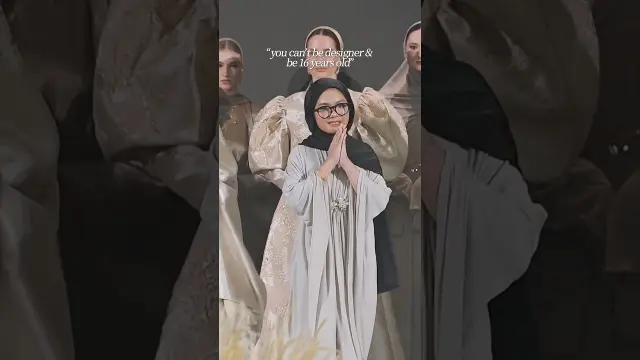
 16-Year-Old Designer Showcases Stunning Runway Collection
#Young Designer
1 ideas
16-Year-Old Designer Showcases Stunning Runway Collection
Get new #Young Designer ideas by email
Every Thursday: the week's best ideas, with the newest from #Young Designer.
Related tags
Young Designers and the Start of a Creative Career
What a young designer is
A young designer is someone at the beginning of a creative career in fashion, textiles, interiors, graphics, product design, or another design field. The phrase can describe someone who is young in age, but it more often means a designer who is still developing a personal style, technical skill, and professional confidence.
Young designers are often known for fresh ideas, curiosity, and a willingness to experiment. They may work with limited resources, which can encourage resourcefulness and a strong personal point of view. In fashion especially, a young designer might create clothing, accessories, or styling concepts that show a new way of thinking about shape, texture, colour, or wearability.
Where the idea comes from
Read more
The idea of the young designer is closely tied to the wider history of apprenticeships, art schools, and studio training. For a long time, designers learned through practical work, observation, and mentorship. Today, many begin with formal study, while others learn through personal projects, online tools, or hands-on making.
What matters most is not age alone, but stage of development. A young designer is usually someone who is still building a portfolio, learning how to present work, and understanding how ideas move from sketch to finished piece.
Common kinds and styles
Young designers can work in many different ways. Some focus on classic, clean lines and careful construction. Others prefer bold shapes, unusual materials, or highly personal storytelling. In fashion, some lean toward elegant tailoring, while others explore draping, embellishment, knitwear, upcycling, or conceptual design.
Across design fields, you may see:
- Minimal styles with simple forms and subtle details
- Decorative styles that use colour, pattern, or surface texture
- Experimental work that challenges familiar shapes or functions
- Sustainable approaches that reuse materials or reduce waste
- Cultural influences that reflect heritage, memory, or place
What beginners should know
If you are starting out, it helps to understand that design is both creative and practical. Good ideas matter, but so do planning, editing, and finishing. A strong concept becomes more convincing when it is made carefully.
Useful habits for a young designer include:
- Keep sketching, even rough ideas
- Save references, but do not copy them directly
- Learn basic construction, materials, and proportion
- Make small tests before committing to a full piece
- Ask for feedback and revise your work
- Build a portfolio that shows process as well as results
It is also important to accept that early work may feel uneven. That is part of learning. Many designers improve most when they make, review, and remake.
Practical tips for growing your work
Try to develop a clear point of view. Ask yourself what you like to make, what problems you enjoy solving, and what themes return in your work. A personal voice often becomes stronger with repetition and reflection.
If you work in fashion, pay attention to fit, movement, fabric behaviour, and finishing. If you work in another design area, think about function, comfort, usability, and durability. In every field, a design becomes stronger when it balances imagination with purpose.
Above all, stay curious. A young designer grows by looking closely, making regularly, and learning from each project.
#Young Designer: frequently asked questions
How do I start out as a young designer?
Start by making things regularly, even small experiments, rather than waiting for a perfect idea or the right equipment. Sketch rough concepts, collect references you genuinely respond to, and finish a few simple pieces so you learn how an idea moves from drawing to object. Curiosity and steady practice matter more at this stage than polish.
Do I need formal design training to be taken seriously?
Not necessarily — designers arrive through art school, apprenticeships, studio work, online learning, and self-directed projects. What counts is whether you can show developed skill, a clear point of view, and a portfolio that reveals how you think. Formal study can help with structure and feedback, but it is one route among several.
Which style or specialism should a young designer choose?
Choose the one you keep returning to when nobody is assigning you work, whether that is clean minimal tailoring, decorative surface work, experimental shapes, or reused materials. Your voice usually becomes clearer through repetition, so pick something you can explore deeply rather than something that simply looks current. You can widen your range later.
How should I look after the pieces I make?
Treat care as part of the design: understand how your fabric or material behaves, test it before committing to a full piece, and finish edges and closures properly so the work holds up in use. Store and clean pieces according to what they are made of, and note anything delicate for whoever wears or uses them.
What mistakes do beginners most often make?
Copying a reference too closely instead of translating it, and rushing to a final piece without small tests first. Others are skipping the unglamorous parts — planning, editing, construction, finishing — or hiding process from a portfolio that only shows final results. Uneven early work is normal; designers improve fastest when they make, review honestly, and remake.
Videos come from YouTube and posts from Instagram; titles and summaries are our own. All rights belong to their creators.