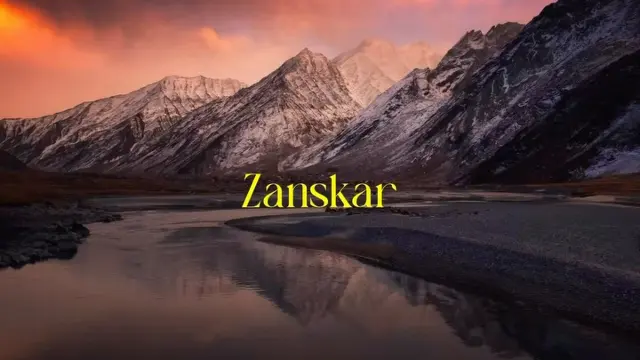
 Journey Through the Landscapes of Zanskar
#Zanskar
1 ideas
Journey Through the Landscapes of Zanskar
Get new #Zanskar ideas by email
Every Thursday: the week's best ideas, with the newest from #Zanskar.
Related tags
Zanskar: A Guide to the High Valleys of Ladakh
Zanskar is a high mountain region in the Indian Himalayas, tucked into the far north-west of the country within the union territory of Ladakh. It is less a single place than a network of valleys enclosed by steep ranges, linked to the rest of the world by a handful of high passes and, for much of the year, by a frozen river. That isolation has shaped almost everything about it: its architecture, its farming, its language and its stubbornly distinct culture.
A land shaped by water and altitude
The region's two main rivers, the Stod and the Lungnak, flow from opposite directions and meet near Padum, the largest settlement, before the combined Zanskar River cuts its way out through a deep gorge towards the Indus. Villages sit on the valley floor wherever there is flat ground and a reliable stream, surrounded by fields of barley, buckwheat and peas watered by small irrigation channels. Above them rise bare slopes, and above those, snow.
Because the passes close with snow, Zanskar has traditionally looked inward for much of the year. People lived from what the short growing season gave them, stored carefully for winter, and travelled long distances on foot or with pack animals when the way was open.
Read more
Tibetan Buddhist heritage
Most Zanskaris practise Tibetan Buddhism, and the landscape is marked by it. Monasteries such as Karsha and Stongde stand on ridges above the valley floor, while Phugtal clings to a cliff face and is reached only on foot. Many houses carry painted prayer flags, small shrines and carved stones, and the yearly round of festivals brings masked dances and long ceremonies to village courtyards. Islam and the Bon tradition also have a presence in the region, and the everyday courtesy between communities is part of what visitors notice.
The Zanskari language is a Tibetic one, closely related to Ladakhi, though many people also speak Urdu, Hindi or English to varying degrees.
Walking the valleys
Zanskar is above all walking country. The classic trans-Himalayan routes cross from Ladakh over high passes in summer, while the famous winter route follows the frozen river itself, when the gorge becomes a corridor of ice. Both are serious undertakings: the summer crossings are long and remote, and the winter walk requires a guide, proper equipment and a good deal of experience.
Shorter walks between villages are rewarding too, and gentler.
What to know before you go
- Acclimatise gradually. Altitude affects everyone differently; ascend slowly, rest when you feel unwell, and do not push on if symptoms worsen.
- Travel with a local guide. Routes are unmarked, weather shifts quickly, and local knowledge matters.
- Carry cash, water purification, sun protection and warm layers. Facilities are few and the sun is fierce at height.
- Respect monastery etiquette: walk clockwise around shrines and stupas, ask before photographing people or interiors, and dress modestly.
- Travel in small numbers and buy locally where you can; the region's economy depends on visitors who tread lightly.
Go for the silence as much as the summits.
#Zanskar: frequently asked questions
How do I start planning a trip to Zanskar?
Begin with the journey into the region rather than the region itself, since access depends on high passes that open and close with the seasons. Decide whether you want to arrive overland or on foot, then build the rest of the trip around that corridor. Booking a local guide early is wise, as routes are unmarked and weather can change plans quickly.
What do I actually need to bring?
Cash, water purification, strong sun protection and warm layers cover most of what the region demands, because facilities are sparse and the sun is harsh at altitude. Good boots and a proper waterproof shell matter more than anything fancy. Carry less than you think, since you will be moving slowly and often on foot.
Which route or kind of trip should I choose?
Choose between the long trans-Himalayan crossings and the gentler walks that link villages, depending on your fitness and experience. The pass routes are remote and demanding, while the frozen-river corridor is a serious winter undertaking that needs a guide, correct equipment and real experience. Village-to-village walking gives you the landscape and the culture with far less commitment.
How should I behave around monasteries and villages?
Walk clockwise around shrines and stupas, ask before photographing people or interiors, and dress modestly. Small courtesies go a long way in a place where communities live closely together and visitors are noticed. Buying locally and travelling in small numbers helps the economy that makes your visit possible.
What is a good way to experience Zanskar if I am not a mountaineer?
Base yourself in a valley settlement and take short walks out to the surrounding villages and monasteries. That gives you the fields, the architecture and the ridgeline buildings without the exposure of a high pass. Going for the silence is a perfectly good reason to be there.
What mistakes do first-time visitors make?
The most common is trying to do too much too soon, without letting the body adjust to the altitude. Others are walking without a guide, underestimating how fast the weather turns, and treating the monasteries as photo backdrops rather than places of worship. Slow down, rest when you feel unwell, and do not push on if symptoms get worse.
Videos come from YouTube and posts from Instagram; titles and summaries are our own. All rights belong to their creators.