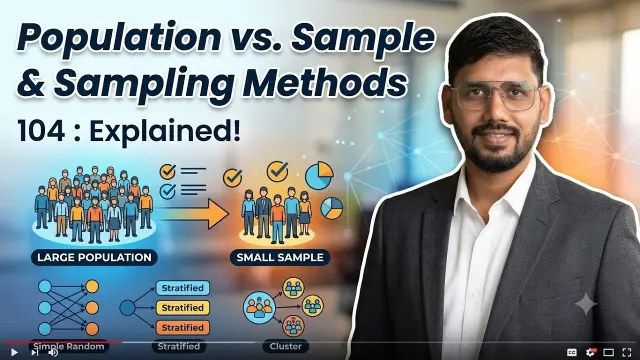
Population versus Sample and Sampling Methods
Learn how researchers predict outcomes and test treatments by understanding population subsets and choosing the right sampling method.
YouTube · Inosphy · 1 October 2026 Watch on YouTube
Tried this idea? Show how yours turned out.
I made thisHow to do it
Step by step
- Define the population — the entire group you want to draw conclusions about.
- Decide on the sample — the specific group you will actually collect data from.
- Check the sample for bias before collecting anything.
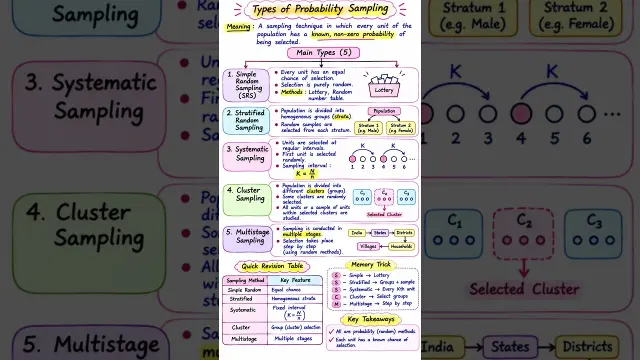
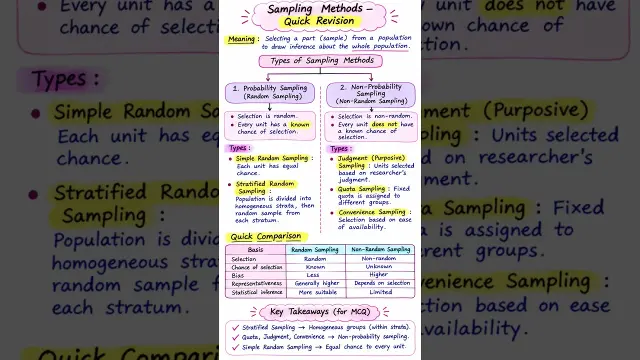
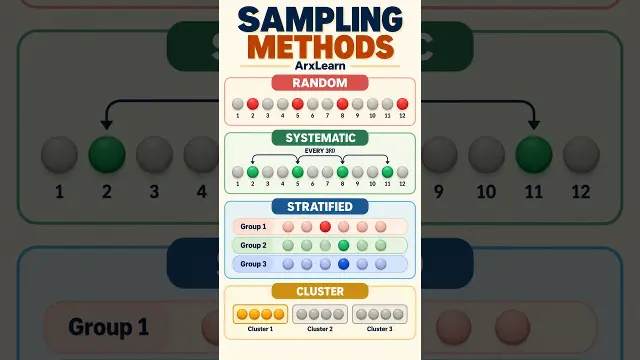
- Pick a probability method (simple random, stratified, systematic or cluster) so every member has a known, non-zero chance of being selected.
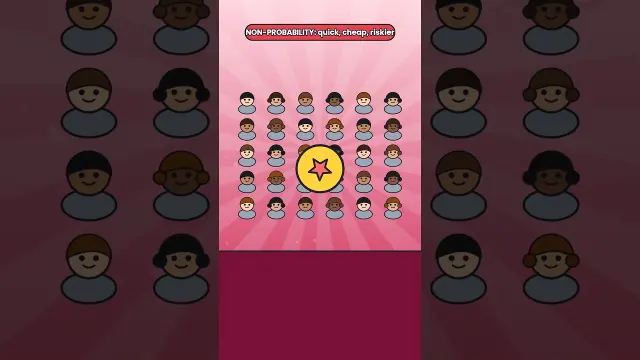
- Or pick a non-probability method (convenience, voluntary, purposive, snowball) when speed and cost matter more than representativeness.
- Match the method to your question and your constraints.
Tips
- You rarely need to survey everyone — a well-chosen sample stands in for the population.
- Probability sampling reduces bias because selection is random, not decided by the researcher.
- Non-probability sampling is quicker and cheaper, but carries a higher risk of sampling bias.
Written by Tagrazzi from the original's description and photo.
The title and summary are written by Tagrazzi; the video belongs to its creator and plays from YouTube.





Comments (0)
No comments yet. Be the first to comment.
Sign in to write a comment.