
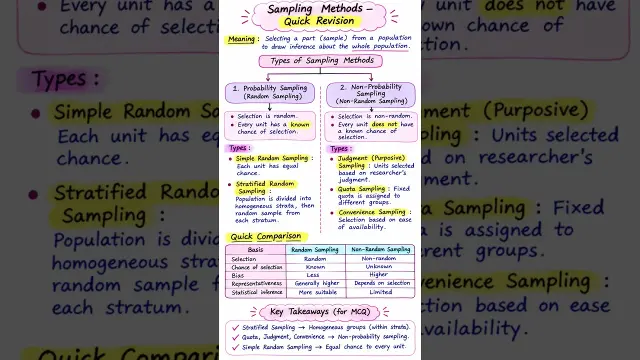
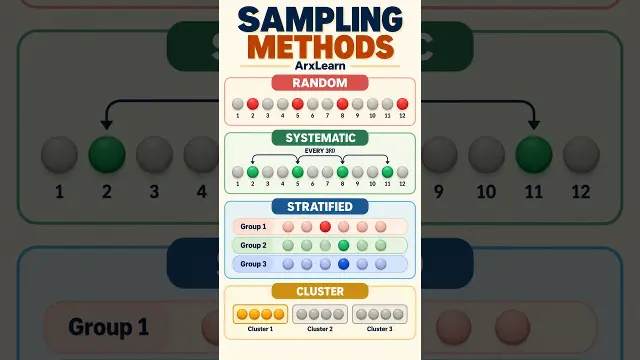
Simple Random Sampling Explained: Steps, Benefits and Limits
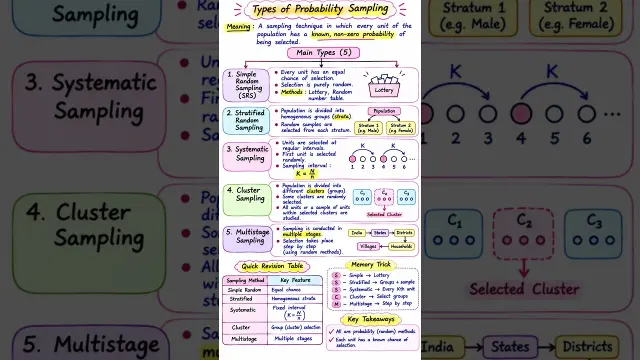
Explains equal-chance selection, how to draw a sample with a random number generator, why it reduces bias, and when stratified sampling fits better.
Instagram · 8 August 2025 View on Instagram
Tried this idea? Show how yours turned out.
I made this#SimpleRandomSampling #ResearchTips #Statistics #SamplingMethods #StudySmart #PhDLife #AcademicResearch #DataScience #researchdesign
How to do it
What you need
- A clearly defined population
- A sampling frame (list of the population)
- Numbers assigned to each member
- A random number generator
- A way to record the collected data
Step by step
- Define the population you want to study.
- Create a sampling frame by listing every member of that population.
- Assign a number to each member on the frame.
- Use a random number generator to select the sample from those numbers.
- Collect data from the members who were selected.
Tips
- Every member of the frame should have an equal chance of being picked, which is what keeps the selection unbiased.
- Keep the sampling frame complete and up to date — anyone missing from the list can never be selected.
- If your population falls into clear subgroups you want represented, stratified sampling may fit better than a simple random draw.
Written by Tagrazzi from the original's description and photo.
The title and summary are written by Tagrazzi; the post belongs to its creator and plays from Instagram.






Comments (0)
No comments yet. Be the first to comment.
Sign in to write a comment.