
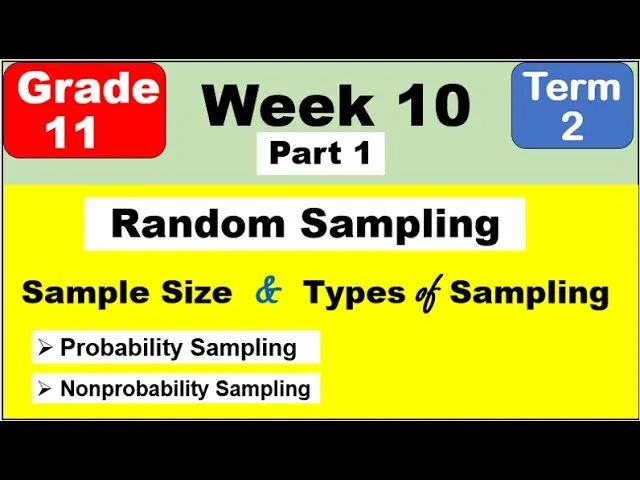
How to Determine Sample Size in Research
Learn how to determine sample sizes based on probability and non-probability sampling techniques for academic research.
YouTube · olajire shukurat · 12 April 2026 Watch on YouTube
Tried this idea? Show how yours turned out.
I made this#ResearchMethodology #SampleSize #ThesisWriting #AcademicWriting #QuantitativeResearch #QualitativeResearch #DissertationTips #StudentResearch
How to do it
Step by step
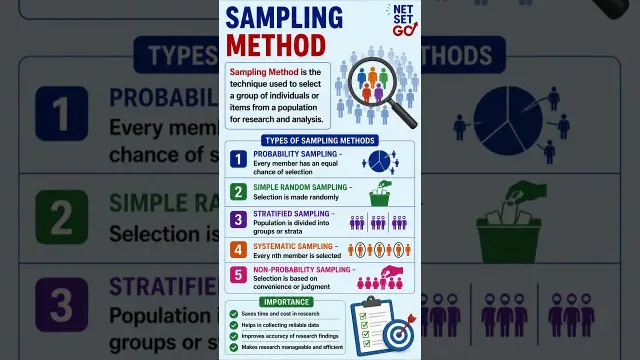
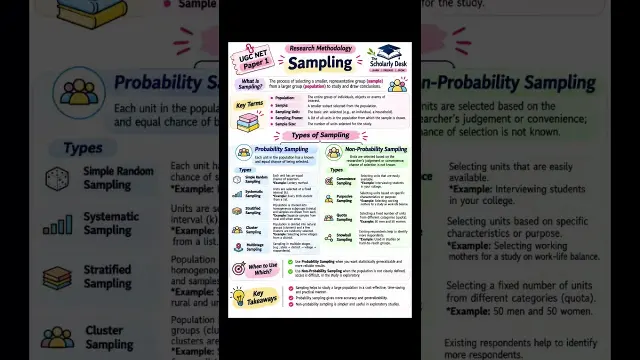
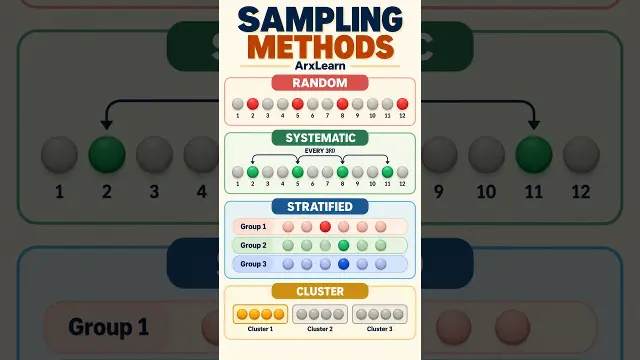
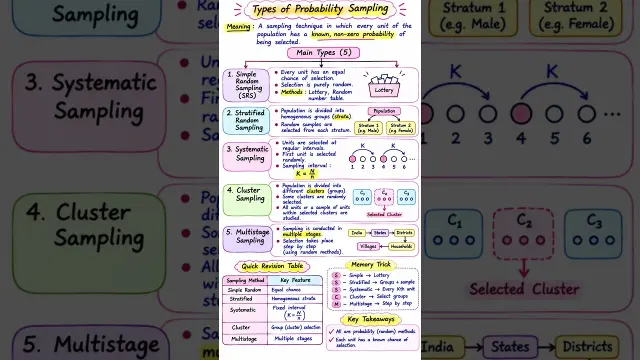
- Identify which sampling technique your study uses—probability or non-probability.
- For probability sampling, apply a statistical formula such as Yamane's formula to calculate the size.
- For non-probability sampling, base the size on saturation and your own judgment.
- Match the approach to your research type: formula-driven for quantitative work, saturation-driven for qualitative work.
- State and justify the chosen sample size in your methodology chapter.
Tips
- Pick the sample size method after you've settled your sampling technique—the technique decides whether a formula even applies.
- Formulas like Yamane's are for probability sampling; using them for non-probability samples doesn't fit.
- In qualitative studies, plan to keep collecting until new data stops adding anything new (saturation) rather than fixing a number upfront.
Written by Tagrazzi from the original's description and photo.
The title and summary are written by Tagrazzi; the video belongs to its creator and plays from YouTube.





Comments (0)
No comments yet. Be the first to comment.
Sign in to write a comment.