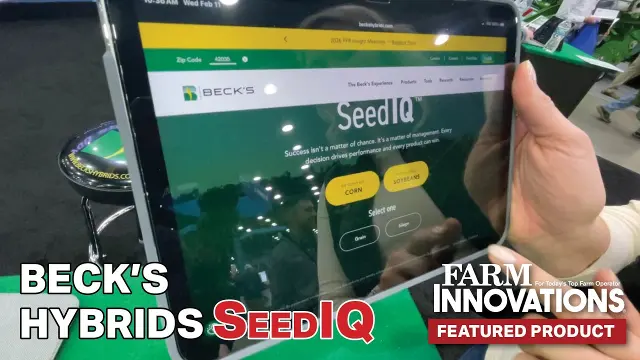
 SeedIQ Platform Delivers Practical Farm Research Insights
#Agricultural Technology
1 ideas
SeedIQ Platform Delivers Practical Farm Research Insights
Get new #Agricultural Technology ideas by email
Every Thursday: the week's best ideas, with the newest from #Agricultural Technology.
Related tags
Agricultural Technology: A Guide to Farming Innovation
Agricultural technology is the broad set of tools, machines, sensors and software used to grow crops and raise animals with more information and less guesswork. It sits where agronomy meets engineering and computing: the same field, the same soil, the same weather, observed and managed in finer detail than before. The aim is rarely novelty for its own sake. It is steadier yields, kinder use of water and inputs, less drudgery and better records of what actually happened in a season.
Where it comes from
Farming has always been a technical craft, and every generation has added to it. Mechanisation replaced much hand labour; plant breeding and soil science changed what could be grown and how; irrigation schemes moved water to where it was needed. What is newer is the cheapness of sensing and computing, which pushed measurement down from the whole farm to the single row or the single animal. Satellite positioning made guided machinery practical, and connected devices made it possible to watch a field or a herd remotely. Much of today's agricultural technology is a refinement of older ideas rather than a break from them.
The main kinds
Read more
- Precision agriculture: positioning and section control on tractors and sprayers, so seed, fertiliser and sprays go only where they are wanted.
- Sensing and remote observation: soil moisture probes, weather stations, yield monitors, and imagery from drones or satellites used to spot variation across a field.
- Farm software: record keeping, field mapping and planning tools that hold a season's history in one place.
- Irrigation and environment control: scheduling and automation in open fields and in greenhouses, where light, heat and humidity can be managed closely.
- Livestock technology: identification, activity and health monitoring, and automated feeding or milking.
- Robotics: weeding, planting and harvesting machines, most established in horticulture and other high-value crops.
- Data and connectivity: the networks and standards that let all of the above talk to each other and to you.
What beginners should know
Start from a problem, not a device. Decide what you want to improve — water use, fuel, labour hours, record keeping, a recurring crop failure — and only then look at what might help. Test on a small area before committing a whole farm. Rural connectivity and power are frequent limits, so check them early. Ask how a system exports your data, whether it works with your existing machinery, and who repairs it when it fails. Training matters as much as the purchase; a tool nobody understands quietly stops being used.
Keep your own records alongside the software, and treat vendor claims with the same scepticism you would give any equipment. Local advisers, extension services and other growers are usually the most reliable guide to what works in your soil and climate.
Used patiently, agricultural technology is less about chasing the newest thing than about seeing your land more clearly and making each decision a little better informed than the last.
#Agricultural Technology: frequently asked questions
How do I get started with agricultural technology without wasting money?
Begin with a specific problem you want to solve, such as water use, labour hours, a recurring crop failure or messy records, rather than with a gadget you saw advertised. Try the chosen tool on a small area first and judge it against your own notes over a season before spreading it across the whole holding.
What do I need before bringing sensors or farm software onto my land?
Check the basics first: reliable power, some form of connectivity, and machinery that can talk to whatever you buy. You should also know how the system exports your data, who repairs it when it fails, and who on the farm will actually be trained to use it.
Which kind of agricultural technology is right for my farm?
It depends on what you grow or raise and where your time and inputs are being lost. Precision guidance and section control suit broadacre field work, sensing and scheduling suit irrigation and greenhouses, and monitoring or automated feeding suits livestock, while robotics tends to pay off first in high-value horticulture.
How do I keep these tools working well over time?
Treat them like any other piece of equipment: check sensors and connections regularly, keep the software updated, and keep your own written records alongside the digital ones. Training is the part most often skipped, and a tool nobody understands quietly stops being used.
What mistakes do beginners make most often?
Buying a device before defining the problem, testing on the whole farm at once, and trusting vendor claims without scepticism are the common ones. Ignoring power and connectivity limits, or failing to ask about data export and repairs, also catches people out later.
Where can I get trustworthy advice about what will work here?
Local advisers, extension services and other growers in similar soil and climate are usually the most reliable guides. Their experience of what survived a bad season tells you more than a specification sheet does.
Videos come from YouTube and posts from Instagram; titles and summaries are our own. All rights belong to their creators.