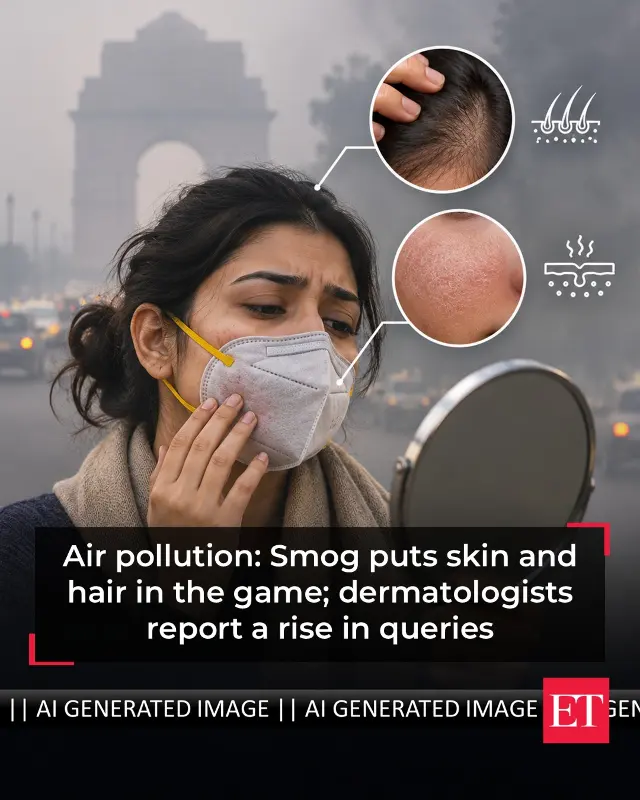
 Delhi Smog Drives Rise in Skin and Hair Complaints at Clinics
#Air Pollution
1 ideas
Delhi Smog Drives Rise in Skin and Hair Complaints at Clinics
Get new #Air Pollution ideas by email
Every Thursday: the week's best ideas, with the newest from #Air Pollution.
Related tags
Air Pollution: Understanding the Air Around Us
The air around you is rarely just air. Alongside nitrogen, oxygen and water vapour, it carries tiny solid particles and gases that come from fires, engines, factories, dust and everyday chemistry. When those extra ingredients build up to levels that affect visibility, health or the environment, we call it air pollution. It is not a modern invention — smoke-filled cities were described long before cars existed — but the scale and mix have changed with industry, traffic and the way we heat and cool our homes.
What is actually in the air
Air pollution is usually discussed in two families. The first is particulate matter: microscopic solid or liquid droplets, from soot and road dust to fine particles small enough to travel deep into the lungs. The second is gases, such as nitrogen oxides from combustion, sulphur dioxide from burning fuels, carbon monoxide, ozone formed when sunlight reacts with other pollutants, and volatile organic compounds released by paints, solvents and cleaning products.
Pollution has two settings. Outdoor pollution gathers where traffic, construction and industry concentrate, and weather decides how long it lingers: still, sunny days trap it, wind and rain disperse it. Indoor pollution is often overlooked and comes from cooking smoke, candles, wood burners, damp, dust mites, pet hair and the chemicals in household products. In many homes, the air inside is more polluted than the air outside.
Read more
Why it matters
Breathing polluted air is a burden on the body, particularly for the lungs, heart and eyes. Some people are more sensitive: children, older adults, pregnant women and anyone with an existing respiratory or heart condition. For skin and hair, polluted air can leave a dulling film and contribute to irritation, which is why cleansing at the end of the day matters. This is not a reason for alarm but for awareness — small, steady habits do a lot.
Everyday habits that help
- Check the air quality index for your area before planning a run or a long walk, and shift strenuous exercise to cleaner hours or indoor spaces when levels are high.
- Ventilate when cooking, and use an extractor hood or an open window; avoid burning candles and incense in small closed rooms.
- Keep windows closed on high-pollution days and during rush hour, then air the rooms when the air is cleaner.
- Dust and vacuum regularly with a damp cloth, and wash bedding often to keep indoor allergens down.
- Choose walking, cycling and public transport where it is safe to do so, and avoid idling your engine.
- Care for houseplants and keep filters in ventilation systems clean; a well-maintained home breathes better.
- On smoky or dusty days, a close-fitting mask worn properly can help, and a scarf over the nose is better than nothing.
None of these solve the problem alone, but together they shape the air you actually spend your days in.
#Air Pollution: frequently asked questions
How can I tell whether the air inside my own home is polluted?
You often can't see it, because the usual signs are subtle: stale smells, condensation on windows, dust settling quickly on surfaces, or a stuffy feeling in closed rooms. Cooking smoke, candles, wood burners, damp and household products are common indoor sources, and indoor air is frequently worse than outdoor air. Watching how a room feels and smells after cooking or cleaning is a practical first check.
What should I do on a high-pollution or smoky day before going out?
Look at the air quality index for your area first and let it decide the plan rather than the weather. Move a run or long walk to a cleaner time of day, keep windows shut during rush hour, and choose an indoor space if levels stay high. A close-fitting mask worn properly helps on smoky or dusty days, and a scarf over the nose is better than nothing.
Which kind of mask actually helps against polluted air?
What matters most is the fit, not the look: a mask that seals closely around the nose and cheeks filters far better than a loose one, because air takes the easiest path around the edges. Worn properly and kept clean, it can reduce what you breathe in on smoky or dusty days. It is a short-term measure rather than a substitute for cleaner air overall.
How should I care for my skin and hair after a day in polluted air?
Polluted air leaves a dulling film on skin and hair and can contribute to irritation, so cleansing at the end of the day is the habit that matters most. Wash your face gently rather than scrubbing, and shampoo regularly so particles don't sit in the hair. This is about awareness and steady routines, not dramatic measures.
What are the most common mistakes people make when trying to keep indoor air clean?
The usual ones are burning candles or incense in small closed rooms, cooking without an extractor hood or open window, and never cleaning filters in ventilation systems. Another is keeping windows sealed all the time, when the better approach is to close them on high-pollution days and air rooms out when the air outside is cleaner. Dusting with a dry cloth also just moves particles back into the air, so a damp cloth works better.
What are simple ways to start improving the air at home without a big project?
Begin with the routines you already repeat daily: ventilate while cooking, dust and vacuum with a damp cloth, wash bedding often, and care for houseplants. Clean filters and an extractor hood do quiet, constant work, and choosing to walk, cycle or take public transport cuts what goes into the air outside. None of these fixes everything alone, but together they shape the air you actually spend your days in.
Videos come from YouTube and posts from Instagram; titles and summaries are our own. All rights belong to their creators.