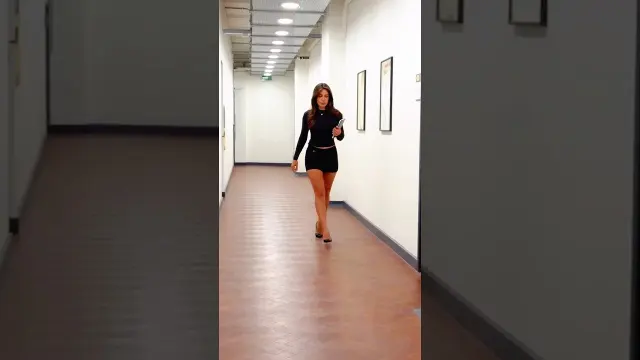
 All-Black Office Outfit for Cold-Weather Presentation Days
#All-Black Look
1 ideas
All-Black Office Outfit for Cold-Weather Presentation Days
Get new #All-Black Look ideas by email
Every Thursday: the week's best ideas, with the newest from #All-Black Look.
Related tags
All-Black Look: How to Wear Black Head to Toe
Black head to toe is one of the few outfits that needs no explanation. It works in an office, at a funeral and at a party, and it asks almost nothing of you in the morning. That ease is exactly why it is worth understanding a little better. An all-black look can read as elegant, severe, artistic or simply unfinished, and the difference rarely comes down to the clothes themselves.
Where it comes from
Black has carried strong meanings for centuries. In much of Europe it was the colour of mourning, and also of formality: courts and merchants used it to signal seriousness and expense, because a deep, even black dye was costly to produce and hard to keep. Religious orders wore it as a sign of humility. Later, black became the colour of modern professional life, and of subcultures that wanted to stand apart from it. The same shade has meant authority and rebellion, grief and glamour, which is part of why it never goes out of fashion.
Why it works
Read more
Black absorbs light rather than reflecting it, so it flattens detail and emphasises silhouette. A group of different black garments reads as one continuous shape, which makes you look taller and more coordinated. It also recedes: attention goes to your face, your posture and whatever you are holding or wearing in another colour. That is useful, and it is also the trap. When everything is the same tone, nothing in the outfit explains itself.
Texture carries the look
The single most common reason an all-black outfit looks flat is that every piece has the same finish. Mix them deliberately:
- Pair matte with sheen: wool with silk, cotton with leather.
- Use knitwear for softness and structure for edge.
- Let one element be visibly heavier, like a coat or boots.
- Add a second, near-black tone such as charcoal or a deep brown to give the eye somewhere to rest.
Shape and proportion
Because colour no longer separates top from bottom, the seams do. Define the waist, or deliberately don't, but decide. A tucked shirt, a belted jacket or a cropped knit tells the eye where the body goes. Volume on volume can be striking, but it needs a clear shape somewhere: a narrow ankle, a defined shoulder, a longer line.
Practical notes
Black cloth shows lint, dust and pet hair more than mid-tones, so keep a roller nearby. Cotton and jersey fade to a soft grey over many washes; turn them inside out, wash cool and dry away from strong sun to slow it down. Black shoes scuff visibly, so a cloth and a little polish go a long way.
A starting point
If you are new to it, begin with pieces you already trust: dark trousers, a black knit, a coat. Then change one thing at a time, and let texture do the work that colour usually does.
#All-Black Look: frequently asked questions
How do I start building an all-black look if I've never really worn one?
Begin with the black pieces you already reach for and trust, such as dark trousers, a plain knit and a coat, rather than buying a whole new wardrobe. Wear them together once, then change a single element at a time and notice what the outfit gains or loses. Building slowly keeps the look feeling like you instead of a costume.
What do I actually need for a black-on-black outfit to work?
You need variety in finish and weight more than you need more clothes: matte with sheen, soft knitwear with something structured, and at least one heavier piece such as a coat or boots. It also helps to have a clear line somewhere, whether that is a defined waist, a shoulder or a narrow ankle. Without those contrasts, matching shades tend to merge into a shapeless block.
How do I keep an all-black outfit from looking flat or unfinished?
Flatness almost always comes from every garment having the same surface, so deliberately mix textures like wool with silk or cotton with leather. Letting a slightly different dark tone in, such as charcoal or a deep brown, gives the eye somewhere to rest. Defining proportion matters too, since colour is no longer separating your top from your bottom and the seams have to do that job.
How should I care for black clothes so they stay black?
Black fabric tends to fade toward soft grey with repeated washing, so turn pieces inside out, use a cool wash and dry them away from strong sun. Black cloth also shows lint, dust and pet hair more than mid-tones, which makes a lint roller worth keeping close by. Shoes scuff visibly, so a cloth and a little polish keep the finish looking deliberate.
Can an all-black look work for a formal or work occasion?
Yes, black is one of the few directions that moves comfortably between professional settings, formal events and evenings out, which is part of why it stays useful. For something like a cold-weather presentation day, lean on structure and a heavier outer layer so the outfit reads as considered rather than plain. Keeping the silhouette clean and the textures rich does most of the work that colour usually does.
What are the most common mistakes people make with an all-black outfit?
The biggest one is wearing pieces that are identical in texture and weight, which makes the whole look read as a single flat mass. The other is leaving shape undecided, so volume piles on volume with no clear line anywhere. Both are easy to fix without buying anything, simply by swapping in a different finish or adjusting where the outfit is defined.
Videos come from YouTube and posts from Instagram; titles and summaries are our own. All rights belong to their creators.