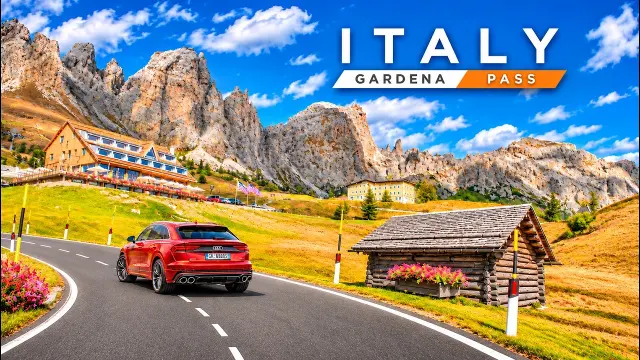
 Autumn Scenic Drive Across Gardena Pass in the Dolomites
#Alpine Road
1 ideas
Autumn Scenic Drive Across Gardena Pass in the Dolomites
Get new #Alpine Road ideas by email
Every Thursday: the week's best ideas, with the newest from #Alpine Road.
Related tags
Alpine Roads: A Guide to Mountain Driving and Scenery
An alpine road is a mountain road that climbs, bends and descends through high terrain, linking valleys that would otherwise be hours or days apart. The idea goes back to the trade and pilgrimage routes cut into the Alps centuries ago, where mule tracks were widened for carts and later for motor vehicles. Today the same corridors carry travellers who come for the drive itself rather than the destination, and similar roads exist in every mountainous region of the world, from the Andes to the Japanese Alps.
What makes these roads distinctive
The defining features are gradient and geometry. An alpine road gains height quickly, so engineers use switchbacks, hairpin turns and long traverses along a slope to keep the climb manageable. Many passes cross a summit saddle and drop into the next valley, which means a single day can take you through several distinct climate zones. Traffic is slow, the road surface is often narrow, and the exposure on the downhill side is part of the experience.
Kinds of alpine roads
Read more
- Pass roads, which cross a ridge or summit and connect two valleys.
- Scenic byways and panoramic routes, built and maintained largely for tourism.
- High plateaus and balcony roads, running along a slope with wide views and less climbing.
- Gravel and forest service tracks, usually unsurfaced and suited only to appropriate vehicles.
- Historic trade and pilgrimage routes, some now partly preserved as walking paths.
The seasons
Summer offers the most reliable access, though afternoon storms are common in the mountains and can bring hail or sudden mist. Autumn is known for clear air and turning larch and beech, but daylight shortens quickly. Snow closes many high passes outside the warm months, and opening dates vary greatly with altitude and weather, so an itinerary should never assume a route is open. Spring runoff can leave gravel and rockfall on the carriageway.
Practical advice for beginners
Drive within your comfort, not the speed of the car behind you. Use a low gear on long descents so the engine helps slow the vehicle and the brakes do not overheat. Keep well to your side on blind bends, sound the horn where sightlines are short if local custom allows, and pull into a layby to let faster traffic pass.
Take bends slowly and look through them rather than at the drop beside them. Fuel up in the valley, carry water, warm layers and a map that works without a signal, and check the weather and road status before setting out. If you stop to admire the view, use a designated pull-off; stopping on a narrow curve is both dangerous and, in many places, forbidden.
Above all, allow more time than you think you need. An alpine road rewards patience: the pleasure lies in the rhythm of the climb, the changing vegetation, the moment a new valley opens below you, and the knowledge that you arrived by the long, scenic way.
#Alpine Road: frequently asked questions
How do I start planning a first drive on an alpine road?
Choose one valley to base yourself in and one pass to cross, rather than chaining many together on a first outing. Look at the route on a map that shows gradients and bends so you know what the climb involves, then leave room in the day for the drive to take longer than a normal road of the same distance. Building the day around the road itself, not a destination at the end of it, is what makes the trip work.
What do I actually need to bring along?
Warm layers, water, and a paper map or downloaded map that still works without a signal, since mountain weather and coverage both change quickly. Fill the tank down in the valley before you climb, and check the weather and road status the same morning rather than trusting a plan made earlier. A car in good order with sound tyres and brakes matters more than any gadget.
Which kind of alpine road should I pick?
Pass roads suit people who want the drama of crossing a summit and dropping into a new valley, while panoramic byways and balcony roads give wide views with gentler climbing and are easier for a nervous driver. Gravel and forest tracks only make sense with a suitable vehicle and some experience, and historic trade routes are often better walked than driven. Match the road to your comfort and to what the car can handle, not to the photographs you have seen.
How do I look after the car on long climbs and descents?
On a long descent, drop into a low gear and let the engine hold the speed back so the brakes are not doing all the work and overheating. On the way up, watch the temperature gauge and take the climb gently rather than straining in too high a gear. Give the car a look over before you set out and again once you are back down, particularly tyres and brakes.
Any ideas for turning a mountain drive into a proper occasion?
Go in autumn if you want clear air and turning larch and beech, or start early in summer before the afternoon storms build. Pack a picnic to eat at a designated pull-off with a view, and plan stops at saddles or laybys for photographs rather than halting on a bend. The drive is best treated as a slow, lingering outing rather than transport between two points.
What are the most common mistakes people make?
Driving to the pace of the car behind, braking late into hairpins, and stopping on a narrow curve to admire the view are the classic ones, and all of them are avoidable. Another is assuming a high pass will be open, when snow can shut routes well outside the coldest months and opening varies with altitude and weather. Rushing the itinerary is the mistake underneath most of the others, since these roads reward patience far more than speed.
Videos come from YouTube and posts from Instagram; titles and summaries are our own. All rights belong to their creators.