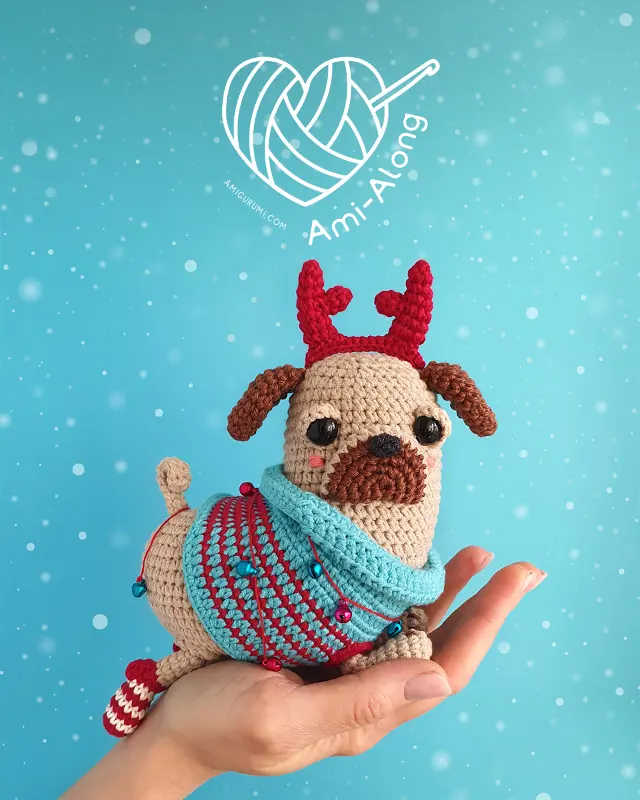
 Ami-Along Crochet Pattern: Rudy the Christmas Pug
#Ami-Along
1 ideas
Ami-Along Crochet Pattern: Rudy the Christmas Pug
Get new #Ami-Along ideas by email
Every Thursday: the week's best ideas, with the newest from #Ami-Along.
Related tags
Ami-Along: A Beginner's Guide to Crocheting Amigurumi Together
An ami-along is a friendly way of crocheting amigurumi in company. The name joins two things: amigurumi, the Japanese craft of crocheting small stuffed figures, and the crochet-along, a format in which many people work through the same pattern over a set period of time rather than all at once. In an ami-along, a designer or a group sets the pace — a head one week, arms the next — and everyone shares their progress as they go.
Where it comes from
Amigurumi itself grew out of Japanese craft culture, where small crocheted and knitted toys became popular as collectible, characterful objects rather than children's playthings. Crochet-alongs have a longer, quieter history in fibre communities: knitters and crocheters have always worked the same pattern together in shops, clubs and magazines, and the format moved naturally into online groups and message boards. The ami-along is simply the meeting of the two — the toy-making tradition and the habit of making in company.
How one usually works
Read more
The shape varies, but the rhythm is familiar:
- A pattern is announced and a start date is given, so people can gather yarn and hooks beforehand.
- The pattern is broken into sections, released or worked on a schedule.
- Participants post photos, ask questions and compare notes as each stage is finished.
- There is often a shared finish line, and sometimes a gallery or a small celebration at the end.
Some ami-alongs run in shops over a few evenings; others are entirely online and stretch across weeks or months.
What beginners should know
You do not need to be an expert, but a little preparation helps enormously. Most amigurumi is worked in continuous rounds of single crochet, so being comfortable with that stitch, with increasing and decreasing, and with working in a spiral will carry you a long way. If you are brand new, practise those on a small ball or a simple shape before joining.
Read the whole pattern through first, even if you will only work the first part now. Note the yarn weight, hook size and finished size, and check your tension by making a small sample — in amigurumi, a slightly tighter fabric keeps the stuffing from showing and gives the figure a firmer shape.
Practical tips
- Choose a smooth, firmly spun yarn in a similar weight to the one the pattern expects; fuzzy yarns hide your stitches and are hard to count.
- Use a stitch marker. In spiral rounds there is no seam to guide you, so a marker at the start of each round saves recounting.
- Keep notes of which round you finished. Interruptions are normal in a shared project.
- Gather safety eyes, stuffing and a tapestry needle early, so you are not stalled waiting for something small.
- If you fall behind, don't worry. The pace is a suggestion, not a deadline, and most groups are happy to have you finish later.
Half the pleasure of an ami-along is the toy itself; the other half is the conversation that grows around it, one round at a time.
#Ami-Along: frequently asked questions
What is an ami-along, and how does it differ from just following a pattern alone?
It is a crochet-along built around amigurumi: a group works through one toy pattern together on a shared schedule instead of each person going it alone. The pattern is usually split into sections, so you make a piece at a time and compare photos and questions with everyone else as you go. What separates it from solo crocheting is the company — the conversation becomes as much the point as the finished figure.
How do I get started if I have never joined one before?
Find a group announcing a pattern and a start date, then use the time before that date to gather your yarn, hook, stuffing and small notions. Read the whole pattern ahead of the first stage and practise the basic stitches on a plain shape so you are not learning them under time pressure. When it begins, just post your progress as each section is done — most groups welcome newcomers who ask questions.
What should I have ready before the first stage begins?
Beyond yarn and a hook in the weight and size the pattern names, you will want stuffing, safety eyes or another face option, a tapestry needle and a stitch marker. Gathering these early matters because a stalled project is usually one waiting on a small, easily forgotten item. A smooth, firmly spun yarn is the safer choice than a fuzzy one, since it keeps your stitches visible and countable.
Which kind of ami-along should I pick — a shop one or an online one?
Shop-based ones tend to run over a few evenings and suit people who like working beside others and getting help on the spot. Online ones stretch over weeks or months and are easier to fit around other commitments, since you work at your own hours and share photos instead of sitting together. Choose based on how much of a fixed appointment you want, and how much time you can realistically give each week.
I have fallen behind the schedule — is it too late to keep going?
No. In nearly every group the pace is a suggestion rather than a deadline, and finishing later is completely normal. Keep a note of the last round you completed so you can pick the work up again without recounting, and post where you are when you get the chance — people are generally glad to see a late finish rather than none.
What are the most common mistakes people make on a first ami-along?
The usual ones are skipping the pattern read-through, choosing a fluffy yarn that hides the stitches, and working too loosely so the stuffing shows through the fabric. Losing your place in spiral rounds is another frequent stumble, which a stitch marker at the start of each round solves neatly. Finally, people often forget to check tension on a small sample first, then discover the finished figure is a different size than expected.
Videos come from YouTube and posts from Instagram; titles and summaries are our own. All rights belong to their creators.