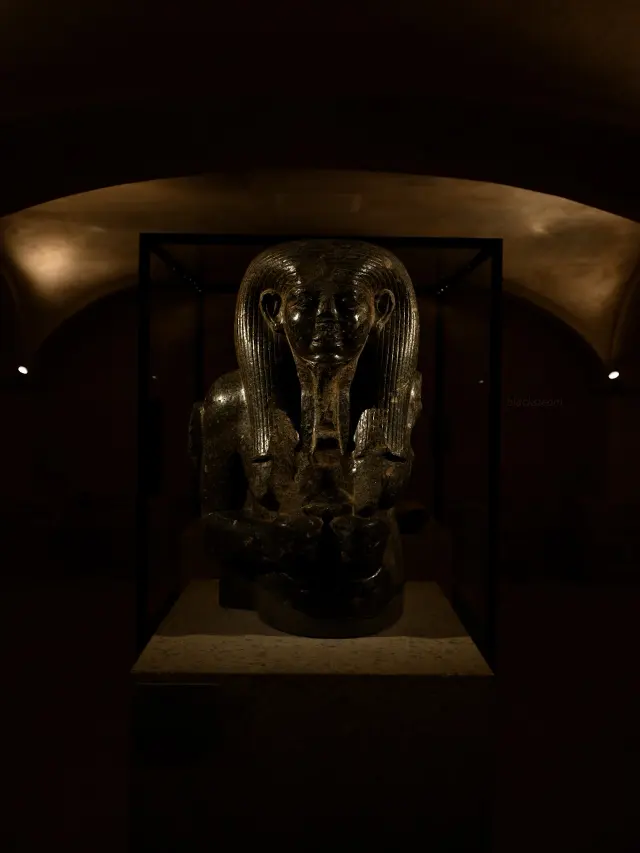
 Discovering ancient Egyptian artifacts at the Neues Museum in Berlin
#Ancient Egypt
2 ideas
Discovering ancient Egyptian artifacts at the Neues Museum in Berlin
Get new #Ancient Egypt ideas by email
Every Thursday: the week's best ideas, with the newest from #Ancient Egypt.
Related tags
Ancient Egypt: Culture, Art and Daily Life
Ancient Egypt was one of the world’s earliest great civilizations, shaped by the Nile River and lasting for thousands of years in northeastern Africa. Its people built a complex society with kings, priests, farmers, artisans and scribes, and they left behind monuments, texts and objects that still fascinate people today. When you think of Ancient Egypt, you may picture pyramids and pharaohs, but the civilization was also rich in religion, language, craft and daily life.
The land of the Nile
The Nile was the center of Egyptian life. Its seasonal flooding helped make the surrounding land fertile, which supported farming in a dry region. This reliable water source shaped settlement, trade and government. Cities, temples and tombs often grew along the river, and travel by boat connected different parts of the kingdom.
Pharaohs, gods and belief
Read more
Ancient Egyptian society was closely linked to religion. The ruler was known as the pharaoh and was seen as a powerful figure with divine authority. Egyptians believed in many gods and goddesses connected with the sun, the sky, the afterlife, fertility and protection. Temples were important religious centers, and rituals were meant to keep balance and order in the world.
Beliefs about the afterlife also played a major role. Egyptians prepared tombs, burial goods and texts to help the dead in their journey after death. This is one reason so many objects from Ancient Egypt have survived in graves and temples.
Writing, art and monuments
The Egyptians developed one of the world’s earliest writing systems, known as hieroglyphs. It was used for religious texts, official records and inscriptions on monuments. Writing was a specialized skill, and scribes held an important place in society.
Egyptian art followed clear conventions. Figures were often shown in a formal, orderly style, with symbols and proportions that carried meaning. Wall paintings, carved reliefs, jewelry, statues and decorated coffins all served both practical and symbolic purposes.
Among the most famous monuments are the pyramids, especially those built as royal tombs. Temples, obelisks and monumental statues also show the scale and ambition of Egyptian building traditions.
Everyday life and crafts
Most people in Ancient Egypt lived simple working lives. Farmers grew crops, raised animals and made use of the river’s resources. Craftspeople made pottery, textiles, furniture and tools. Markets, family life and religious festivals were part of everyday routine.
If you are interested in Ancient Egypt, it helps to remember that it was not one single unchanging culture. It developed over a very long time, with different periods, rulers and artistic styles. Beginners often start by learning the basics of the Nile, the gods, the writing system and burial customs.
How to explore the subject
- Look for objects, not only monuments: everyday tools and jewelry reveal a lot.
- Pay attention to symbols, since many images had religious or political meaning.
- Compare tomb art, temple art and domestic objects to see different purposes.
- Read Ancient Egypt as a living civilization, not just a collection of mysteries.
Ancient Egypt remains compelling because it combines beauty, belief, power and daily life in a way few ancient cultures do.
#Ancient Egypt: frequently asked questions
How do I start exploring Ancient Egypt if I know almost nothing about it?
Begin with the fundamentals: the Nile and why it shaped settlement, the role of the pharaoh, the main gods, hieroglyphs and burial customs. Then branch out into everyday life and craft, since tool, textile and jewelry collections show how belief and daily routine fit together.
What should I look at first when I visit a museum with Egyptian collections?
Start with objects you can see up close — pottery, jewelry, tools and decorated coffins — rather than rushing straight to the monumental pieces. Read the symbols too, because many images carried religious or political meaning that changes how an object reads.
Which kind of Egyptian art is most worth studying: tomb art, temple art, or everyday objects?
Comparing them is more rewarding than choosing one, since each was made for a different purpose. Tomb and temple art tends to be formal and symbolic, while domestic objects reveal ordinary routines and the skill of craftspeople.
What mistakes do beginners usually make with Ancient Egypt?
The most common is treating it as a single unchanging culture, or as a collection of mysteries rather than a working society. It developed over a very long span with different periods, rulers and artistic styles, so it helps to place anything you see within its own era.
Can a beginner learn to read hieroglyphs?
You can learn to recognize frequent signs and understand how the writing system works without training as a scribe. Writing was a specialized skill held by a small group in Egyptian society, so even partial reading helps you interpret inscriptions on monuments and coffins.
Where can I see Egyptian objects outside Egypt?
Museums in many countries hold Egyptian collections, often built from objects that survived because they were placed in graves and temples. Beyond the large national collections, smaller museums frequently hold pieces that are well worth seeking out.
Videos come from YouTube and posts from Instagram; titles and summaries are our own. All rights belong to their creators.