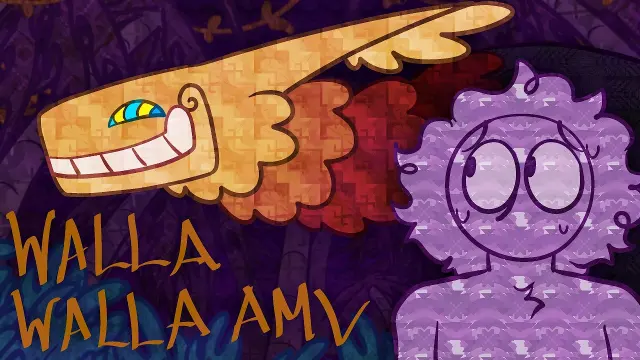
 Walla Walla: Animated Music Video Made for a Final Art Project
#Animated Music Video
1 ideas
Walla Walla: Animated Music Video Made for a Final Art Project
Get new #Animated Music Video ideas by email
Every Thursday: the week's best ideas, with the newest from #Animated Music Video.
Related tags
Animated Music Video: A Guide to Songs Brought to Life
A song on its own leaves room for the listener's imagination. An animated music video fills that room with drawings, shapes, puppets or pixels, giving a track a visual world that exists nowhere else. Because animation is drawn or built frame by frame rather than filmed, it can go places a camera cannot: a paper city folding in on itself, a character whose hair turns into weather, a landscape that changes colour with every bar. That freedom is exactly why so many musicians turn to animators, and why so many animators first fall in love with the craft through a favourite video.
Where it comes from
Moving images have been set to music for about as long as both have existed. Early cinema houses played live music alongside cartoons, and experimental filmmakers drew directly onto film and synced shapes to rhythm long before the format had a name. When music television arrived, the animated clip became a genre in its own right, and it has stayed one through every technological shift since. What has changed is access: what once needed a studio and a budget now often needs a laptop, a drawing tablet and patience.
The main styles
Read more
- Traditional 2D animation: hand-drawn or digitally drawn frames, warm and expressive, whether it looks like a children's book or a fever dream.
- Stop-motion: puppets, clay, cut paper or household objects photographed slightly differently each frame.
- Motion graphics: typography, shapes and geometric movement, often used where clarity and rhythm matter more than character.
- 3D and CGI: modelled worlds and characters, from photoreal to deliberately toy-like.
- Mixed media: collage, live footage painted over, rotoscoping that traces real movement into drawn form.
- Lyric videos: a simpler cousin, where the words themselves become the animation.
If you are making your first one
Start with the song, not the drawing. Listen until you can feel the structure — verses, choruses, the moment everything drops. Then decide on one strong visual idea that can carry three or four minutes. A single good conceit beats a dozen half-finished ones, and it will save you when motivation dips halfway through.
Sketch a rough storyboard or animatic timed to the track, so you know what happens on which beat before you commit hours to a single shot. Keep the design simple enough that you can actually finish it: flat colours, few characters, limited backgrounds. Loop cycles and reusable elements are your friends. Work at a low frame rate where the style allows it, since fewer drawings means more time for the drawings that matter.
Beginners often underestimate how long animation takes. Set a deadline, cut the shot list ruthlessly, and finish something small rather than abandoning something grand. Test your video on a phone screen early — details that read beautifully on a monitor may vanish there.
Practical notes
If you are animating someone else's music, get permission in writing before you publish. If you are using other people's images, footage or fonts, check the licence. Credit collaborators clearly, and keep your project files organised with consistent naming, because you will return to them.
Above all, remember that the point is not technical perfection. It is whether the images make the song feel bigger than it did before.
#Animated Music Video: frequently asked questions
How do I start making an animated music video if I have never animated before?
Begin with the song rather than the visuals: listen repeatedly until you can feel where the verses, choruses and drops sit, then build one strong visual idea that can carry the whole track. From there, sketch a rough storyboard or animatic timed to the music so you know what happens on which beat before committing to a single shot. Finishing something small and simple teaches you more than starting something ambitious.
What do I actually need to make one?
At minimum you need the track, a way to draw or build frames digitally, and software that lets you cut those frames to the music. A drawing tablet helps for hand-drawn work, while stop-motion calls for a camera and physical objects or puppets instead. What matters most is patience and organised project files, since animation is slow and you will come back to old work.
Which animation style should I choose?
Pick the style you can realistically finish and that suits the mood of the song: hand-drawn frames feel warm and expressive, stop-motion feels tactile, motion graphics suit rhythm and clarity, and 3D or mixed media open up more experimental worlds. A lyric video is a good middle ground when the words themselves can carry the visuals. Simplicity in design usually beats ambition you cannot complete.
How do I keep an animation project from running out of steam?
Beginners consistently underestimate how long animation takes, so set a deadline and cut the shot list down hard. Design simple characters and flat backgrounds, and rely on loop cycles and reusable elements to fill time without redrawing everything. Finishing a short, modest video is far better than abandoning a grand one.
What permissions or licences do I need before publishing?
If you are animating someone else's music, get their permission in writing before you publish. Any images, footage or fonts you did not create need their licence checked, and collaborators should be credited clearly. Keeping files consistently named also saves you when you need to prove what came from where.
What is a common mistake first-timers make?
Trying to carry too many ideas at once is the usual trap: a single good conceit holds a whole song, while a dozen half-finished ones fall apart. Another is never checking the video on a small phone screen, where fine detail simply disappears. Test early, keep the design lean, and judge the result by whether the images make the song feel bigger rather than by technical polish.
Videos come from YouTube and posts from Instagram; titles and summaries are our own. All rights belong to their creators.