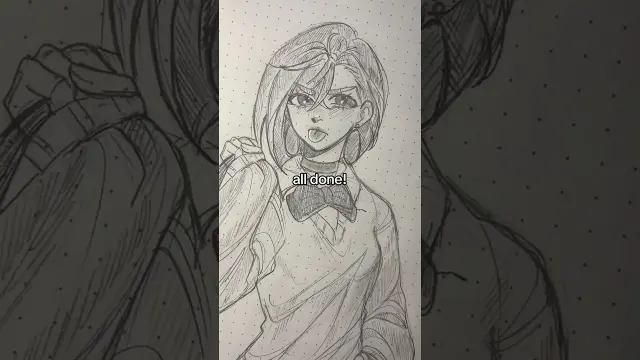
 Anime Style Character Sketching and Drawing Process
#Anime Art
2 ideas
Anime Style Character Sketching and Drawing Process
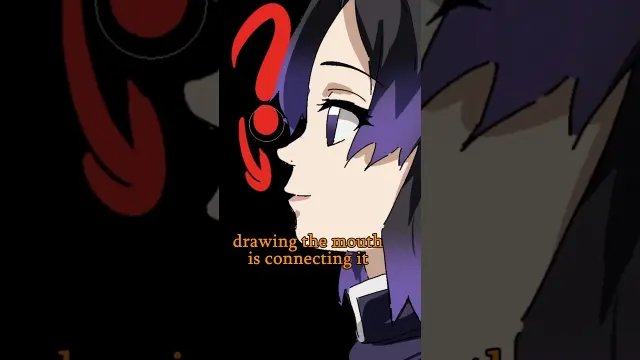 Quick Art Tips on Common Mouth Drawing Mistakes
Get new #Anime Art ideas by email
Every Thursday: the week's best ideas, with the newest from #Anime Art.
Related tags
Anime Art: A Guide to Style and Drawing
Anime art is a visual style of drawing inspired by Japanese animation and manga. It is known for expressive faces, clear silhouettes, stylized hair, and strong emotional storytelling. While many people associate it with television and film, anime art also appears in illustration, comics, fan art, character design, and concept sketches. Its appeal lies in how flexible it is: it can look simple or highly detailed, playful or dramatic, realistic or abstract.
What anime art is
At its core, anime art is less about strict realism and more about clear communication. Artists often simplify anatomy and use exaggeration to show personality, mood, and movement. Eyes may be larger than in realistic drawing, expressions may be more direct, and hair and clothing are often designed to help the character stand out. Backgrounds and props can be detailed, but the main focus is usually on the character and the feeling of the scene.
Anime art comes from the broader tradition of Japanese comics and animation, but it has grown into many different approaches. Some styles use soft lines and gentle shading, while others rely on sharp angles, bold contrast, or very clean digital coloring. There is no single correct anime look. Instead, the style changes depending on the artist, the story, and the purpose of the drawing.
Read more
Common styles and kinds
You may see anime art in several forms:
- Character portraits, which focus on expression, costume, and pose
- Action scenes, which emphasize movement and energy
- Chibi or super-deformed art, which uses small bodies and large heads for a cute effect
- Manga-style line art, usually black and white with shading techniques like hatching or screentone-like textures
- Digital anime illustration, often with smooth color layers and soft lighting
Each version uses the same visual language in a different way. A strong design usually starts with simple shapes, then adds details that support the character’s personality.
Techniques to know
If you want to draw anime art, begin with the basics of observation and proportion. Study how heads, eyes, hands, and poses are simplified. Learn to build a figure from simple forms before adding hair, clothing, and facial features. This makes characters easier to draw from different angles.
Line work matters a lot in anime art. Clean, confident lines help the drawing feel deliberate. Shading can be minimal or dramatic, but it should support the form. If you color digitally, keep an eye on light direction and avoid overcomplicating every surface. If you work traditionally, practice using pencils, ink, markers, or colored media that suit your style.
Tips for beginners
- Start with basic shapes and simple poses
- Practice expressions, not just faces
- Draw hands, feet, and hair often, since they define a character
- Keep references nearby, but try to understand the structure instead of copying only the outline
- Focus on consistency in your own style rather than perfect imitation
Anime art improves with repetition. If you sketch regularly, you will start to notice what makes a character feel alive: posture, gesture, facial expression, and clear design choices. The more you practice those elements, the more natural your drawings will become.
#Anime Art: frequently asked questions
How do I start learning to draw anime art?
Start with observation and proportion rather than finished faces: study how heads, eyes, hands, and poses get simplified, then build a figure out of basic shapes before adding hair, clothing, and features. Sketching regularly matters more than any single tutorial, because repetition is what teaches you which posture and expression choices make a character feel alive. Keep references nearby, but aim to understand the underlying structure instead of tracing outlines.
What do I need to get started with anime art?
Very little — a pencil and paper are enough to learn the style, since clean, confident line work and clear shapes matter far more than expensive materials. If you prefer to work traditionally, pencils, ink, markers, or colored media each suit a different look; if you color digitally, the priority is tracking your light direction rather than overworking every surface. Choose the medium you will actually pick up often, and upgrade later.
Which kind of anime art should I try first?
There is no single correct anime look, so pick the form that matches what you want to communicate: a character portrait for expression and costume, an action scene for energy and movement, chibi for a playful and cute effect, or black-and-white manga-style line art if you enjoy shading with hatching and texture. Soft lines and gentle shading suit quieter, emotional pieces, while sharp angles and bold contrast give a drawing punch. Try a few and notice which one keeps you sketching.
What mistakes should beginners watch out for?
The most common slip is copying an outline without understanding what sits underneath it, which makes the character impossible to redraw from another angle. Beginners also tend to drill faces endlessly while neglecting hands, feet, hair, and mouths — the very features that make a design read clearly and expressively. Another frequent problem is overcomplicating the shading or chasing perfect imitation of someone else's style instead of developing consistency in your own.
How should I display or care for anime art?
Treat it like any artwork on paper: keep it out of direct sunlight, frame it behind glass with a mat so the surface never touches the glazing, and handle prints by the edges to avoid fingerprints and creases. Avoid damp spots like bathrooms and kitchens, since moisture warps paper and dulls ink over time. If the piece is a loose sketch, store it flat in a portfolio rather than rolling it.
What occasions suit anime art as a gift or decoration?
It works well anywhere a personal, character-driven touch is welcome — a birthday gift for someone devoted to a particular series, a framed portrait for a bedroom or study wall, or a custom character design made for a milestone celebration. Match the palette and mood of the piece to the space it will hang in, and lean toward a framed print or original sketch over a casual poster if you want it to feel considered.
Videos come from YouTube and posts from Instagram; titles and summaries are our own. All rights belong to their creators.