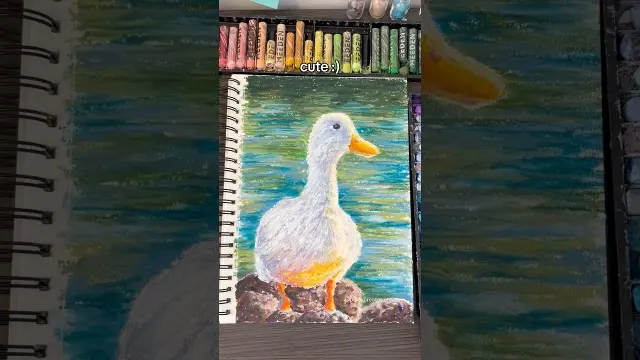
 Drawing a Duck Using Oil Pastels
#Art Process
1 ideas
Drawing a Duck Using Oil Pastels
Get new #Art Process ideas by email
Every Thursday: the week's best ideas, with the newest from #Art Process.
Related tags
Art Process: From Idea to Finished Work
What the art process is
The art process is the series of steps you follow to turn an idea into a finished work. It can be simple or highly structured, but it usually includes noticing, planning, making, adjusting, and completing. For some people, art begins with a clear image in mind. For others, it starts with a color, a memory, a material, or a quick sketch. There is no single correct way to work.
Art has always been made through process, whether in drawing, painting, printmaking, collage, textiles, sculpture, or mixed media. The exact methods may differ, but the core idea is the same: you explore, experiment, and refine until the work feels resolved.
Common stages in the process
Read more
Many artists move through a few familiar stages:
- Gathering ideas: looking, observing, collecting references, or thinking through a subject
- Sketching or planning: making rough studies, notes, or compositional thumbnails
- Choosing materials: selecting paper, paint, pencils, pastels, fabric, or other tools
- Building the work: laying down shapes, color, texture, or structure
- Revising: stepping back, comparing, and changing what is not working
- Finishing: adding final details, balancing the composition, and deciding when to stop
Not every project needs all of these steps. A quick sketch may only need one or two. A large or layered piece may need many more.
Styles and approaches
Your process depends partly on how you like to work. Some artists prefer careful planning and gradual layering. Others work more intuitively, responding to the piece as it develops. You may also combine approaches: planning the basics first, then allowing room for surprises.
Some common ways of working include:
- Direct drawing or painting, where you move toward the finished image steadily
- Layered work, where forms, colors, and marks are built up over time
- Experimental work, where you test materials and let accidents guide you
- Reworking, where earlier marks are changed, covered, or transformed
What beginners should know
If you are new to making art, it helps to remember that process matters as much as the result. Early attempts can look awkward, and that is normal. You learn by making choices, seeing what happens, and adjusting.
A few practical habits can help:
- Start with small, manageable pieces
- Use simple materials so you can focus on observation and decision-making
- Keep rough sketches or studies
- Save unfinished work and revisit it later
- Practice looking at your work from a little distance
- Try not to judge too early, before the piece has a chance to develop
Practical tips
A useful art process balances freedom and control. Too much planning can make a piece feel stiff, while too little can leave it unfocused. Give yourself a clear starting point, but stay open to change. If something is not working, try altering proportion, value, color, spacing, or texture before starting over.
It also helps to work in stages and take breaks. Fresh eyes often reveal what the piece needs next. Most importantly, treat the process as part of the artwork itself. Over time, you will notice the methods that suit you best and make creating feel natural.
Videos come from YouTube and posts from Instagram; titles and summaries are our own. All rights belong to their creators.