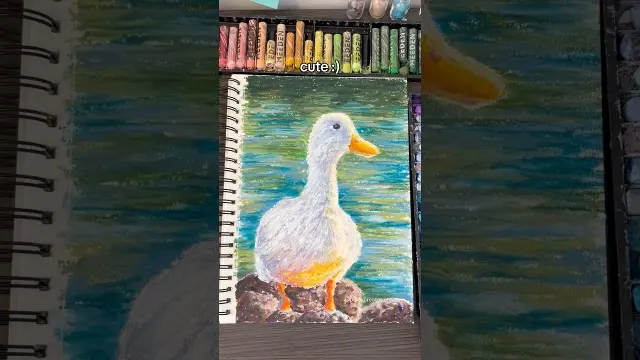
 Drawing a Duck Using Oil Pastels
#Oil Pastel
1 ideas
Drawing a Duck Using Oil Pastels
Get new #Oil Pastel ideas by email
Every Thursday: the week's best ideas, with the newest from #Oil Pastel.
Related tags
Oil Pastel Guide for Beginners and Creators
What oil pastels are
Oil pastels are a drawing medium made of pigment, binder, and oil-based ingredients formed into sticks. They look a little like crayons, but they behave more like a soft drawing material that can be layered, blended, and worked into rich, opaque colour. Because they stay creamy rather than drying quickly, they are popular for expressive sketches, colourful illustrations, and finished artwork.
Oil pastels are used on paper, board, and other fairly sturdy surfaces. They are valued for their strong colour, smooth application, and the ability to build up bold marks or soft transitions depending on how you handle them.
Where they come from and what they’re used for
Read more
Oil pastels were developed as a drawing medium for artists who wanted something immediate, portable, and colourful. They sit somewhere between drawing and painting, which makes them useful for people who enjoy direct mark-making without needing brushes or water.
You can use oil pastels for:
- sketching and practice drawings
- portraits and still life
- landscapes and flowers
- school projects and mixed media work
- layered illustration and decorative art
They are often chosen when you want intense colour and visible texture. You can also combine them with other media in simple ways, as long as the surface can handle it.
Main qualities and styles
Oil pastels can be used in several ways, depending on the effect you want:
- Soft layering: building colour gradually for depth and richness
- Blending: smoothing edges or transitions with a finger, tissue, or tool
- Hatching and scumbling: using repeated strokes or light circular marks for texture
- Thick application: pressing firmly for dense, vivid coverage
- Sgraffito: scratching into one layer to reveal a colour underneath
Different artists use them for realistic shading, loose expressive work, or bold graphic shapes. Some prefer careful blending, while others celebrate the rough, visible strokes.
What beginners should know
If you are new to oil pastels, start with a small set and a sturdy paper with a little tooth, because slick paper can make them harder to control. Work from light to dark when possible, and remember that oil pastels can be difficult to erase completely, so light planning helps.
A few useful tips:
- Keep your marks simple at first.
- Avoid pressing too hard too soon; build layers slowly.
- Use a scrap sheet under your hand to avoid smudging.
- Try different pressures to see how the colour changes.
- Test blending tools before using them on your finished work.
Oil pastels can be messy in a pleasant way, so expect some pigment on your fingers. That is normal. If you want cleaner edges, use masking, careful layering, or a more controlled sketching approach.
Finishing and care
Because oil pastels do not dry in the same way as paint, finished work may stay a little soft to the touch. Store artwork flat and protect it with glassine, tracing paper, or a similar barrier if needed. Handle completed pieces gently to avoid smears.
With practice, oil pastels can become a flexible and rewarding medium. They are especially good if you enjoy strong colour, direct drawing, and the freedom to make quick marks that still feel rich and full of life.
Videos come from YouTube and posts from Instagram; titles and summaries are our own. All rights belong to their creators.