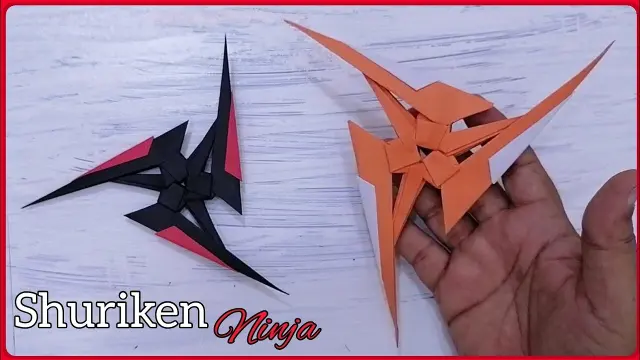
 Naruto-Style Paper Shuriken Folded From Two Square Sheets
#Anime Paper Crafts
1 ideas
Naruto-Style Paper Shuriken Folded From Two Square Sheets
Get new #Anime Paper Crafts ideas by email
Every Thursday: the week's best ideas, with the newest from #Anime Paper Crafts.
Related tags
Anime Paper Crafts: A Beginner's Guide to Paper Fan Art
Paper has a way of turning a favourite character into something you can hold. Anime paper crafts are simply the many ways fans recreate the worlds of animation using little more than sheets, scissors and glue. Some people fold; some cut and layer; some print and assemble. What connects them is the pleasure of making a recognisable shape out of something flat and ordinary.
Where the idea comes from
Folding paper into objects is an old Japanese art, and the tradition of cutting and folding paper into decorative shapes sits alongside it. Modern anime paper crafts borrow from both, then add the habits of hobby model-making: templates, tabs, glue and a great deal of patience. Printed paper models, in which a flat design is cut out and folded into a three-dimensional figure, grew out of the same model-building culture that produced plastic kits.
The main kinds you will meet
Read more
- Folded shapes. Simple origami forms such as stars, throwing blades, cranes and small animals, often in colours tied to a character.
- Paper figures or dolls. Layered pieces with a head, body and clothes, sometimes with movable joints made from thread or split pins.
- Kirigami and cut-out scenes. Designs where cutting, not folding, does the work: silhouettes, window decorations, pop-up cards.
- Template models. Printed patterns cut and assembled into busts, masks, weapons or props with real volume.
- Scrapbook and collage pieces. Small cut-outs gathered into a page, a frame or a notebook cover.
What beginners should know
Start with something that has few parts. A folded star or a simple mask teaches you how paper behaves — how it creases, how much pressure a fold needs, where a curve refuses to stay put. Accuracy matters more than speed: a line that is slightly off at the start becomes a visible gap at the end.
Choose your paper to suit the job. Thin paper folds crisply but tears easily; heavier card holds a shape and survives assembly but is hard to crease. For printed models, a medium-weight card is usually the kindest compromise. Score fold lines lightly before bending them, and keep your cuts slow and deliberate.
Practical habits
Keep a clean, flat workspace and a small tray for offcuts. Use a sharp blade on a cutting mat rather than dull scissors, and always cut away from your fingers, keeping the hand holding the paper well behind the blade. Glue sparingly — a thin line holds better than a puddle, and too much moisture warps card. Let each stage dry before adding the next.
Finally, accept imperfection. A slightly crooked edge disappears once the piece sits on a shelf, and the second attempt is always better than the first. What you are really learning is how a flat sheet becomes a shape, and that skill carries over to every project after it.
#Anime Paper Crafts: frequently asked questions
How do I start with anime paper crafts if I have never made anything before?
Pick a project with very few parts, such as a folded star, a simple mask or a small silhouette, and make that one thing before moving on. The point of a first attempt is to learn how the paper behaves under your hands rather than to finish a showpiece. Expect the second try to look noticeably better than the first, and keep the first one anyway.
What supplies do I actually need to begin?
You need paper, something to cut with, a means of sticking things together and a flat surface to work on. A sharp blade used on a cutting mat gives cleaner lines than dull scissors, and a light scoring tool helps fold lines bend where you want them. A small tray for offcuts keeps the workspace clear and stops small pieces from disappearing.
Which kind of anime paper craft should I choose?
Choose based on whether you most enjoy folding, cutting, layering or assembling. Folded shapes and cut-out scenes are the friendliest starting points, layered figures sit in the middle in difficulty, and printed template models take the most patience because they have real volume to build. Pick the one whose process sounds pleasant to you, not the one that looks most impressive finished.
What paper should I use for these projects?
Match the paper to the job: thin sheets crease sharply but tear easily, while heavy card holds a shape and survives handling but resists crisp folds. For anything printed and assembled into a three-dimensional form, a medium-weight card is usually the easiest compromise. Test a scrap first if you are unsure how a sheet will behave.
How do I keep finished paper pieces from getting damaged?
Paper is fragile, so keep finished pieces out of direct sun, away from damp and off surfaces where they might be knocked or spilled on. Anything with volume or moving parts is better displayed on a shelf or inside a frame than handled regularly. Dust gently rather than wiping, since pressure is what crushes delicate edges.
What mistakes do beginners make most often?
The usual ones are rushing the cutting, using too much glue and folding without scoring the line first. A cut that wanders slightly at the start turns into a visible gap once the piece is assembled, and excess moisture warps card in a way that cannot be undone. Working slowly and letting each stage dry before adding the next solves most of it.
Videos come from YouTube and posts from Instagram; titles and summaries are our own. All rights belong to their creators.