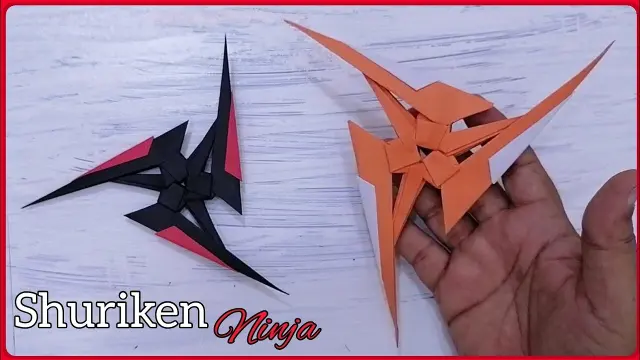
 Naruto-Style Paper Shuriken Folded From Two Square Sheets
#Naruto Crafts
1 ideas
Naruto-Style Paper Shuriken Folded From Two Square Sheets
Get new #Naruto Crafts ideas by email
Every Thursday: the week's best ideas, with the newest from #Naruto Crafts.
Related tags
Naruto Crafts: A Beginner's Guide to Ninja-Inspired Making
Naruto crafts are handmade projects inspired by the world of a long-running Japanese manga and anime about young ninja. The stories are full of throwing stars, scrolls, headbands, sandals, small pouches and hidden villages, and each of those objects is easy to recreate with paper, fabric, foam or clay. People make them for costume pieces, party decorations, gifts for fellow fans, or simply because folding a sharp-looking star out of a square of paper is satisfying.
Where the craft comes from
The source material draws on Japanese folk imagery and on origami, the traditional art of paper folding. Fans took that starting point and turned it into a broad craft tradition: children fold shuriken at kitchen tables, cosplayers sculpt armour from craft foam, and hobbyists paint resin kunai for display. Most of it is informal, shared between friends or taught at workshops, which is part of why it stays playful rather than strict.
The main kinds of project
Read more
- Paper folding: the classic entry point. A four-pointed throwing star needs two square sheets, each folded into a parallelogram, then locked together so the points interlock without glue.
- Cardboard and foam props: kunai, scabbards and armour plates are usually cut from thick card or EVA foam, sealed, then painted with acrylics.
- Fabric work: forehead protectors, pouches and wraps are simple sewing or no-sew projects, often made from cotton and fastened with elastic or ties.
- Modelling and jewellery: polymer clay, air-dry clay and beads become tiny figures, charms and pendants.
- Paper and ink: scrolls, tags and invitations suit brush lettering and simple stamped motifs.
What beginners should know
Start with paper. It costs almost nothing, needs no special tools, and teaches you the logic of folds and locking tabs before you spend money on foam or paint. Use proper origami paper if you can, since printer paper cracks along the creases; if you only have ordinary sheets, cut them to a true square first, because a lopsided square will never fold cleanly.
For props, cut foam on a self-healing mat with a sharp craft knife, always away from your body, and let an adult handle the blade if you are young. Seal foam with a couple of thin coats of flexible glue or primer before painting, otherwise the paint soaks in and the surface stays patchy. Acrylics dry fast and clean up with water, which makes them forgiving for beginners.
Practical tips
- Fold slowly and press every crease firmly with a fingernail; crisp folds matter more than speed.
- Keep a glue stick and a little tape nearby, but try to design projects that hold together by themselves.
- Sketch a character or symbol on paper before painting it onto fabric or foam.
- Work in a well-ventilated space when using sprays, glues or sealants, and protect your table.
- Keep handmade pieces for yourself, as gifts or for costume use, and design your own variations rather than copying artwork exactly — your own take is more interesting anyway.
#Naruto Crafts: frequently asked questions
How do I start with Naruto crafts if I have never made anything by hand before?
Start with paper folding, because it costs almost nothing, needs no special tools, and teaches you how creases and locking tabs work before you spend money on foam, paint or clay. Fold slowly, press every crease firmly with a fingernail, and always begin from a true square, since a lopsided sheet will never fold cleanly. Once a simple folded star feels easy, move on to props or fabric.
What supplies do I actually need for these projects?
It depends on the kind of project: origami paper for folding, thick card or craft foam cut on a self-healing mat with a sharp knife for props, cotton and elastic for headbands and pouches, and clay or beads for charms and jewellery. Acrylic paint, a flexible sealer and a glue stick cover most finishing work. Protect your table and work in a well-ventilated space whenever you use sprays, glues or sealants.
Which kind of Naruto craft should I choose?
Pick by the result you want rather than by difficulty. Paper suits quick decorations, party favours and small gifts; foam and cardboard suit costume pieces and display props; fabric suits wearable accessories; clay and beads suit tiny figures and pendants. If a piece needs to survive being worn around, choose foam or fabric over paper.
How do I look after finished pieces so they last?
Keep paper items dry and store them flat, pressing them between heavy books if the creases start to soften. Sealed and painted foam props last longer out of direct sunlight and away from hard knocks that chip the edges. Fabric pieces are best washed gently by hand and dried flat so elastic and ties keep their shape.
What mistakes do beginners make most often?
The usual ones are folding printer paper, which cracks along the creases, and starting from a sheet that is not a true square. Another is painting foam straight away without sealing it first, which leaves a patchy surface because the paint soaks in. Rushing the creases and cutting toward your body instead of away are the other common slips.
What occasions are these crafts good for?
They work well as costume pieces for conventions and dressing up, as decorations and table favours for a themed party, and as small handmade gifts for fellow fans. The simpler folded items also make good party activities for children, since they need very little equipment. Designing your own variation rather than copying existing artwork exactly makes the result more personal.
Videos come from YouTube and posts from Instagram; titles and summaries are our own. All rights belong to their creators.