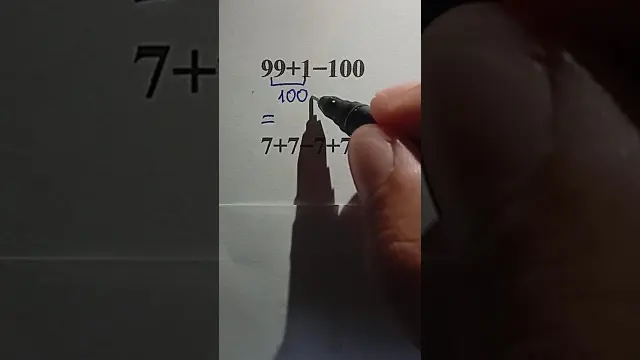
 Step by Step Practice in Adding and Subtracting Whole Numbers
#Arithmetic Practice
1 ideas
Step by Step Practice in Adding and Subtracting Whole Numbers
Get new #Arithmetic Practice ideas by email
Every Thursday: the week's best ideas, with the newest from #Arithmetic Practice.
Related tags
Arithmetic Practice: Building Confidence with Numbers
Arithmetic is the branch of mathematics that deals with counting and with the four basic operations: addition, subtraction, multiplication and division. It is the oldest and most practical part of mathematics, grown out of trade, farming, building and keeping accounts, and it remains the foundation on which algebra, geometry and everyday decision-making rest. Practising it is less about talent than about familiarity: the more often you handle numbers, the less intimidating they become.
What practice actually involves
Arithmetic practice can take several forms, and they train slightly different skills. Mental arithmetic builds speed and a feel for how numbers behave, so that you can estimate a total in a shop or split a bill without reaching for anything. Written methods, with numbers set out in columns, build accuracy and make larger calculations manageable. Drill work, such as reciting times tables or working through short sets of sums, fixes basic facts in memory so that harder problems have somewhere solid to stand. Word problems add the skill of reading a situation and deciding which operation it needs.
Place value, fractions and percentages
Read more
Underneath all of it sits place value: the idea that the position of a digit tells you its worth. Most confusion with written calculation comes back to this, so it is worth revisiting whenever something goes wrong. Fractions, decimals and percentages are three ways of describing parts of a whole, and being comfortable moving between them makes a great deal of daily life easier, from adapting a recipe to understanding a discount.
Getting started
If arithmetic has never quite settled for you, start small and stay regular. A short session of ten or fifteen minutes, several times a week, does more than an occasional long one, because remembering improves when practice is spread out rather than crammed.
Learn the multiplication tables properly, up to ten, until recall is automatic; nearly every other calculation leans on them. Work with pencil and paper regularly, laying the numbers out neatly, since much of written arithmetic is really a matter of keeping columns tidy. Do easy calculations in your head rather than automatically using a calculator, and use estimation as a habit: work out roughly what the answer should be before calculating, then check whether the result is plausible. When you make a mistake, write down what kind it was.
A note on patience
Errors are information, not evidence of a missing gift. Most people who are quick with numbers simply have practised more, and speed tends to arrive on its own after accuracy has settled. Keep the problems just beyond what feels comfortable, keep the sessions short, and let the confidence build quietly in the background.
#Arithmetic Practice: frequently asked questions
How do I start practising arithmetic if I've never been confident with numbers?
Begin with short, frequent sessions rather than one long one, since memory holds onto what it meets regularly. Keep the work small enough that you can finish and check it, and use pencil and paper so the layout stays clear. Confidence tends to arrive after accuracy, so let speed come on its own rather than chasing it.
What do I actually need in order to practise arithmetic?
Very little: something to write with, something to write on, and a set of sums at the right level. A multiplication table chart nearby helps while recall is still being built, and rough paper for estimating is useful too. A calculator is best kept for checking afterwards rather than for doing the work itself.
Which kind of arithmetic practice should I choose — mental, written, or word problems?
They train different things, so the honest answer is a mix. Mental work builds speed and a feel for how numbers behave, written methods build accuracy with larger calculations, and word problems teach you to read a situation and decide which operation it needs. If one of them feels weak, that is usually the one to spend more time on.
How do I keep my arithmetic skills from going rusty?
Regular, brief contact beats occasional long sittings, because remembering improves when practice is spread out. Fold estimation into daily life — guess a total before it is rung up, or work out a rough share of a bill in your head. Going back over place value whenever a calculation goes wrong catches most problems at their root.
What are the most common mistakes people make when practising arithmetic?
Laying numbers out carelessly is the big one, since much of written arithmetic is really about keeping columns tidy and digits in their proper place. Another is reaching for a calculator before trying, which skips the mental workout the practice is meant to give. A third is ignoring mistakes instead of noting what kind they were, when the pattern in your errors is the most useful thing you have.
I keep making errors — does that mean I'm just not good at arithmetic?
No. Errors are information about what to work on next, not evidence of a missing gift, and people who seem quick with numbers have generally just practised more. Note the type of mistake, ease the difficulty back slightly if it keeps repeating, and keep the sessions short. The improvement is usually quiet and only obvious when you look back.
Videos come from YouTube and posts from Instagram; titles and summaries are our own. All rights belong to their creators.