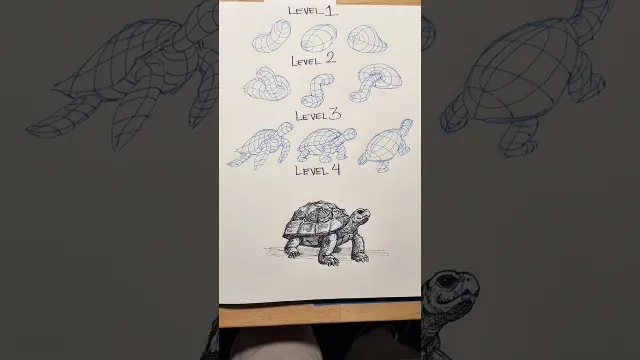
 Using Wireframe Drawings to Understand Spatial Volume
#Art Lessons
1 ideas
Using Wireframe Drawings to Understand Spatial Volume
Get new #Art Lessons ideas by email
Every Thursday: the week's best ideas, with the newest from #Art Lessons.
Related tags
Art Lessons for Beginners and Creative Learners
What art lessons are
Art lessons are guided exercises and instruction that help you learn how to see, observe, and make images more confidently. They can cover drawing, painting, sketching, printmaking, mixed media, and sometimes basic design principles such as line, shape, color, balance, and composition. At their best, art lessons do more than teach technique: they help you notice details, understand materials, and develop your own way of expressing ideas.
People take art lessons for many reasons. Some want to build a creative hobby, some want to improve hand-eye coordination, and others want to strengthen skills for illustration, design, or other creative work. Whatever your goal, lessons usually start with simple exercises and gradually move toward more open-ended projects.
Where art lessons come from
Read more
Teaching art has a long history. For centuries, artists have learned by copying forms, practicing observation, and studying the human figure, nature, and everyday objects. Traditional training often focused on drawing from life, understanding proportion, and learning how light creates volume. Today, art lessons may still use those foundations, but they can also include playful experimentation, collage, color study, or digital tools.
Common kinds of art lessons
Art lessons often focus on one or more of these areas:
- Drawing basics: line, contour, shading, proportion, and perspective
- Painting: mixing color, layering, brush control, and surface handling
- Observation: still life, landscapes, portraits, and figure study
- Composition: arranging shapes, creating focus, and using positive and negative space
- Mixed media: combining pencils, paint, paper, ink, or found materials
- Creative exploration: using prompts, improvisation, and personal themes
For beginners, drawing from simple objects is often the most useful starting point. It helps you learn to look carefully before trying more complex subjects.
Techniques and skills to practice
A good art lesson usually balances instruction with repetition. You may be asked to copy basic forms, sketch quickly, or break a subject into simple shapes before adding detail. These habits train your eye and make difficult subjects feel more manageable.
Useful techniques include:
- Starting with light, loose lines before refining
- Looking at proportions instead of details first
- Practicing shading from light to dark
- Studying how shapes fit together in space
- Using simple color studies before full pieces
What beginners should know
You do not need to be “naturally gifted” to benefit from art lessons. Progress usually comes from regular practice, patience, and a willingness to make imperfect work. It is normal for early drawings or paintings to feel awkward. That does not mean you are failing; it means you are learning to see more clearly.
Try to focus on one skill at a time. For example, you might spend a few sessions on basic shapes, then on shading, then on composition. Smaller goals make learning easier and less overwhelming.
Practical tips
- Keep your materials simple at first.
- Practice often, even for short periods.
- Work from real objects when you can.
- Save older work so you can see your progress.
- Notice what you enjoy most, then build from there.
Art lessons are most rewarding when they help you grow both skill and confidence. With steady practice, you can develop a personal style while still learning the foundations that support all visual art.
#Art Lessons: frequently asked questions
How do I start with art lessons if I've never drawn before?
Start simple: put a few everyday objects on a table and draw them as basic shapes before adding any detail. Short, regular sessions matter far more than long occasional ones, so keep materials minimal and sketch often. The first goal is learning to look carefully, not producing something polished.
What supplies do I actually need for a first art lesson?
A pencil, a sheet of paper, and something to draw from are enough to begin. Add an eraser, a few softer pencils, and later a basic set of paints or colored pencils once you know what you enjoy. Keeping the kit small at the start removes the pressure of choosing the 'right' tools.
Should I begin with drawing or go straight to painting?
Drawing is the more useful foundation, because it teaches proportion, shape, and how light creates volume, all of which carry into every other medium. Once those habits feel natural, mixing color and handling a brush become much easier to learn. Painting first is fine too, but expect to circle back to drawing basics.
Why does using a wireframe or simple shapes help my drawings?
Breaking a subject into boxes, spheres, or wireframe lines shows how its parts sit in space before you commit to contours or shading. It separates structure from detail, which is what makes difficult subjects like hands or figures feel manageable. Many lessons use this as a warm-up for exactly that reason.
What mistakes do beginners make most often in art lessons?
The usual ones are pressing too hard on the pencil too early, chasing fine detail before proportions are right, and shading in one flat tone instead of building gradually from light to dark. Judging early work as a sign of failure is another habit worth dropping. Awkward drawings usually mean your eye is improving faster than your hand.
How do I keep improving between lessons?
Practice in short, frequent bursts, work from real objects whenever you can, and keep a folder of older pieces so progress becomes visible over time. Focus on one skill per stretch, such as shapes, then shading, then composition. Noticing which part you enjoy most is the best guide to what to study next.
Videos come from YouTube and posts from Instagram; titles and summaries are our own. All rights belong to their creators.