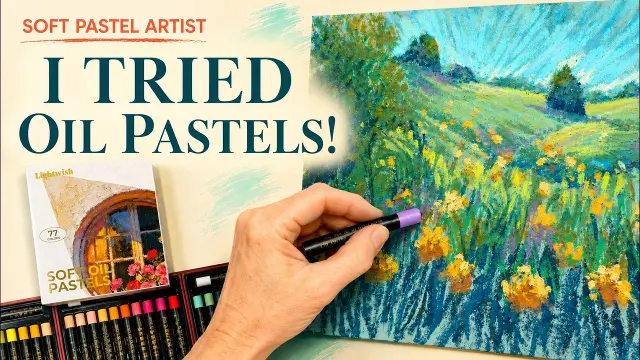
 First Impressions of Using Oil Pastels for Landscape Art
#Art Review
1 ideas
First Impressions of Using Oil Pastels for Landscape Art
Get new #Art Review ideas by email
Every Thursday: the week's best ideas, with the newest from #Art Review.
Related tags
Art Review: How to Read and Write It
An art review is a structured response to a work of art, an exhibition, or an artist’s body of work. It is part description, part interpretation, and part evaluation. At its best, it helps you look more carefully, understand what you are seeing, and explain why it matters.
Art review has a long history in criticism, journalism, and art writing. It developed alongside public exhibitions, museums, galleries, and printed criticism, where writers needed a way to discuss new work for wider audiences. Today, art reviews appear in magazines, newspapers, blogs, catalogues, and exhibition notes, but the basic purpose remains the same: to examine art thoughtfully and communicate an informed opinion.
A good review usually begins with observation. What do you actually see? Consider subject matter, scale, color, composition, material, texture, line, light, and technique. If the work is abstract, focus on form and visual effect. If it is figurative, notice how the artist handles bodies, space, expression, and narrative. Careful description gives the review its foundation.
From there, a review often moves into interpretation. You can ask what the work seems to suggest, what mood it creates, or how it relates to themes such as memory, identity, nature, place, or everyday life. You do not need to force a single “correct” meaning. Art often invites multiple readings, and a thoughtful review can acknowledge that.
Read more
Common approaches to art review
- Formal analysis: looks closely at visual elements such as color, line, shape, balance, and composition.
- Contextual review: considers the work in relation to its cultural, historical, or personal background.
- Interpretive review: focuses on meaning, atmosphere, and emotional impact.
- Comparative review: places the work alongside other works, styles, or traditions.
For beginners, the most useful habit is to slow down. Spend time looking before deciding what you think. Try to separate what you observe from what you infer. If you find a work difficult, start with simple questions: What is the subject? What is the first thing I notice? What feeling does the work create? What choices has the artist made?
A strong review is balanced. It should be specific rather than vague, and fair rather than overly harsh or flattering. If you are writing one, support your opinions with details from the artwork itself. If you are reading one, look for clear observation, honest judgment, and reasons that help you understand the writer’s response.
Whether you are reviewing a painting, sculpture, photograph, or installation, the aim is the same: to look closely, think clearly, and respond with care.
#Art Review: frequently asked questions
How do I start writing an art review if I have never done it before?
Begin by simply looking at the work for longer than feels comfortable, noting what you actually see before deciding what you think. Describe subject, color, scale, material, and composition in plain language, then move on to what those choices seem to suggest. Separating observation from interpretation from the start keeps the review grounded and makes your eventual judgment easier to trust.
What do I need to prepare before reviewing an exhibition?
Bring something to take notes with, since small details and your first reactions are easy to lose once you have moved on to the next room. Read any available exhibition notes or labels, but form your own impression first so the wall text does not do the looking for you. Knowing a little about the artist's background helps, though it should support your response rather than replace it.
Which approach should I choose: formal, contextual, interpretive, or comparative?
Pick the one that matches what the work itself pushes you toward — a boldly abstract piece often rewards close formal attention, while a work steeped in personal or cultural history may call for context. Comparative reviews work best when you genuinely know the other works you are invoking. You can also blend approaches, as long as the review stays focused and each part earns its place.
How do I write about art I do not understand or do not like?
Difficulty is not the same as failure, so start with concrete questions: what is the subject, what did you notice first, what mood does it create, what choices did the artist make? Being honest about confusion is acceptable in a review as long as you explain what specifically led to it. Fair criticism describes the work accurately and gives reasons, rather than dismissing it in a single line.
What are the most common mistakes in art reviews?
The usual ones are vague praise, retelling the artist's biography instead of addressing the work, and letting personal taste stand in for argument. Another frequent slip is over-interpreting, where the writer assigns a fixed meaning the piece never asked for. Supporting every claim with something visible in the artwork is the simplest way to avoid all of these.
Can a review be written about a single piece rather than a whole exhibition?
Yes — a focused review of one painting, sculpture, photograph, or installation is often the most useful kind for a beginner, since it allows real depth. Discuss the work on its own terms first, then note how it sits within the artist's wider practice or the space it occupies. The same balance of observation, interpretation, and fair judgment applies either way.
Videos come from YouTube and posts from Instagram; titles and summaries are our own. All rights belong to their creators.