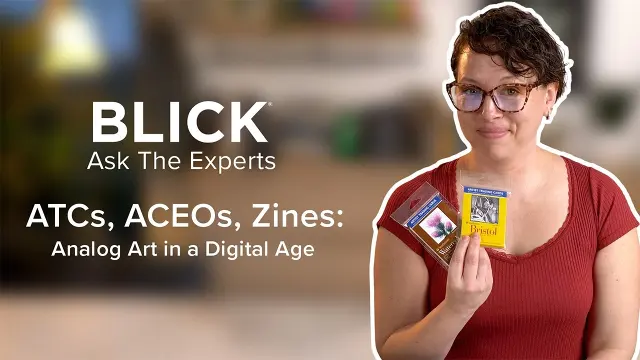
 Small Analog Art in a Digital Age: ATCs, Zines, and Books
#Artist Trading Cards
1 ideas
Small Analog Art in a Digital Age: ATCs, Zines, and Books
Get new #Artist Trading Cards ideas by email
Every Thursday: the week's best ideas, with the newest from #Artist Trading Cards.
Related tags
Artist Trading Cards: Small Art, Big Exchange
Artist Trading Cards, often called ATCs, are miniature works of art made for swapping, collecting, and sharing. They are usually created on small cards, which makes them quick to finish, easy to store, and appealing for artists who enjoy making many tiny pieces rather than one large work. The idea is simple: create an original card, then trade it with another artist instead of selling it.
What Artist Trading Cards are
ATCs are usually the size of a standard trading card, though the exact format can vary a little depending on the group or exchange. What matters most is that each card is small, original, and made to be traded rather than framed as a finished painting. Because of their size, they encourage experimentation. You can try a new color palette, a different drawing style, collage, lettering, stamping, stitching, or mixed media without the pressure of a large blank page.
The format has roots in both collecting and handmade art traditions. It brings together the fun of trading cards and the freedom of personal artwork. Many artists use ATCs as a way to meet others, build creative habits, and explore ideas in a low-pressure format.
Read more
Common styles and materials
ATCs can be made in almost any style. Some are clean and graphic, while others are layered, textured, or highly detailed. You might see:
- drawing and sketching
- watercolor or gouache
- collage with paper scraps, fabric, or found materials
- ink, markers, and colored pencil
- stamping and lettering
- stitching, embossing, or other mixed-media techniques
Because the cards are small, simpler compositions often work best. A single portrait, flower, symbol, word, or abstract shape can be enough. Strong contrast and clear focal points help the design read well at a small size.
How to begin
If you are new to ATCs, start with plain card stock or any sturdy paper that can hold your chosen medium. Cut or prepare a few cards of the same size so the set feels consistent. Then think about making a series rather than a single card. Working in a small group can help you loosen up and find a rhythm.
A few useful tips:
- Keep your first design simple.
- Let each card dry fully before stacking or trading.
- Sign and date the back if you like.
- Use materials that suit the surface you choose.
- Make a few extras in case you want to trade with others.
Why people enjoy them
Artist Trading Cards are appealing because they are both personal and social. You make something by hand, but the finished piece is meant to travel to someone else. That exchange can be inspiring, especially if you enjoy collecting small artworks or working within a shared creative community. ATCs also help you practice consistency, work in series, and finish pieces more easily than larger projects.
If you want to start, think of ATCs as tiny invitations to experiment. The small scale removes a lot of pressure and leaves room for play, which is often where the best ideas begin.
#Artist Trading Cards: frequently asked questions
How do I get started with artist trading cards?
Begin with a sturdy paper or card stock that can take the medium you like, and prepare several cards at the same size so a set feels consistent. Instead of labouring over one card, make a small series in one sitting — it helps you loosen up and find a rhythm. Keep your first design simple, then build up detail once you know how the surface behaves.
What supplies do I actually need to make ATCs?
The basics are a cutting tool, a firm surface to work on, and a medium you already enjoy — pencil, ink, watercolour, markers, collage scraps, or thread. Choose materials that suit the card you've picked, since thin paper will buckle under wet media while heavier stock handles layers. A scrap paper for testing and something to protect your finished cards is really all the extras you need.
Which style or technique should I choose for my cards?
Pick whichever technique you can execute cleanly at a small scale, because busy compositions tend to get lost on a card. A single subject — a flower, a face, a word, one bold abstract shape — with strong contrast usually reads better than many small elements. Working in a series around one technique is also a good way to see your own progress.
What are common mistakes beginners make?
The usual one is overcrowding the card, so leave space and let one focal point carry the design. Another is stacking or sleeving cards before the paint, ink or glue has fully dried, which smears work you were happy with. Not signing or labelling the back is a quiet loss too, since the card will travel far from you.
How should I store and care for finished cards?
Let each card dry completely, then keep them flat and protected — a small box, an album, or individual sleeves all work. Store them away from direct sunlight and damp, since fading and warping are the main risks for paper artwork. Handle them by the edges where you can, especially with collage or heavily layered pieces.
What kinds of sets or themes can I make?
Series work well: one subject repeated in different colours, a theme tied to a season or celebration, or a set built around a single technique you want to practise. Cards also make thoughtful small gifts and are easy to include in a swap or a package to another artist. Choosing a theme first usually makes it easier to finish a whole batch.
Videos come from YouTube and posts from Instagram; titles and summaries are our own. All rights belong to their creators.