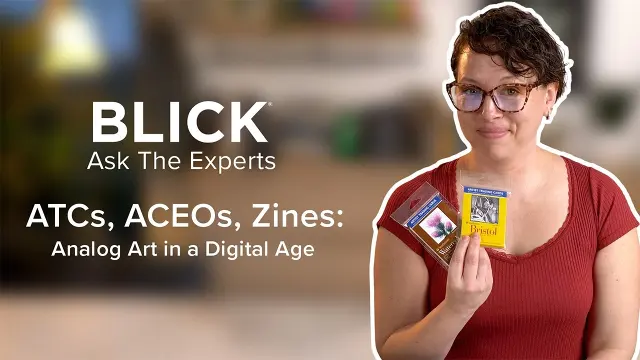
 Small Analog Art in a Digital Age: ATCs, Zines, and Books
#Handmade Books
1 ideas
Small Analog Art in a Digital Age: ATCs, Zines, and Books
Get new #Handmade Books ideas by email
Every Thursday: the week's best ideas, with the newest from #Handmade Books.
Related tags
Handmade Books: A Guide to Book Arts
Handmade books are books made by hand rather than produced entirely by machine. They can be simple stitched notebooks, folded pamphlets, altered books, journals, sketchbooks, or more sculptural works of book art. The form has deep roots in the history of bookmaking, when books were copied, bound, and decorated by hand long before modern printing. Today, handmade books are valued both as practical objects and as a creative medium.
What handmade books are
A handmade book can be as modest as a few folded sheets sewn together, or as elaborate as a one-of-a-kind artist’s book. What unites them is the making process: the pages, binding, cover, and often the decoration are assembled by hand. Some are meant for writing or drawing, while others are intended to be viewed as artworks in their own right.
Common forms and styles
Read more
There are many ways to make a handmade book. A few familiar types include accordion books, pamphlet-stitched booklets, sewn signatures, long-stitch books, coptic bindings, and folded books with no stitching at all. Some handmade books are designed as journals or albums, while others are used for poems, photographs, collage, printmaking, or mixed media.
The style you choose depends on how you want the book to open, how durable it should be, and what kind of work will go inside it. A simple folded book is ideal for beginners, while sewn bindings offer a sturdier structure for frequent use.
Materials and tools
You do not need expensive supplies to begin. Paper, card, thread, needle, glue, scissors, ruler, and a bone folder or similar folding tool are enough for many basic projects. For covers, people often use heavier paper, book board, fabric, or decorated cardstock. The paper inside the book should suit its purpose: smooth paper for writing, heavier paper for collage or paint, and stronger sheets if the pages will be handled often.
Choosing materials carefully matters. Paper that is too fragile may tear at the fold, while very thick paper can make sewing or folding harder. A good rule is to start simple and match the materials to the project.
Basic techniques
The main skills in handmade bookbinding are folding, measuring, punching holes, sewing, gluing, and pressing. Clean folds help the book sit neatly. Accurate measurements keep the pages aligned. Even stitching keeps the spine secure. If you use glue, apply it sparingly so the pages do not buckle.
Beginners often do best with one binding method at a time. A basic pamphlet stitch is a good starting point because it teaches spacing, sewing, and finishing in a clear way. Once you understand the structure, you can explore more complex bindings and decorative variations.
Practical tips for beginners
Start with a small format so you can finish the book without feeling overwhelmed. Make a test copy if you are trying a new binding. Keep your folds crisp and your page count even when the structure requires it. Work patiently, because handmade books improve with careful measuring and repeating steps neatly.
Do not worry if your first books are imperfect. Handmade books often look best when they show the maker’s hand. Small irregularities can give them character, especially in sketchbooks, journals, and artist’s books.
Why people make handmade books
People make handmade books for many reasons: to keep memories, to present stories, to experiment with paper and image, or simply to enjoy the craft of making something useful and beautiful. Whether simple or elaborate, a handmade book turns ordinary sheets of paper into a personal object with structure, rhythm, and meaning.
#Handmade Books: frequently asked questions
How do I start making handmade books if I've never bound one before?
Begin with the simplest structure you can finish in one sitting, such as a few sheets folded in half and stitched down the center. Pick a single binding method and repeat it a couple of times before moving on, since understanding one structure well makes the next much easier. Keep the format small at first so you can see the whole process from folding to the finished spine.
What supplies do I actually need for a basic handmade book?
Most starter projects need only paper, a heavier card for the cover, thread, a needle, glue, scissors, a ruler, and something to score and crease folds with. The paper inside matters more than the tools, so choose smooth stock for writing and heavier sheets for paint, collage, or pages that will be handled a lot. It's worth testing a scrap of your chosen paper first, since very thin paper tears at the fold and very thick paper is hard to sew.
Which kind of handmade book should I choose for my project?
Think about how the book needs to open and how much wear it will get: a simple folded or accordion book suits display and light use, while a sewn binding holds up better for a journal or sketchbook you carry around. Also consider what goes inside, because bulky collage and mixed media need sturdier pages and a spine with some room to expand. If the book is meant to be looked at rather than written in, structure can be chosen for effect rather than durability.
How do I care for a handmade book so it lasts?
Store it flat or standing upright and supported, away from damp, direct sun, and strong heat, which can warp boards and warp or fade paper. Open stiff new bindings gently and avoid forcing the spine flat, especially with sewn structures. Handle pages by the edges where you can, since oils from fingers show quickly on uncoated paper.
What are some good handmade book ideas for a gift or occasion?
A small stitched notebook, a photograph album, or a book of poems and collages all make personal gifts, and the format can be matched to the occasion. Accordion books suit displayed pieces like a series of prints or pressed flowers, while a simple pamphlet booklet works well for a written message or a collection of recipes. The handmade quality is the point, so a slightly irregular cover or visible stitching reads as character rather than a flaw.
What mistakes do beginners most often make?
Common ones are measuring carelessly, using too much glue so pages buckle, and pulling stitches unevenly so the spine skews. Folding without scoring first also produces soft, ragged edges that never sit neatly. Making a rough test copy before committing to your good paper catches most of these problems early.
Videos come from YouTube and posts from Instagram; titles and summaries are our own. All rights belong to their creators.