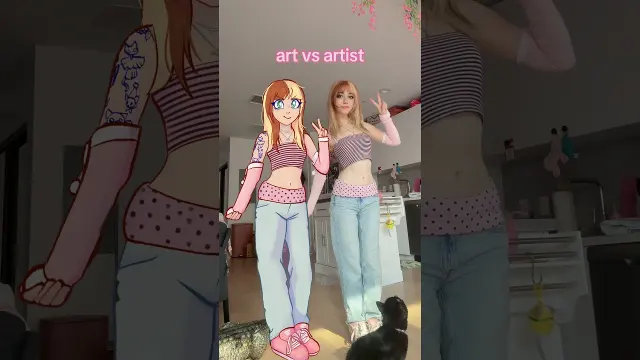
 Art Versus Artist Challenge With Friends
#Artist
1 ideas
Art Versus Artist Challenge With Friends
Get new #Artist ideas by email
Every Thursday: the week's best ideas, with the newest from #Artist.
Related tags
Artist: What It Means and How Artists Work
What an artist is
An artist is someone who makes creative work to express ideas, feelings, observations, or stories. Art can take many forms, including painting, drawing, sculpture, printmaking, photography, mixed media, performance, and digital work. At its heart, being an artist is less about one fixed style and more about looking closely, making choices, and turning those choices into something that communicates.
The word artist has long been used for people who create with skill and intention, whether they work in a studio, outdoors, at a kitchen table, or in a shared workshop. Some artists make work for exhibitions, while others create for personal expression, illustration, teaching, or commissioned projects. There is no single correct path.
Main kinds of artistic practice
Read more
Artists often specialize, but many move between different methods. Some common approaches include:
- Drawing and painting: using line, color, shape, and surface to build images.
- Sculpture and three-dimensional work: shaping materials such as clay, wood, metal, paper, or found objects.
- Printmaking: creating images that can be reproduced from a carved, etched, or transferred surface.
- Photography and digital art: working with cameras, editing tools, and digital processes to compose images.
- Mixed media: combining materials and techniques in one piece.
- Illustration and design-related art: making images that support stories, products, or ideas.
Many artists also develop a recognizable style over time. Style comes from repeated choices: subjects, color palettes, marks, composition, materials, and the way you simplify or elaborate forms.
What artists do
Artists observe the world and translate that observation into form. That may mean capturing a moment, exploring a feeling, questioning an idea, or simply enjoying the process of making. Artistic work can be representational, showing people or objects as they appear, or abstract, focusing on color, texture, rhythm, and shape instead of literal images.
Artists often spend time sketching, testing materials, revising, and deciding when a piece feels complete. Making art usually involves both inspiration and craft. The finished work may look effortless, but it is often built from many small decisions.
What beginners should know
If you are starting out, remember that artists are made through practice. You do not need expensive tools or a fully formed style to begin. A few useful habits are:
- Make art regularly, even in short sessions.
- Experiment with different materials to learn what feels natural.
- Keep unfinished studies and sketches; they are part of learning.
- Look at other artists’ work with curiosity, not comparison.
- Pay attention to what you enjoy drawing, painting, or shaping.
It also helps to study basic elements like line, value, color, shape, space, and texture. These are the building blocks of most visual art. Learning them gives you more control, whatever medium you choose.
Practical tips for a lasting practice
A steady artistic practice grows from observation and patience. Set up a simple routine, keep your materials easy to reach, and make room for mistakes. Try working from life as well as imagination, because both strengthen your eye. If you feel stuck, limit your choices: one subject, one tool, or one color family can make starting easier.
Most of all, let your work evolve. An artist’s path is rarely straight. It changes with experience, interests, and time, and that is part of what makes it meaningful.
#Artist: frequently asked questions
How do I start making art if I have never done it before?
Start with something small and low-pressure: a pencil and a few sheets of paper are enough to begin. Pick one simple subject, such as a cup on the table or a plant by the window, and give it a short session rather than waiting for the perfect moment. Regular short sessions build skill faster than occasional long ones, and keeping your early sketches shows you how your eye is changing.
Do I need special or costly materials to be an artist?
No — a basic set of drawing tools and something to draw on covers a great deal of ground while you are learning. What matters more is using the same materials often enough to understand how they behave. Add new supplies once you know what you actually enjoy reaching for, rather than buying a full studio up front.
Which kind of art should I choose to focus on?
Try several approaches before committing: drawing, painting, building in three dimensions, print work, photography, or digital tools all ask different things of you. Notice which one holds your attention even when the results are disappointing, since that is usually the strongest signal. Many artists keep more than one practice going, so choosing one direction now does not close off the others.
How do I develop my own style instead of copying others?
Style forms from repeated decisions — the subjects you return to, the colors you favor, how you handle edges and detail, and what you choose to leave out. Copying to learn is useful, but push each study toward your own preferences rather than stopping at a match. Over time those small choices accumulate into something recognizable as yours.
What are common mistakes beginners make?
The usual ones are waiting for inspiration instead of showing up, buying tools in place of practicing, and throwing away work that was only a stepping stone. Comparing your early pieces to finished work by experienced artists also discourages people unnecessarily. Keeping mistakes visible and treating unfinished pieces as notes rather than failures removes most of the friction.
Any ideas for making art as a group activity?
Set a shared prompt or theme and have everyone work from it with whatever materials they brought, then compare results at the end. A friendly challenge format — where people respond to the same subject or trade pieces halfway — keeps it playful and takes the pressure off individual skill. The point is the conversation the work starts, not ranking the outcomes.
Videos come from YouTube and posts from Instagram; titles and summaries are our own. All rights belong to their creators.