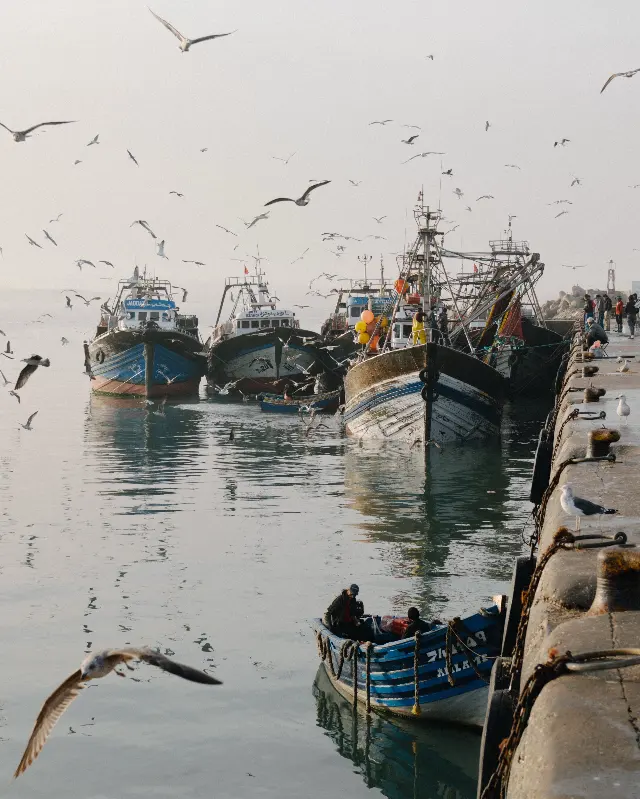
 Morning at Essaouira's Fishing Harbour on Morocco's Atlantic Coast
#Atlantic Coast
1 ideas
Morning at Essaouira's Fishing Harbour on Morocco's Atlantic Coast
Get new #Atlantic Coast ideas by email
Every Thursday: the week's best ideas, with the newest from #Atlantic Coast.
Related tags
The Atlantic Coast: Harbours, Beaches and Sea Light
The Atlantic coast is not one place but a long conversation between land and water. The same ocean touches the rocky inlets of northern Europe, the wide sandy stretches of western Africa, the fishing towns of Morocco and Portugal, and the windswept shores of the Americas. What holds these places together is a shared character: cool water, strong light, a horizon that feels close, and a way of life that has always been organised around the tide.
A coastline of many climates
Because the Atlantic reaches from cold northern latitudes to warm subtropical ones, its shores look and feel very different from one another. In the north you find cliffs, grey-green water, weathered stone houses and harbours built to shelter boats from heavy weather. Further south the light sharpens, the water turns deep blue, and the coastal towns turn outward toward the sea — whitewashed walls, blue doors, nets drying in the sun.
Travellers often describe the Atlantic as more introverted than other seas. It is a coast of working life rather than resort display: boats going out before dawn, fish sold on the quay, laundry strung between houses, gulls following the catch.
Read more
Harbours and working ports
A fishing harbour is usually the most honest introduction to a coastal town. Arrive early and you will see the whole economy in motion: boats returning, crates unloaded, ice packed, ropes coiled, a market forming in the open air. If you visit one, keep to the edges of the working area, ask before photographing people, and buy something small from the stalls — it is a fairer exchange than a picture taken from a distance.
Beaches and the sea's mood
Atlantic beaches tend to be broad and open, with dunes, coarse sand and a steady breeze. Conditions change quickly: a calm morning can turn choppy by afternoon. Swim where locals swim, respect flags and lifeguards, and remember that the ocean here can be cold and strong even on a warm day.
Light, weather and what to wear
The Atlantic light is a large part of why people love this coast — clear in the morning, hazy at midday, golden and long in the evening. Weather shifts fast, so layers work better than any forecast: a light waterproof, a warm jumper, a hat and shoes that grip wet stone.
Practical tips
- Walk the coast path rather than only the beach; the viewpoints are usually the reward.
- Learn the tide times before exploring rock pools or narrow coves.
- Eat where the fish is landed, and ask what came in that morning.
- Carry cash for small harbourside stalls and markets.
- Go out at dawn at least once. The coast belongs to fishermen first.
Above all, slow down. The Atlantic rewards patience more than planning: a bench facing the water, an hour of watching the boats, a walk back along the sand as the light goes.
#Atlantic Coast: frequently asked questions
How do I start planning a trip along the Atlantic Coast?
Begin with the kind of coast you want rather than with a checklist of sights: a working harbour, a broad dune-backed beach, or a cliff path above grey-green water. Choose a base near a landing port so you can see the daily rhythm of boats and market stalls instead of only the seafront. Then leave room in the plan for weather to rearrange it, since conditions change quickly.
What should I pack for an Atlantic Coast visit?
Layers serve you better than trusting a forecast, because light and weather shift fast across the day. Bring a light waterproof, a warm jumper, a hat for the wind and sun, and shoes with grip for wet stone and harbour quays. Add a little cash for small stalls and markets, which rarely run on cards.
Which stretch of the Atlantic Coast should I choose?
The Atlantic runs from cold northern latitudes to warm subtropical ones, so the shores themselves set the mood. Northern stretches offer cliffs, weathered stone houses and harbours built against heavy weather, while southern ones bring sharper light, deep blue water and whitewashed towns that face outward to the sea. Pick by the character you want rather than by distance.
How can I visit a fishing harbour respectfully?
Treat the quay as a workplace first and keep to the edges of the working area rather than stepping into it for a better angle. Ask before photographing people, and buy something small from the stalls so the exchange is fairer than a picture taken from a distance. Going early gives you the honest version of the town at work.
What are common mistakes people make on the Atlantic Coast?
Many visitors stay on the sand and skip the coast path, which is usually where the viewpoints are. Others set out into coves and rock pools without checking the tide, or swim in unfamiliar water without watching the flags and following where locals go. Rushing is the quiet mistake: this coast rewards patience more than a packed schedule.
Any ideas for a memorable morning on the Atlantic Coast?
Go out at dawn at least once, when the light is clearest and the boats are already returning with the catch. Watch the crates come off, the ice packed and the market forming in the open air, then eat where the fish was landed and ask what came in that morning. Finish with a bench facing the water and nothing else to do.
Videos come from YouTube and posts from Instagram; titles and summaries are our own. All rights belong to their creators.