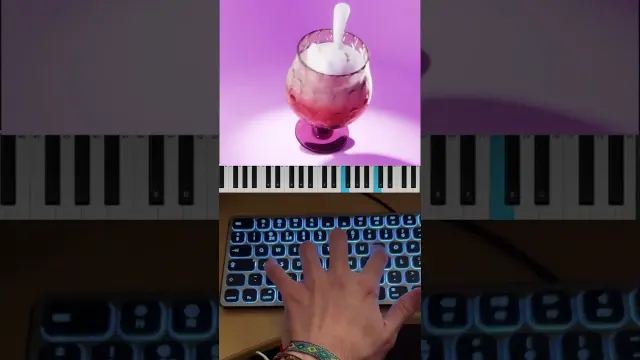
 Live Streamed Sound Design Process for Animation and Foley
#Audio Post Production
1 ideas
Live Streamed Sound Design Process for Animation and Foley
Get new #Audio Post Production ideas by email
Every Thursday: the week's best ideas, with the newest from #Audio Post Production.
Related tags
Audio Post Production: A Beginner's Guide
Audio post production is everything that happens to a film's sound after the cameras stop rolling. On set, the priority is capturing usable dialogue; the world around it — footsteps, doors, weather, music, the atmosphere of a room — is built later, in a studio, by a team working to picture. The goal is not to draw attention to itself. Good post production sound is the reason a scene feels like it takes place somewhere real, and why you can follow a conversation without thinking about it.
The stages, roughly in order
Work usually begins with **dialogue editing**. The editor goes through every take, chooses the best readings, cleans up noise and smooths the joins between shots so that lines sound like one continuous performance. Where location sound is unusable, actors are brought in to re-record their lines in sync with picture; this is called **ADR** (automated dialogue replacement), and it is also used to fix a line that was rewritten after the shoot.
**Sound effects and ambience** come next. Editors lay in hard effects — a car passing, a glass set down, a phone buzzing — and background beds for each location, often called room tone or atmosphere tracks, which hold a scene together and cover the seams between edits.
Read more
**Foley** is the craft of performing sound in a studio while watching picture: footsteps, cloth movement, the handling of props. Named after a pioneering sound artist, it fills the small, intimate details that libraries rarely match to a specific character's weight and rhythm.
**Sound design** is the more creative branch — inventing sounds that don't exist, shaping textures, building the sonic identity of a place, a creature or a machine.
**Music** is spotted (chosen and placed), edited to fit the picture, and balanced against dialogue.
Mixing and delivery
The **mix** is where all these elements are balanced and placed in space. A dialogue premix tames and clarifies voices; premixes for effects and music follow; then the final mix, or re-recording mix, brings them together. Mixes are prepared for stereo, for surround, and increasingly for object-based immersive formats that position sound in three dimensions.
Deliverables matter as much as the mix. A project typically ships as full mixes plus **stems** — separated dialogue, music and effects — and an **M&E** version with the dialogue removed, so the film can be dubbed into other languages. Broadcasters and streaming platforms each publish technical specifications for loudness and channel layout, and a mix that ignores them will be rejected.
What beginners should know
- Watch and listen to finished work with the same attention you give your own. Pause and ask what you are hearing beyond the picture.
- Clean, well-chosen dialogue is worth more than a dense stack of effects.
- Silence and restraint are tools. Not every moment needs sound.
- Build a library slowly and name files clearly; you will thank yourself later.
- Learn to work to picture and to deadlines — post production is collaborative, and notes come from directors, editors and producers.
- Protect your hearing. Monitoring at high levels for long sessions is a real risk, and a tired ear makes poor decisions.
Most people enter through one of these crafts and learn the rest by working alongside them. Whichever door you take, the habit that matters is listening closely — to films, to rooms, and to your own work.
#Audio Post Production: frequently asked questions
How do I get started in audio post production?
Most people begin by picking one craft — dialogue editing, sound effects, Foley or mixing — and learning it deeply while working alongside the others. Practise on short scenes: cut dialogue to picture, lay in ambience, and finish a full mix so you understand how the stages connect. Listening closely to finished films and asking what sits under the picture is the habit that carries you furthest.
What do I actually need to begin working on sound for picture?
You need a computer that runs a digital audio workstation comfortably, a way to hear accurately, and a copy of picture to work against. Closed-back headphones plus a modest monitoring setup will take you a long way before anything expensive matters. Beyond gear, the real requirement is a clean, organised library and the discipline to name files so you can find them again.
Which part of post production should I focus on first?
Start with dialogue, because clear, well-chosen lines carry a scene and everything else is balanced around them. Once you can smooth edits and cover noisy takes, moving into effects, ambience or Foley becomes much easier to judge. Sound design and mixing build on that foundation rather than replacing it.
What common mistakes should a beginner avoid?
The most frequent one is stacking effects until a scene feels crowded — restraint and silence often do more work than another layer. Another is neglecting dialogue cleanup and then trying to fix it in the mix, which rarely ends well. Ignoring the delivery requirements of whoever will broadcast or stream the finished piece is the third, since a mix that misses the published specifications comes straight back.
How do I look after my ears during long sessions?
Keep monitoring levels moderate and take real breaks away from the speakers, because a tired ear makes poor judgements about balance. Mix at a comfortable level and turn up only briefly to check impact rather than working loud all day. Treat your hearing as the main tool of the trade and protect it the way you would any other instrument.
Where do Foley and sound design fit into a finished track?
Foley is performed in a studio to picture — footsteps, cloth, props — and it gives a character a specific weight and rhythm that a library effect rarely matches. Sound design is the more inventive branch, building textures and identities for places, creatures and machines that don't exist on set. Both sit underneath dialogue and are balanced against music at the mix.
Videos come from YouTube and posts from Instagram; titles and summaries are our own. All rights belong to their creators.