 Should Frontend Developers Learn Backend in the AI Era
#Backend Development
3 ideas
Should Frontend Developers Learn Backend in the AI Era
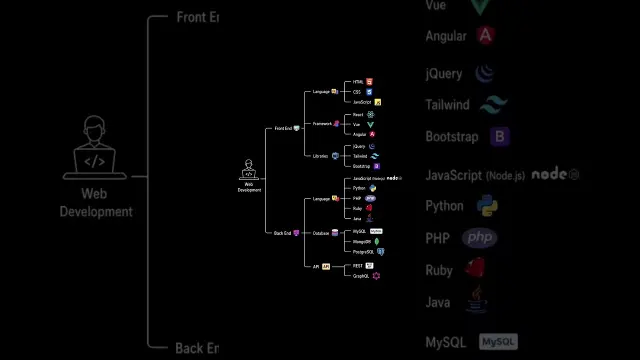 Web Development Roadmap for Beginners: Frontend and Backend
 Java Developer Roadmap: Core Java, Spring and Backend Skills
Get new #Backend Development ideas by email
Every Thursday: the week's best ideas, with the newest from #Backend Development.
Related tags
Backend Development: A Beginner's Guide to How Servers Work
Every website you use is really two halves working together. One half is what you see and click; the other is the machinery behind it, quietly deciding what to show you, remembering what you did, and keeping other people's information away from you. That second half is backend development, and it is where most of the interesting problem-solving happens.
What backend development actually means
The backend is the part that runs on a server rather than in your browser. It receives requests, decides what they mean, talks to a database, and sends an answer back. When you log in, order something, or refresh a feed, the backend is what checks that you are who you say you are, fetches the right records, and formats them into something the frontend can display.
That means a backend developer's work usually touches three things at once: application logic, data storage, and communication between systems. You spend your time thinking about what should happen, where the information lives, and how the pieces talk to each other.
Read more
The main ingredients
Most backends are built from the same building blocks, whatever language or tool you choose.
- A language and framework for writing the logic. Common choices include Python, JavaScript, Java, Go, Ruby, PHP or C#, each with frameworks that handle the repetitive parts.
- A database, either relational with tables and strict structure, or document-based with flexible records. Relational databases suit data with clear relationships; document stores suit changing, nested data.
- An API, the agreed contract other software uses to talk to your application, most often following REST conventions or the more flexible query style of GraphQL.
- Supporting systems for caching, background jobs, file storage and message queues, used as the application grows.
Kinds of backend work
Some backend roles lean toward building APIs for mobile apps; others focus on data pipelines, real-time messaging, payments, or internal tooling. The daily texture differs, but the underlying skills overlap heavily, which is why backend knowledge transfers well between industries.
What beginners should learn first
Start with one language and get comfortable with it before collecting more. Then learn how HTTP works: methods, status codes, headers, and what a request actually contains. Build a small API that reads from and writes to a database, and run it locally. Add authentication once the basics feel solid.
Version control, the command line, and a little networking knowledge will save you more time than any framework will. Learn to read error messages and logs carefully; that skill outlasts every tool.
Practical habits worth forming early
Write small, testable functions and add tests as you go, not as an afterthought. Validate and sanitise everything that arrives from outside your system, because input you did not expect is the root of most security trouble. Keep secrets out of your code and in configuration. Design your database schema thoughtfully before you build on top of it, and reach for caching only once you have measured a real problem.
Above all, build things that work end to end. A modest application you have deployed and maintained teaches more than a dozen tutorials followed passively.
#Backend Development: frequently asked questions
How do I start learning backend development as a beginner?
Begin with one programming language and get comfortable writing small programs before moving on to frameworks. After that, learn how HTTP works, build a simple API, and connect it to a database so you can see how requests and data flow together.
What skills do I need to become a backend developer?
You need a solid grasp of one language, basic database knowledge, and an understanding of APIs and server-side logic. It also helps to know the command line, version control, networking basics, and how to read logs and error messages.
Should I learn frontend or backend first?
If you want to understand how websites work end to end, starting with one side and then learning the other is a practical path. Backend is a good choice if you enjoy logic, data, security, and how systems communicate behind the scenes.
What is the difference between a relational database and a document database?
A relational database organizes information into tables with clear relationships, which works well when the data is structured and connected. A document database stores more flexible records, which can be useful when the data changes often or has nested parts.
How do I keep a backend application secure and reliable?
Validate and sanitize all input, keep secrets out of your code, and be careful about what your app accepts from outside systems. Writing tests, watching logs, and designing your database thoughtfully also help prevent problems before they grow.
What kind of projects are best for practicing backend development?
Simple end-to-end projects are ideal, such as a small API that can create, read, update, and delete data. Adding authentication, a database, and a few background tasks will teach you far more than following tutorials without building anything real.
Videos come from YouTube and posts from Instagram; titles and summaries are our own. All rights belong to their creators.