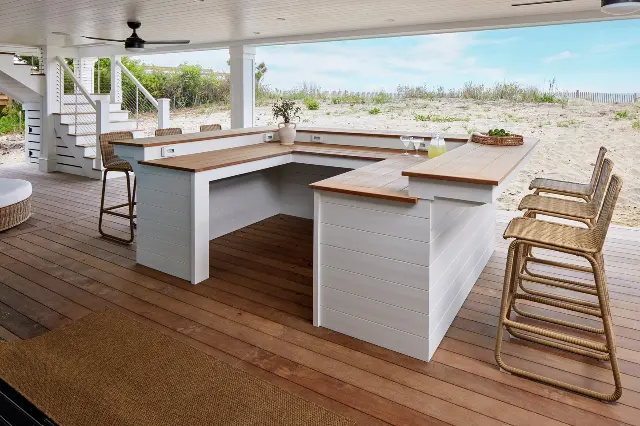
 Why Every Custom Beach Home Wants a Bar, From Morning Coffee to Cocktails
#Bar Design
1 ideas
Why Every Custom Beach Home Wants a Bar, From Morning Coffee to Cocktails
Get new #Bar Design ideas by email
Every Thursday: the week's best ideas, with the newest from #Bar Design.
Related tags
Bar Design: Ideas for a Home Bar That Works
A bar is one of those corners of a home that earns its space twice over. In the morning it holds the coffee pot and a bowl of fruit; by evening it becomes the place where a drink is made slowly, with a little ceremony, while someone leans on the counter and talks. Good bar design starts from that double life rather than from a picture of a glamorous hotel lounge.
The main kinds of home bar
Broadly, three arrangements cover most homes. The bar cart is the smallest and most flexible: a trolley that rolls out when guests arrive and tucks away afterwards, best for renters and compact flats. The counter nook is a fixed surface built into a corner, an alcove or the end of a kitchen run, often with open shelving above. The full back bar pairs a serving counter with a mirrored or shelved wall behind it, and it is the arrangement that needs the most planning — plumbing if there is a sink, electricity for a fridge, and enough depth for bottles to sit clear of the glassware.
Heights, clearance and flow
Read more
Comfort matters more than any single style choice. A bar counter traditionally sits higher than a kitchen worktop, so that standing guests have something to rest a glass on and seated guests on stools are not craning upward. Fix your stool height and work backwards from there, and leave a clear passage behind the stools so people can move past without asking anyone to shuffle. If you plan a sink or a tap, settle that first: everything else is easier to design around plumbing than the reverse.
The back bar and storage
The wall behind the counter does the visual work. Open shelves keep bottles and glassware in view and make the bar feel generous; closed cupboards hide the clutter of open bottles, napkins and tools. A useful compromise is a mix — closed storage below, a few open shelves above. Group bottles by type, keep the tools you reach for most within arm's length, and store glassware where it will not be knocked by someone reaching over it.
Surfaces and light
Choose surfaces for the life they will lead. Stone, tile and sealed timber all handle spills; untreated wood does not appreciate a wet glass left overnight. As for light, layer it: a soft overhead glow plus low, warm light near the counter makes bottles gleam and faces look well. Dimmers are worth the small effort.
Beginning
Start with what you already own, decide where the bar will stand, and let the design follow the way you actually entertain. A well-planned small bar beats a grand one nobody uses.
#Bar Design: frequently asked questions
How do I start planning a home bar without spending a fortune?
Begin with what you already have — a tray, a cart or a spare stretch of countertop — and let the design grow from the way you actually entertain. Pick the spot first and work outward, since the position of the bar decides everything else. A modest, well-used setup serves better than an elaborate one that nobody touches.
What do I need for a home bar to actually work?
The essentials are a stable surface at a comfortable height, storage within easy reach, and somewhere to set a glass down without wobbling. If you want a sink, tap or fridge, settle that before anything else, because plumbing and power are far harder to add later than shelving or lighting. Beyond that, the tools and bottles you reach for most matter more than a long list of fancy extras.
Should I choose a bar cart, a counter nook or a full back bar?
It comes down to space, permanence and how often you host. A cart suits renters and compact homes because it rolls out for guests and tucks away afterwards, while a counter nook built into a corner or alcove is a good middle ground for a fixed setup. A full back bar with a serving counter and wall storage gives the most presence, but it needs the most planning in terms of depth, electricity and plumbing.
How do I care for a bar so it stays looking good?
Choose surfaces for the life they will lead — stone, tile and sealed timber handle spills, while untreated wood will mark if a wet glass sits on it overnight. Wipe up spills promptly, keep bottles grouped so nothing topples, and store glassware out of the path of people reaching across it. A little routine attention keeps both the finish and the contents in good shape.
What are common mistakes people make with home bar design?
The most frequent one is copying a hotel-lounge picture instead of designing for the room you have and the way you live. Another is fixing stools and surfaces on impulse, which leaves guests resting glasses awkwardly or blocked in by a tight passage behind the seats. Skipping the plumbing decision until late, or leaving everything on open shelves without any closed storage, are also easy oversights.
Any ideas for making a small bar feel generous?
Open shelves let bottles and glassware show themselves, which makes even a narrow corner read as abundant, while a few closed cupboards below keep the napkins and tools out of sight. Layered light — a soft overhead glow plus warm, dimmable light near the counter — makes bottles gleam and flatters the people standing there. Keep the passage behind the stools clear so the space never feels cramped.
Videos come from YouTube and posts from Instagram; titles and summaries are our own. All rights belong to their creators.