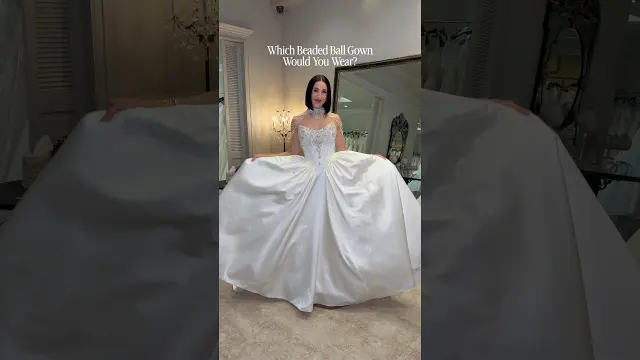
 Two Beaded Ball Gown Wedding Dresses Tried On
#Beaded Wedding Dress
1 ideas
Two Beaded Ball Gown Wedding Dresses Tried On
Get new #Beaded Wedding Dress ideas by email
Every Thursday: the week's best ideas, with the newest from #Beaded Wedding Dress.
Related tags
Beaded Wedding Dress: A Guide to Sparkle, Craft and Care
Beaded wedding dresses are those in which small ornamental pieces — glass, crystal, pearl, shell, wood or metal — are stitched onto the fabric to add texture, shine or pattern. Beading is one of the oldest forms of textile decoration: cultures across the world have long used seeds, shells, stones and glass to signal wealth, celebrate ceremonies and tell stories through pattern. On a wedding dress it carries that same ceremonial weight, catching light as the wearer moves.
How the beading is done
Most beadwork falls into a few techniques. Hand-sewing gives the most control: each bead or sequin is attached individually with a needle and thread, which allows dense clusters, gradual fades and detailed motifs. Tambour beading, worked with a small hooked needle from the underside of stretched fabric, is a traditional method for covering large areas efficiently. Appliqué on net or tulle — beads embroidered onto a fine mesh and then cut out and stitched to the gown — lets a motif such as a flower or vine be positioned precisely. Cheaper dresses often use glued or machine-applied rhinestones, which sit flatter and can shed over time.
Main looks
Read more
Allover beading covers the whole gown for a liquid, glittering effect. Scattered beading places motifs at intervals, leaving the fabric visible between them. Heavily embellished bodices with plainer skirts balance sparkle against movement, and beaded illusion sleeves or high necklines add coverage without weight. Pearl beading reads softer and more romantic than crystal; crystal reads sharper and more dramatic. Matte beads give texture without shine.
Choosing one
Beading adds weight, so try the dress standing, sitting, walking and raising your arms. Check the inside: a lined bodice with a smooth barrier between beads and skin prevents scratching. Consider the venue — dense crystal is at home in candlelight and evening ballrooms, while pearl or matte beading and lighter scatterings suit daylight and garden settings. Think about the season too: heavy beading can feel warm in summer and can snag on rough surfaces outdoors.
Practical tips for beginners
Start small if you are beading something yourself. Work on a frame or hoop, use a fine beading needle and a thread matched to the fabric, and knot frequently so a break stays local. Test a sample patch first to see how the fabric hangs under weight.
For ready-made dresses, ask how the beading is attached and whether spare beads come with the gown. Alterations to beaded areas are slow and costly, so plan them early. Store the dress flat or padded rather than on a thin hanger, avoid snagging it on velcro and jewellery, and have it cleaned by someone experienced with embellishment. Handle it with clean hands and minimal lotion, and keep a small repair kit for the wedding day itself.
#Beaded Wedding Dress: frequently asked questions
What makes a wedding dress "beaded"?
A beaded wedding dress has small ornamental pieces — glass, crystal, pearl, shell, wood or metal — stitched onto the fabric to create texture, shine or pattern. The beads can be sewn on by hand one at a time, applied with a hooked needle in tambour work, embroidered onto net and then appliquéd, or simply glued on in less expensive gowns. The look and the durability depend heavily on which of those methods was used.
How can I tell whether a beaded dress will be comfortable to wear all day?
Beading adds real weight, so try the gown standing, sitting, walking and with your arms raised before deciding. Check the inside too: a lined bodice with a smooth layer between the beads and your skin keeps the embellishment from scratching. A dress can look light on the hanger and still feel heavy by the end of a long celebration.
Pearl or crystal beading — how do I pick the right one for my venue?
Pearl beading reads softer and more romantic, while crystal looks sharper and more dramatic as it catches light. Dense crystal tends to suit candlelight, evening ballrooms and formal settings, whereas pearl or matte beading and lighter scatterings feel more at home in daylight and gardens. Think about the season as well, since heavy beading can feel warm in the summer and catches on rough outdoor surfaces.
What are the most common mistakes people make with beaded wedding dresses?
One of the biggest is leaving alterations too late, because working around beaded areas is slow and fiddly. Another is not asking how the beading is attached or whether spare beads come with the gown — useful to know before a bead works loose. Storing the dress on a thin hanger or letting it snag on velcro and jewellery are also easy ways to damage the work.
How should I care for and store a beaded dress?
Store it flat or on a padded hanger rather than a thin one, and keep it away from anything that could catch, such as velcro or sharp jewellery. Handle it with clean hands and minimal lotion, and have it cleaned by someone who is used to embellished garments. A small repair kit kept on hand for the wedding day itself can save a lot of worry.
I'd like to bead a dress myself — how should I start?
Begin with something small rather than a whole gown, working on a frame or hoop with a fine beading needle and thread matched to the fabric. Knot the thread often so that if it breaks, the damage stays in one place instead of unraveling a whole motif. Before committing, bead a sample patch to see how the fabric hangs once it carries the extra weight.
Videos come from YouTube and posts from Instagram; titles and summaries are our own. All rights belong to their creators.