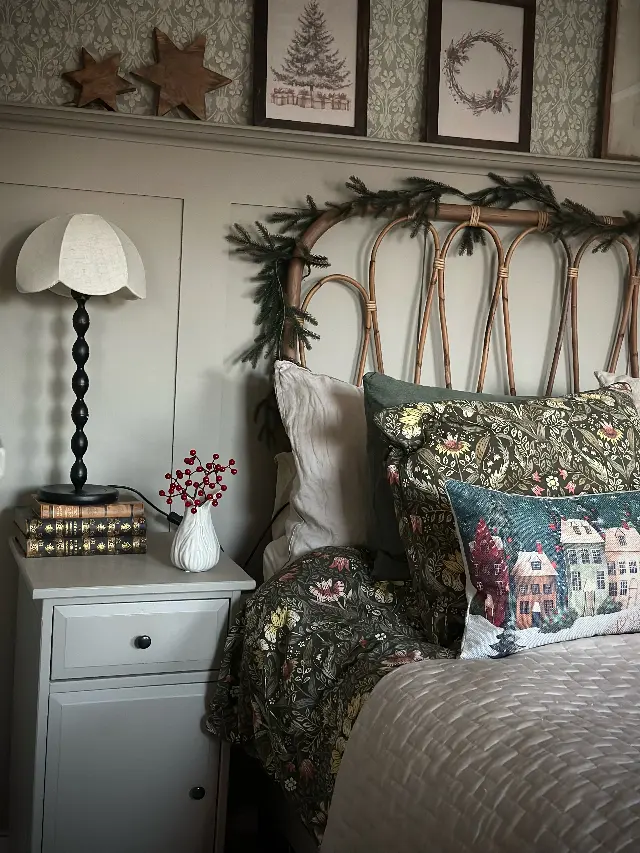
 Christmas bedroom styling in shades of green with a touch of red
#Bedroom Inspiration
1 ideas
Christmas bedroom styling in shades of green with a touch of red
Get new #Bedroom Inspiration ideas by email
Every Thursday: the week's best ideas, with the newest from #Bedroom Inspiration.
Related tags
Bedroom Inspiration: Ideas for a Calm, Personal Space
The bedroom is the one room in a home that answers to almost nobody else. It does not need to impress guests, hold a dinner party or survive daily traffic. That freedom is exactly why it is such a rewarding space to decorate, and why so many people collect ideas for it long before they change a single thing. Bedroom inspiration is really about deciding what kind of rest you want, and then arranging a room that makes that rest easier.
Start with the feeling, not the furniture
Before choosing anything, it helps to describe the atmosphere you are after in plain words: airy and bright, cocooning and dark, quiet and simple, or layered and full of texture. Each leads to very different decisions about colour, fabric and light. A room intended as a bright morning space wants pale walls and light linens; a room intended as a retreat leans towards deeper tones, heavy curtains and soft, dim light.
The bed as the centre
Read more
Everything else in the room is arranged around the bed, so it deserves the first thought. Consider how you actually sleep: whether you prefer to be cool or warm, whether you read before sleeping, whether you share the bed or not. Layering is the most practical approach, starting with a breathable base and adding blankets or quilts that can be removed individually. Texture matters as much as colour, and mixing materials such as cotton, linen, wool and knitted fabric gives a bed depth without needing pattern.
Colour and light
Restful rooms rarely rely on many strong colours at once. A single base tone carried across walls, bedding and curtains, with one or two quieter accents, tends to feel calm and is easy to live with over years. Light works with colour: aim to have three kinds where possible, a main ceiling light, softer bedside lighting for the evening, and natural daylight during the day. Dimmable lamps and warm-toned bulbs help the room settle as the evening goes on.
Storage you can hide
Clutter is the enemy of a calm bedroom, and visible clutter is worse. Simple, generous storage, under the bed, inside a bench at the foot of the bed or in a plain wardrobe, keeps everyday things out of sight. If space is tight, height is usually the untapped resource.
Making it personal
The details that make a bedroom feel like yours are rarely expensive: a framed print, a chair that belonged to someone, a lamp you like the shape of, a basket of books. Plants, a small vase, a soft rug beside the bed, a hook for the robe you actually wear. Add these slowly and keep what genuinely pleases you rather than what fills a gap.
A bedroom is finished when it lets you close the door and put the day down. Start with the bed, choose a tone you can live with, control the light and hide the clutter, and let the personal touches arrive in their own time.
#Bedroom Inspiration: frequently asked questions
How do I start decorating a bedroom when I have no clear plan?
Begin with the mood rather than the shopping: describe in plain words the atmosphere you want, such as airy and bright, cocooning and dark, or quiet and simple, since each one points to different choices in colour, fabric and light. Once that feeling is settled, turn to the bed, because everything else in the room is arranged around it. Small personal pieces can then be added gradually instead of all at once.
What do I actually need for a restful bedroom?
The essentials are comfortable layered bedding, lighting you can soften in the evening, and storage that keeps everyday items out of sight. A breathable base layer with blankets or quilts you can add and remove separately lets you adjust the bed to how you sleep rather than to a fixed look. Everything beyond that is decoration and can arrive slowly.
Which bedroom style should I choose?
Choose according to how you use the room rather than to what looks good in pictures. A bedroom that should feel like a bright morning space suits pale walls, light linens and plenty of daylight, while one meant as a retreat leans towards deeper tones, heavier curtains and low, warm light. A single base tone carried through walls, bedding and curtains, with a couple of quieter accents, tends to age well.
What are the most common bedroom decorating mistakes?
The usual ones are crowding the room with several strong colours at once, relying on a single overhead light, and leaving everyday clutter in view. Mixing too many competing materials or patterns on the bed also flattens the effect that texture alone could give. Leaving the bed as an afterthought and decorating around it usually leads to a room that looks good but feels wrong to sleep in.
How do I keep a bedroom calm and easy to maintain over time?
Favour washable, forgiving fabrics for bedding and curtains, and choose materials you won't mind caring for regularly, so the room stays practical as well as restful. Keep storage generous and simple so there is always somewhere for daily things to go, and edit the room now and then by removing what no longer pleases you. Rotating heavier layers in and out with the seasons keeps the bed comfortable without a full redo.
Any ideas for styling a bedroom for a seasonal occasion?
Work with the tone already in the room instead of replacing it, adding a festive note through a few small touches such as a coloured throw, a cushion or a simple greenery arrangement. Greens with a restrained hint of red sit comfortably against pale or deep walls alike and can be packed away afterwards. Keep the additions light enough that the room still feels restful once the lights go down.
Videos come from YouTube and posts from Instagram; titles and summaries are our own. All rights belong to their creators.