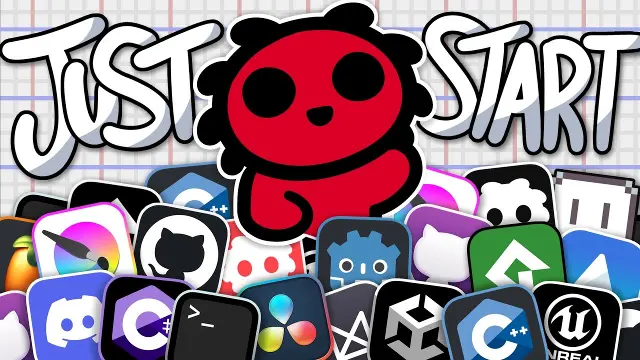
 Planning a First Game: Practical Steps Before You Start Building
#Beginner Game Dev
1 ideas
Planning a First Game: Practical Steps Before You Start Building
Get new #Beginner Game Dev ideas by email
Every Thursday: the week's best ideas, with the newest from #Beginner Game Dev.
Related tags
Beginner Game Dev: How to Start Making Your First Game
Making games is one of the most rewarding creative pursuits you can take up, and one of the easiest to abandon halfway. Understanding what game development actually involves — and how the pieces fit together — is the difference between collecting tutorials forever and shipping something you can show someone.
What game development is
A game is a set of rules, a world, and a way for a player to act inside it. Building one means turning those ideas into something a computer can run. That work splits into a few overlapping crafts: design (what the game is and how it feels), programming (making it behave), art (what it looks like), audio (what it sounds like), and production (keeping it moving). In a large studio these are separate jobs; for a beginner, you are usually all of them at once, which is exactly why scope matters so much.
The main routes in
Read more
Two broad approaches exist. Engines — software that handles rendering, physics, input and sound so you do not have to write them from scratch — are the common path, and each has its own strengths and its own style of working, from drag-and-drop scene editors to code-heavy frameworks. The other route is building from a library in a general-purpose programming language, which teaches you a great deal about how games work underneath but takes longer to produce anything playable.
Text-based games, board and card adaptations, and small puzzle games are excellent first projects because they depend on logic and design rather than complex art.
What beginners should know
Pick one engine and stay with it for a year. Tutorial-hopping feels like progress but rarely is. Learn the basics of programming alongside it — variables, conditions, loops, functions — because every engine assumes them.
Plan small. A first game should be finishable in weeks, not months: one mechanic, one screen, one win condition, one loss condition. "Make it work, then make it good, then make it pretty" is a reliable order, and it is fine to use placeholder shapes for art until the game is fun.
Copying a simple existing game — a platformer, a match-three, a snake clone — is not cheating. It removes design decisions and lets you focus on finishing, which is the real skill you are practising.
Expect the last ten percent to take as long as the first ninety. Getting a game from "runs on your machine" to "a stranger can play it" means menus, audio, saving, bugs and instructions. Build those into your plan rather than treating them as an afterthought.
Practical habits
Keep a small notebook of ideas so you are not tempted to cram every one into your current project. Show work-in-progress to someone early; feedback on an unfinished thing is far more useful than feedback on a polished one. Learn to use version control so a broken experiment never costs you a working build. Take breaks from the screen — puzzle design and debugging both go better after a walk.
Most of all, finish. A small, complete, slightly rough game teaches more than a beautiful unfinished one, and the habit of finishing is what turns a hobby into a craft.
#Beginner Game Dev: frequently asked questions
How do I get started in game development with no experience?
Choose a single engine and commit to learning it properly instead of sampling several, since jumping between tutorials feels productive but leaves you with shallow knowledge. Alongside it, work through the fundamentals of programming — variables, conditions, loops, functions — because every engine assumes you already understand them. Your opening project should be something you can realistically complete rather than a dream game you keep restarting.
Do I need to be a programmer or an artist before I can make a game?
No — engines take care of rendering, physics, input and sound, so you are not writing those systems yourself, and basic programming literacy is enough to begin. Art can wait: plain shapes and rough stand-ins are perfectly acceptable while you test whether the game is actually fun. Most beginners end up wearing several hats at once, which is precisely why keeping the project small matters so much.
Which kind of game is best for a beginner to build?
Text-based games, card or board adaptations, and compact puzzle games work well because they lean on logic and design instead of heavy artwork. Recreating a simple classic — a platformer, a match-three, a snake clone — is also a strong choice, since the design questions are already answered and you can concentrate on finishing. What matters is that the project has a clear scope you can see the end of.
What should I have worked out before I start building?
Decide on a single core mechanic, a single play area, and one condition each for winning and losing — that alone prevents most early scope creep. Pick your engine beforehand and stick with it, and accept that placeholder visuals are fine until the game plays well. Sketching a rough plan of what the finished thing looks like keeps you from drifting once the initial excitement fades.
Why do so many beginner game projects get abandoned, and how do I avoid it?
Projects usually die from overreaching: the idea grows faster than the skills, and every new concept gets crammed into the current build instead of being written down for later. Keep a notebook for stray ideas, show unfinished work to someone early so you get useful feedback, and use version control so a failed experiment never costs you a working build. Finishing something small and slightly rough teaches far more than polishing something that never ships.
What are the most common beginner mistakes in game development?
Tutorial-hopping, planning something that takes months instead of weeks, and treating menus, sound, saving and instructions as an afterthought are the usual culprits — that final layer of polish often takes as long as everything before it. Work in the order of making it function, then making it play well, then making it look good. Building the unglamorous parts into your plan from the start is what separates a project a stranger can actually play from one that only runs on your own machine.
Videos come from YouTube and posts from Instagram; titles and summaries are our own. All rights belong to their creators.